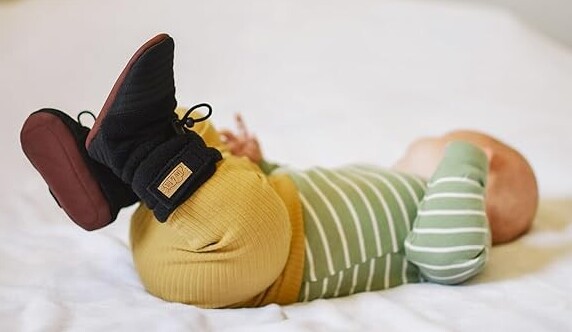
Getting the right size for baby stay-put cozy booties matters more than you might think. A proper fit keeps tiny feet warm, comfy, and growing healthy.
Too-big booties can make first steps wobbly, while tight ones squish little toes. Babies need support and comfort as they learn to move. Aim for that “just right” fit — snug but not tight.
You can spot size issues easily. Baby stay-put booties that leave marks or are hard to pull on are too small. If they slip off or twist while your baby moves, they’re too big.
Watch how your baby walks and wiggles — comfort is the best clue you’ve found the perfect fit.
You May Also Like: Baby Stay Put Cozy Booties: Comfort Meets Functionality
Step-By-Step Guide On Measuring Your Baby’s Feet
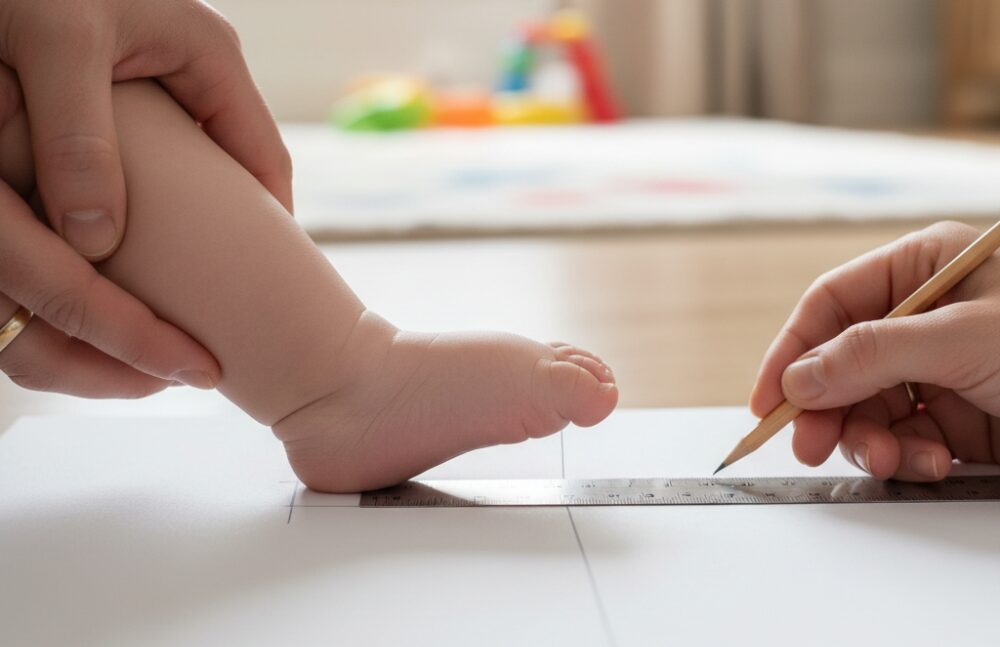
Getting the right fit for your baby’s booties starts with proper measurements. Here’s a quick, step-by-step guide to do it right:
1. Getting Ready to Measure
Measuring a baby’s feet seems simple but takes a gentle touch. Grab a ruler or measuring tape that’s easy to read. Measure when your baby is calm — after a nap or a meal works best.
2. How to Measure Accurately
Measure both feet since one is often slightly bigger. Place each foot flat on a sheet of paper and press gently (don’t squish). Mark the heel and the tip of the longest toe. Measure the distance between the two marks to get the length.
3. Handling Wiggly Feet
Wiggly babies make measuring tricky! Keep your baby entertained with a toy or a soothing song. Ask someone to help hold the foot steady while you measure.
4. Taking Your Time
Focus on accuracy instead of speed. Careful measuring means shoes that fit comfortably. A few extra minutes now leads to happy little feet later.
With a calm moment and a few simple steps, you’ll have the perfect measurements for booties that fit just right.
Here is a video that I found on YouTube that will show you exactly how to measure your child’s feet.
Translating Measurements to Bootie Sizes
Finding the right bootie size for your baby can feel tricky, but a few simple steps make it much easier.
- Turning foot measurements into the right bootie size: Each brand and country has its own sizing system. The key is to check the brand’s size chart before buying.
- Size charts are very helpful: They translate your baby’s foot measurements into the brand’s numbers. Compare carefully, usually in inches or centimeters, and double-check since brands can differ slightly.
- International sizing adds another layer: US, UK, and European sizes don’t match. Always use a reliable conversion chart when shopping from overseas.
- Baby feet grow fast, so a little extra room is smart: Avoid buying booties that are too big — they can make walking tricky and uncomfortable.
By checking size charts and allowing a bit of growth room, you can find booties that fit comfortably and keep your baby’s little feet happy.
Recommended: Best Baby Snow Boots For Boys: A Quick Parent’s Guide
Buying Tips: Ensuring Comfort and Room for Growth
Choosing the right booties isn’t just about size — it’s about comfort, flexibility, and a little room to grow. Here’s how to find the perfect pair for your baby’s tiny feet.
Prioritize Comfort and Flexibility
Soft, flexible materials are the best choice for growing feet. They let tiny toes move naturally and stay comfortable without feeling restricted.
Go for Adjustable Features
Ties, Velcro, or straps help you fine-tune the fit as your baby grows. A bit of stretch also keeps the booties snug while leaving space for wiggly toes.
Avoid Sizing Up Too Much
It’s tempting to buy a bigger size, but too much room can lead to tripping. Go for a snug fit that leaves just enough space for gentle growth.
Watch for Signs of Discomfort
If your baby keeps tugging at their booties or tries to kick them off, they may not fit right. These little clues can tell you it’s time for a different size or style.
Check the Inside Details
Look for smooth stitching and minimal seams that won’t rub against your baby’s skin. Soft, padded soles give a cozy feel while still allowing natural movement.
The best baby booties are comfy, flexible, and just the right fit. When your baby’s feet feel good, every little step is a happy one. 🙂
Recommended: How To Choose Baby Girl Snow Boots For Winter Adventures
How To Choose Winter Booties For Prewalkers
-
Look for soft, flexible soles. Winter booties for prewalkers should bend easily so babies can crawl, stand, and cruise naturally without stiff resistance.
-
Choose warmth without bulk. Light insulation or soft fleece lining keeps little feet warm while avoiding heavy, restrictive materials that can limit movement.
-
Check for a secure but gentle fit. Booties should stay on with elastic or adjustable closures while leaving room for toe wiggles and healthy foot development.
-
Consider weather protection. For outdoor use, water-resistant uppers help keep feet dry during quick stroller walks or snowy errands.
-
Prioritize easy on and off. Wide openings and simple closures make dressing faster — especially helpful when dealing with cold weather layers.