
The best lightweight footed sleepers for babies in a sleep sack are made of thin, stretchy cotton or a cotton blend, with a flat zipper or smooth snaps, flat seams, and a close but not tight fit. Skip hoods, ruffles, appliqués and padded feet. The sack should zip over the sleeper without pulling at the neck or bunching at the feet.
What makes a footed sleeper work under a sleep sack?
A footed sleeper works under a sleep sack when it adds warmth without adding bulk. The sack already covers the body, so the sleeper only needs to be a thin, smooth layer with feet attached. Most sleeper reviews judge the garment on its own, but under a sack the problems are different.
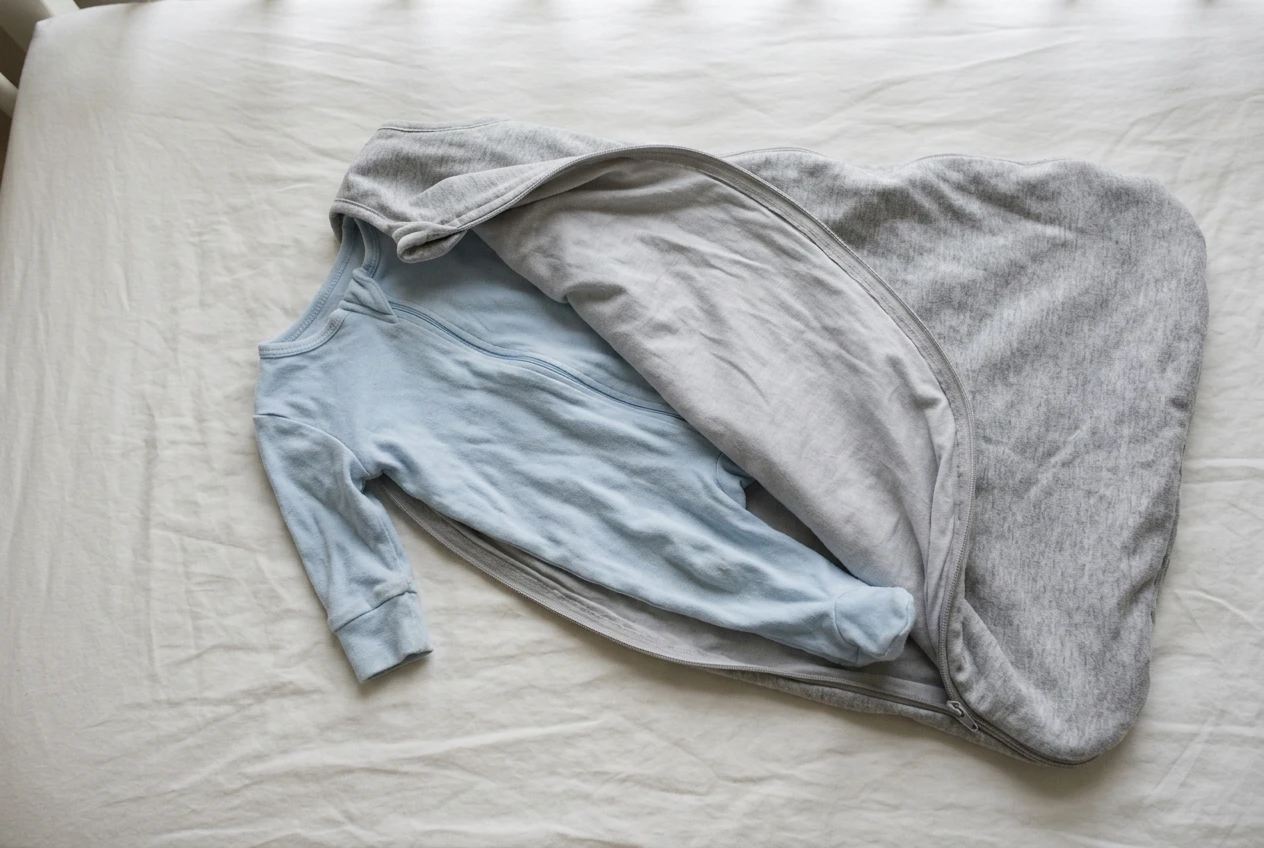
Look for these features:
- Thin fabric. Heavy fleece or quilted sleepers make the sack tight across the chest and hips.
- Flat zipper and seams. A baby lies on their back in a sack, so ridges and thick seams press into the spine and sides.
- A plain neckline. Hoods, wide collars and stiff trim bunch up where the sack’s neck and armholes close.
- Soft, unpadded feet. Thick foot soles crowd the bottom of the sack and can make the sack harder to close.
- Easy night changes. You will often be opening both layers in the dark, so the sleeper’s closure matters as much as the fabric.
A sleeper that fits all of these will also be easy to wear on its own in a warmer room, which makes it a more useful purchase.
Which fabrics stay lightweight without feeling thin?
Thin cotton jersey, interlock cotton and soft cotton or viscose blends keep a sleeper light while still feeling soft and stable on the skin. Each behaves a little differently under a sack, so it helps to know what to expect.
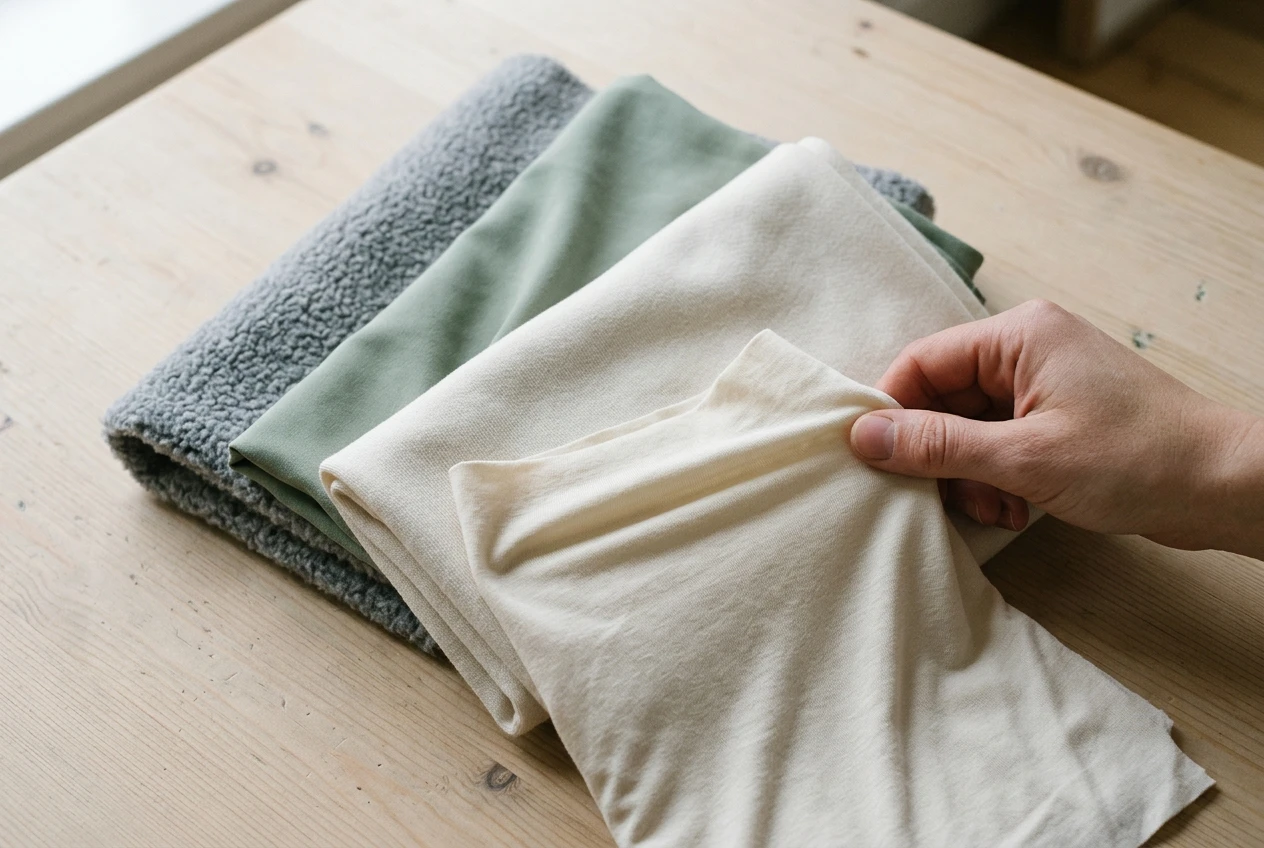
- Cotton jersey. This is the stretchy knit used in most t-shirts. It is breathable, packs flat and is usually the easiest to layer. It can feel clingy when it is very thin.
- Interlock cotton. A smoother, slightly thicker double knit. It holds its shape through repeated washing and feels more substantial without being bulky.
- Bamboo viscose or other viscose blends. These fabrics drape softly and feel smooth against the skin. They tend to be stretchy, which suits a snug layer, but they can pill or lose shape if washed hot, so follow the care label.
- Fleece and velour. These are warm and soft, but they are thick for a layer under a sack. They suit a cold room better than a typical bedroom, and then only if the sack is thin.
Weight alone does not tell you how a fabric will behave in the sack. A smooth knit slides against the sack lining and stays flat, while a fuzzy or textured surface can drag and bunch as the baby moves. Check how the fabric stretches in your hands: if it springs back, it will stay flat under the sack.
Fabric content is only one part of the picture. For the layer beneath the sleeper, the guide on a snug cotton bodysuit to wear under a baby sleep sack covers the same logic of thin, close and smooth.
How should a footed sleeper fit under a sleep sack?
A footed sleeper should fit close to the body, with a little room at the toes and no loose fabric anywhere else. Fit matters more under a sack than on its own, because extra fabric has nowhere to go.
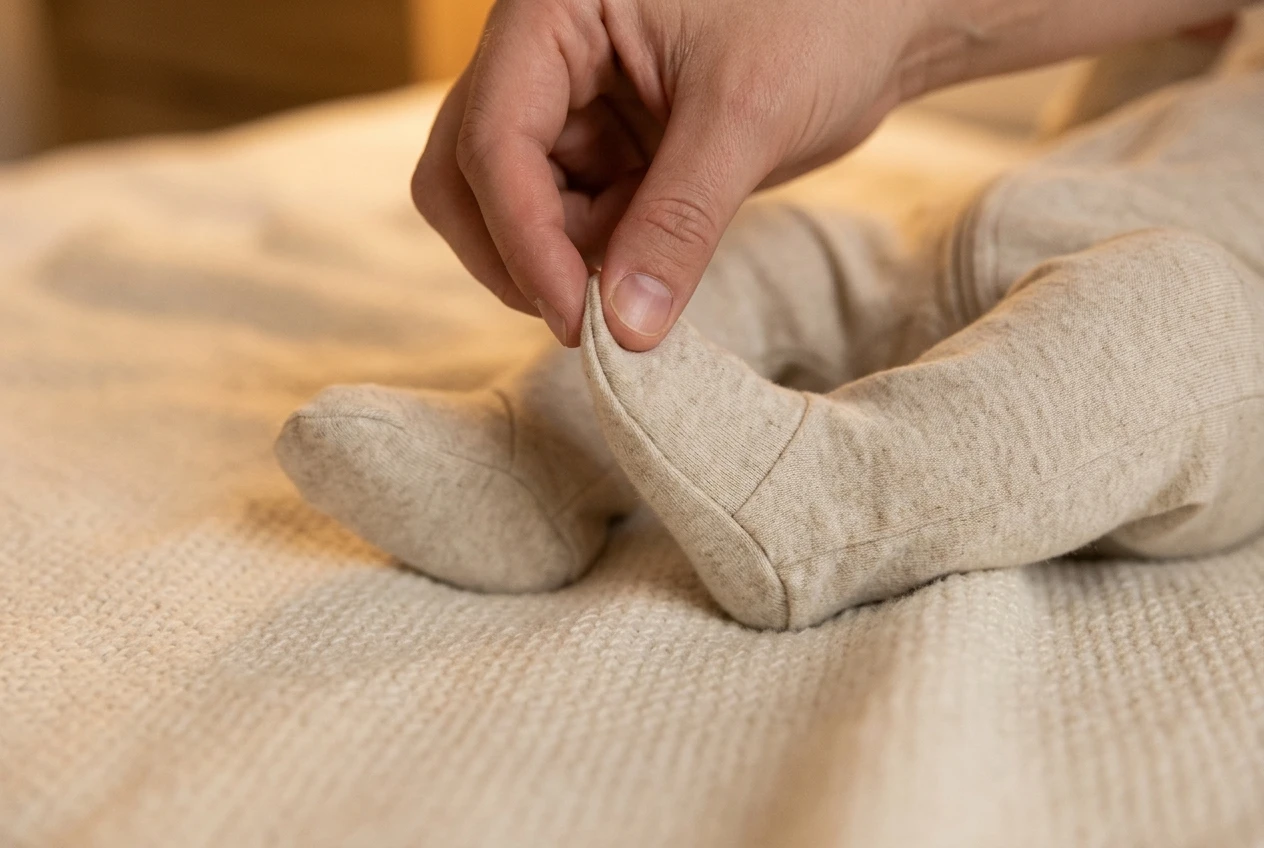
Check these points when the sleeper is on:
- The feet. The baby’s toes should have a little space, and the foot should not fold or wrinkle at the heel. Folded fabric ends up under the baby’s feet inside the sack.
- The legs. The leg length should reach the ankle without pulling the foot back. If the crotch hangs low, the sleeper is too big.
- The torso. You should be able to slide a finger under the fabric at the chest. A fully loose torso bunches against the sack lining.
- The neck. The collar should lie flat and sit clear of the chin. A sack’s neck opening sits right over it.
- The sleeves. Long sleeves should end at the wrist with no excess fabric. Extra length bunches up inside the sack’s armholes.
Size by the maker’s chart and the baby’s current measurements rather than by age alone, because brands cut differently.
When a baby is between sizes, the smaller size is usually the better fit under a sack as long as the legs and feet are not strained. If the toes curl or the zipper strains, go up a size.
Which zipper and snap styles make 3 a.m. changes easier?
Two-way zippers that open from the bottom make the easiest night changes, because you can change a diaper without undressing the baby’s upper body. A change under a sack means opening two garments, so the sleeper’s closure should be quick and quiet.
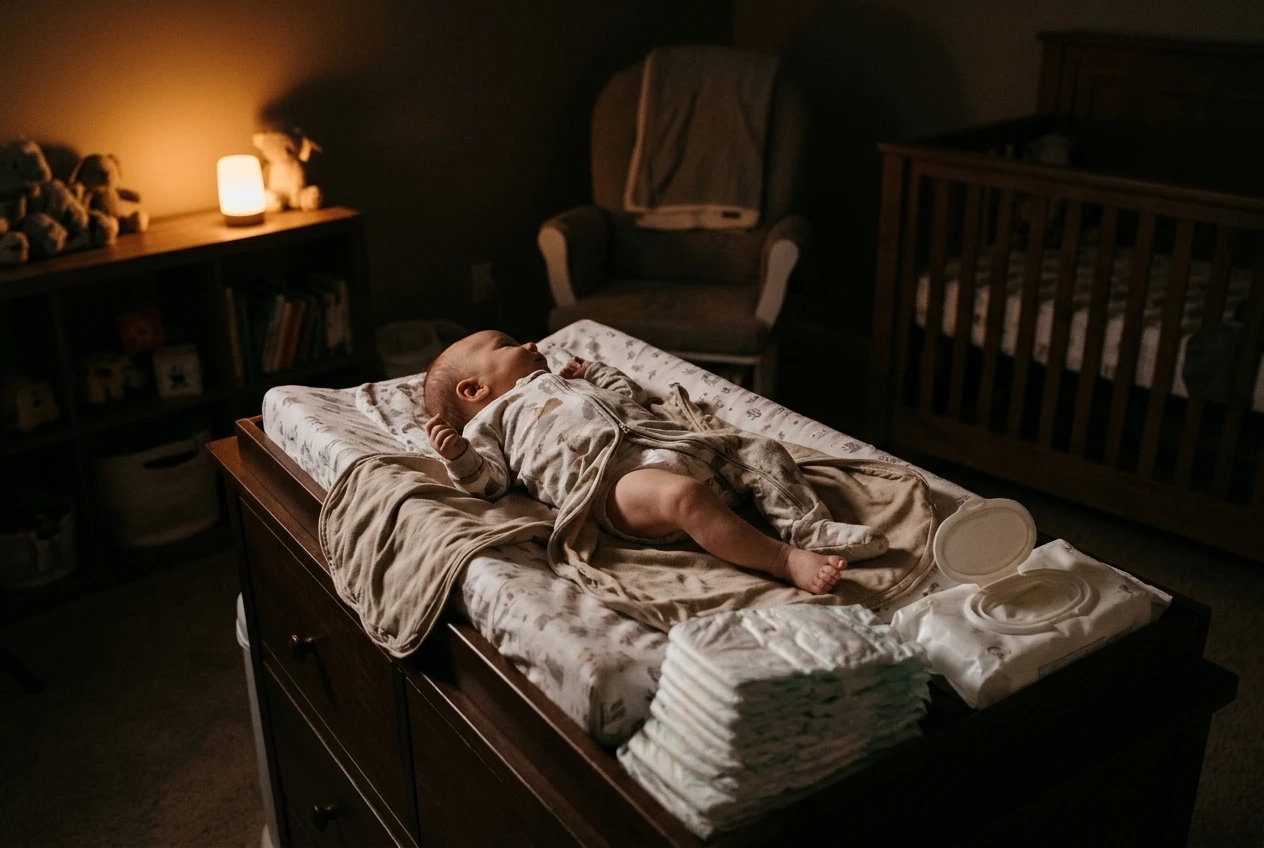
Here is how the main closure styles compare:
- Two-way zipper. Opens from the neck or from the ankle. You can undo only the lower half for a diaper change, which keeps the chest covered. This is the most practical option for night changes.
- Single zipper with a chin guard. Fast to operate with one hand, and the fabric flap keeps the pull away from the baby’s chin. It needs the full zip opened for a change.
- Snap front. Snaps are slower in the dark and easy to misalign by one position, but they lie flat and are rarely a problem under a sack.
- Envelope or overlap neck with snaps. Useful for pulling a sleeper off over the shoulders after a leak, but it adds a layer of fabric at the neck.
A typical night change with a zip sleeper under a sack goes like this:
- Unzip the sack fully and fold it back from the legs.
- Unzip the sleeper from the bottom, if it has a two-way zip, or from the top if not.
- Change the diaper.
- Zip the sleeper up and check the zipper garage is covering the pull.
- Close the sack and check the neck and armholes lie flat.
Practice the closure once in daylight. A sleeper with a stiff zipper or tight snaps will be much harder at 3 a.m.
Which lightweight footed sleepers are worth buying?
The sleepers worth buying are the ones that match the features above, and four types cover most babies. I am describing types rather than individual products here, because the right choice depends on your baby’s size and your room, and individual product details such as fabric blend, price and sizing change between seasons.
Thin cotton jersey zip sleeper. This is the best all-round choice for a sack. It is light, stretchy and breathable, and most are cut close. Look for a two-way zip and fold-over cuffs if the baby is very young.
Interlock cotton sleeper. A slightly firmer fabric that keeps its shape wash after wash. It suits parents who want one sleeper to last through a few size changes and does not feel as clingy as the thinnest jerseys.
Viscose blend sleeper. The soft, smooth drape suits babies who dislike scratchy fabric, and it slides well inside a sack. Check the care label before buying, as some need gentler washing.
Snap-front cotton sleeper. A good choice if you prefer snaps or want the flattest possible chest and spine. Choose one where the snaps run all the way to the ankle so a diaper change does not require removing the whole sleeper.
Whichever type you choose, read the product page for the fabric content, the zipper style and whether the feet are plain fabric or padded. If a listing does not tell you, it is a poor candidate for under a sack.
How do the picks compare side by side?
The four types differ mainly in how warm they are, how they feel against the sack and how easy they are to change. Use the table to narrow down your choice.
|
Sleeper type |
Warmth |
Fit under a sack |
Night changes |
Best for |
|---|---|---|---|---|
|
Thin cotton jersey, zip |
Light |
Very flat and smooth |
Fast with a two-way zip |
Most babies in a typical bedroom |
|
Interlock cotton |
Light to medium |
Flat, holds shape |
Depends on the closure |
Parents wanting a durable everyday layer |
|
Viscose blend |
Light |
Smooth, slides in the sack |
Depends on the closure |
Babies who prefer very soft fabric |
|
Snap-front cotton |
Light |
Flattest chest and spine |
Slower in the dark |
Parents who prefer snaps |
Warmth ratings here are relative to each other, not to a specific temperature. Two sleepers in the same fabric can feel quite different depending on how tightly the fabric is knitted.
How do you match a sleeper to your room and your sack?
Choose the sleeper by how warm your baby’s room is, and then check that it works with the sack you already own. The sleeper and the sack together set the warmth, so a thicker sack calls for a thinner sleeper and the other way around.
Use these checks:
- Thick or quilted sack. Pick the thinnest cotton jersey or a footless layer. Footed sleepers add warmth at the feet that the sack already provides.
- Thin or summer-weight sack. An interlock cotton or viscose blend sleeper gives a little more warmth without crowding the sack.
- Sack with a zip that opens from the bottom. A snap-front or two-way zip sleeper makes it easy to change a diaper without removing either layer fully.
- Sack with tight armholes. Choose a sleeper with narrow, plain sleeves with no cuffs that fold over.
Always put the sleeper on, close the sack and look at the baby’s neck, chest and feet before you leave the room. Watch for fabric bunched at the neck or pulled tight across the feet. If the baby feels hot or sweaty at the neck or chest, go to a lighter layer.
Not sure how many layers your baby needs tonight? Read What to Wear Under a Baby Sleep Sack by Room Temperature and pair it with the sleeper that suits your room.
