
What to wear under a baby sleep sack depends on the room temperature and the sack’s TOG rating: one thin cotton layer in a warm room, a long-sleeve bodysuit or lightweight footed pajamas in a cooler one. Check the maker’s chart first, and add no blankets, hats or extra bulk on top.
What should a baby wear under a sleep sack?
A baby should wear one base layer under a sleep sack, and the thickness of that layer is the only thing that changes through the seasons. The sack is the blanket, so the pajamas underneath only need to bring the total warmth to the right level for the room.
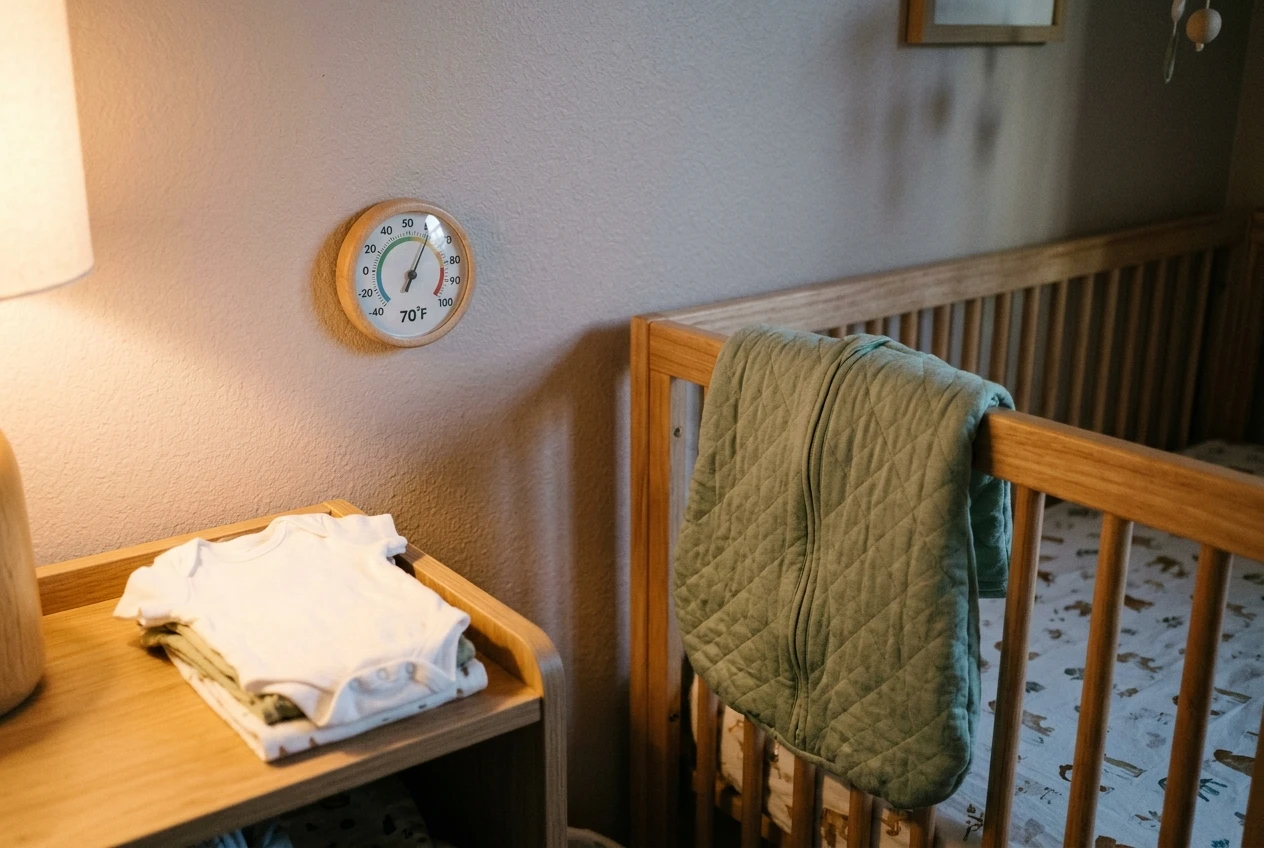
Think of bedtime as two decisions made in order. First, read the room temperature on a thermometer instead of guessing by how the house feels to you. Second, match the sack’s TOG rating to that temperature, then pick the base layer that the sack’s chart recommends.
TOG is a rating for warmth. A lower number means a lighter sack, and a higher number means a warmer one. Many makers print a chart on the packaging or their website that pairs each rating with a temperature range and a suggested outfit. That chart is written for that particular sack, so it outranks any general table, including the one below.
How do you dress a baby under a sleep sack by room temperature?
Dress the baby in a lighter base layer as the room gets warmer and a slightly heavier one as it gets cooler, always staying with a single layer under the sack. The table below shows bands that many sack charts resemble. Ranges vary between brands, so treat it as a starting point and confirm against your own sack’s chart.
Room temperature | Typical sack weight | Base layer under the sack | When to change |
|---|---|---|---|
Above 75°F (24°C) | Lightest (around 0.5 TOG) | Diaper only, or a short-sleeve cotton bodysuit | Move to a bodysuit if the baby wakes with cool skin on the chest |
69 to 75°F (20 to 24°C) | Light (around 1.0 TOG) | Short-sleeve or long-sleeve cotton bodysuit | Go short-sleeve at the warm end, long-sleeve at the cool end |
61 to 68°F (16 to 20°C) | Warm (around 2.5 TOG) | Long-sleeve bodysuit, or a lightweight footed sleeper | Swap the sleeper for a bodysuit if the neck feels damp |
Below 61°F (16°C) | Warm sack, per the maker’s chart | Long-sleeve bodysuit plus a thin footed sleeper, only if the chart allows | Bring the room into range instead of adding more layers |
A few notes on reading the table.
- Measure at the crib. Place the thermometer in the sleeping space, away from windows, vents and radiators, because the temperature near the crib can differ from the hallway reading.
- Stay inside the sack’s range. If the room falls outside the chart, the fix is a different sack or a change to the room, not a stack of extra clothing.
- Use the table for the base layer only. The sack weight column is a general match. Your sack’s printed chart decides which rating you need.
- Check the room again at bedtime and before you go to bed yourself. Rooms cool overnight in winter and can stay warm on summer evenings.
Bedtime in a room that sits between two bands is common. In that case, choose the lighter outfit and check the baby’s chest later, since it is easy to add a layer at a night feed and harder to cool a baby who is already overheated.
How does the sleep sack’s TOG rating change what goes underneath?
A higher TOG rating means the sack already provides more warmth, so the layer underneath should be thinner. A lower rating means the sack provides little insulation, so the base layer carries more of the load.
Here is how that plays out in practice.
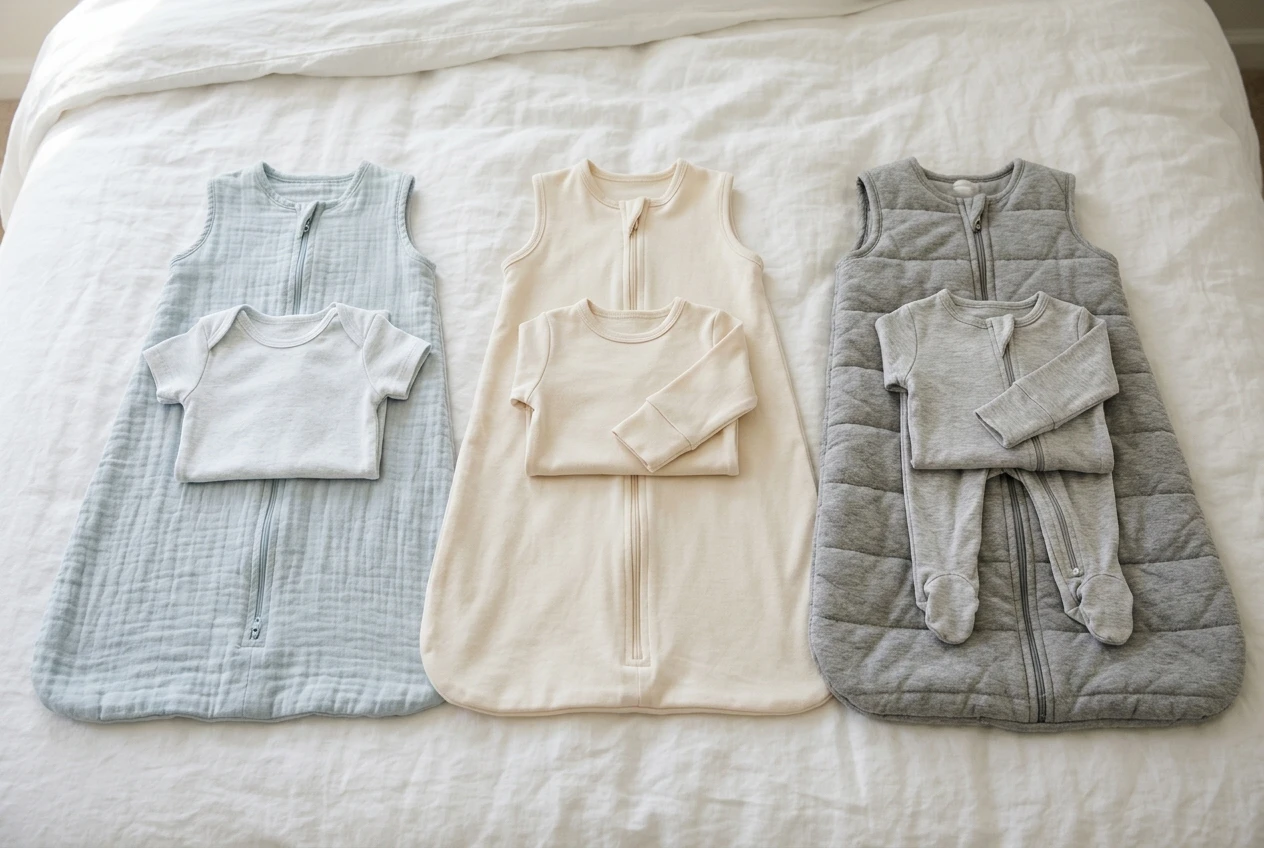
- Low TOG sacks (light, summer weight): The sack is thin cotton or muslin, so a diaper or a short-sleeve bodysuit is usually enough underneath. Putting footed fleece pajamas under a light sack in a cool room does not turn it into a warm setup, because fleece and a thin sack together are hard to judge.
- Mid TOG sacks (all-round weight): These suit the middle of the temperature range. A cotton bodysuit is the usual partner, long-sleeve or short-sleeve depending on where the room sits in the band.
- High TOG sacks (winter weight): The sack is padded and does most of the work. A long-sleeve bodysuit or thin footed cotton pajamas is the most that is normally needed. A thick base layer under a heavy sack is the most common route to overheating.
Two sacks with the same rating can feel different because of fabric and fill, so use the maker’s chart as written. If the sack says to wear a bodysuit at 70°F, a bodysuit is the answer even if your baby seems like a cold sleeper. Adjust by one small step after checking the baby, not by changing several things at once.
If you are weighing up a sack with sleeves, our post on how baby fleece sleep sacks with sleeves improve sleep quality covers how that style works, and the same rule applies: check the maker’s chart before choosing the layer underneath.
How can you tell if your baby is too hot or too cold?
Feel the baby’s chest or the back of the neck, because hands and feet often feel cool even when the baby is comfortable. The chest should feel warm and dry, neither sweaty nor cool.
Signs of being too warm:
- Damp hair or a sweaty neck and chest
- Flushed cheeks
- Fast breathing
- Restlessness, or skin that feels hot to the touch
Signs of being too cold:
- A chest or back that feels cool to the touch
- Fussing that settles when the baby is warmed up
- Pale or mottled-looking skin
If the baby is too warm, change to a lighter base layer or a lower TOG sack. If the baby is too cool, move up one step: a long-sleeve bodysuit in place of a short-sleeve one, or the next weight of sack. Make one change at a time so you know which one helped.
If you are concerned about a baby’s temperature, feeding or breathing, contact your pediatrician. A table in an article cannot replace that advice.
What should never go under or over a sleep sack?
Nothing should go over the sack, and nothing bulky or loose should go under it. Safe-sleep guidance, including the recommendations from pediatric bodies, advises a clear sleep space and a baby dressed for the room without added covers.
Skip these:
- Blankets over the sack. The sack replaces loose bedding. A blanket on top adds heat that the TOG chart did not account for and brings loose fabric into the crib.
- Hats indoors. Babies lose heat through the head, and a hat in a heated room can cause overheating.
- Hooded sacks and hooded pajamas. A hood can shift over the face and adds warmth around the head.
- Puffy layers under the sack. Quilted jackets, snowsuits and thick fleece change how the sack fits and raise the baby’s temperature.
- A sack that is too big. The neck opening and armholes should fit snugly so the baby cannot slide down inside. Follow the maker’s size and weight guidance.
- A swaddle under a sleep sack, or a sack used once a baby can roll. Follow your pediatrician’s advice and the sack maker’s instructions about when to stop swaddling and which type of sack suits the baby’s stage.
- Weighted sleepwear. Pediatric guidance advises against weighted sacks, blankets and swaddles for babies.
- Added heat sources. Hot water bottles, heating pads and electric blankets do not belong in a crib.
Check your sack’s label too. Reputable makers print their own safe-sleep notes, and those are specific to the product.
Which pajama pieces are worth buying for sleep sack layering?
The most useful pieces are a handful of thin, snug-fitting cotton bodysuits and a couple of lightweight footed or footless sleepers, since those cover every band in the table. Specific product picks will follow in a separate roundup. This section covers what to look for so you can judge any piece you find.
Fabric. Cotton, and soft cotton blends, breathe and absorb moisture, which helps when a baby sweats. Thin merino is another option some parents choose for cooler rooms, because it manages moisture well. Heavy fleece is better kept for daytime wear than as a layer inside a sack.
Fit. Snug but not tight is the goal. Loose, baggy pajamas bunch up inside the sack, while overly tight ones restrict movement. Pajamas with a close fit also keep the warmth of a base layer predictable.
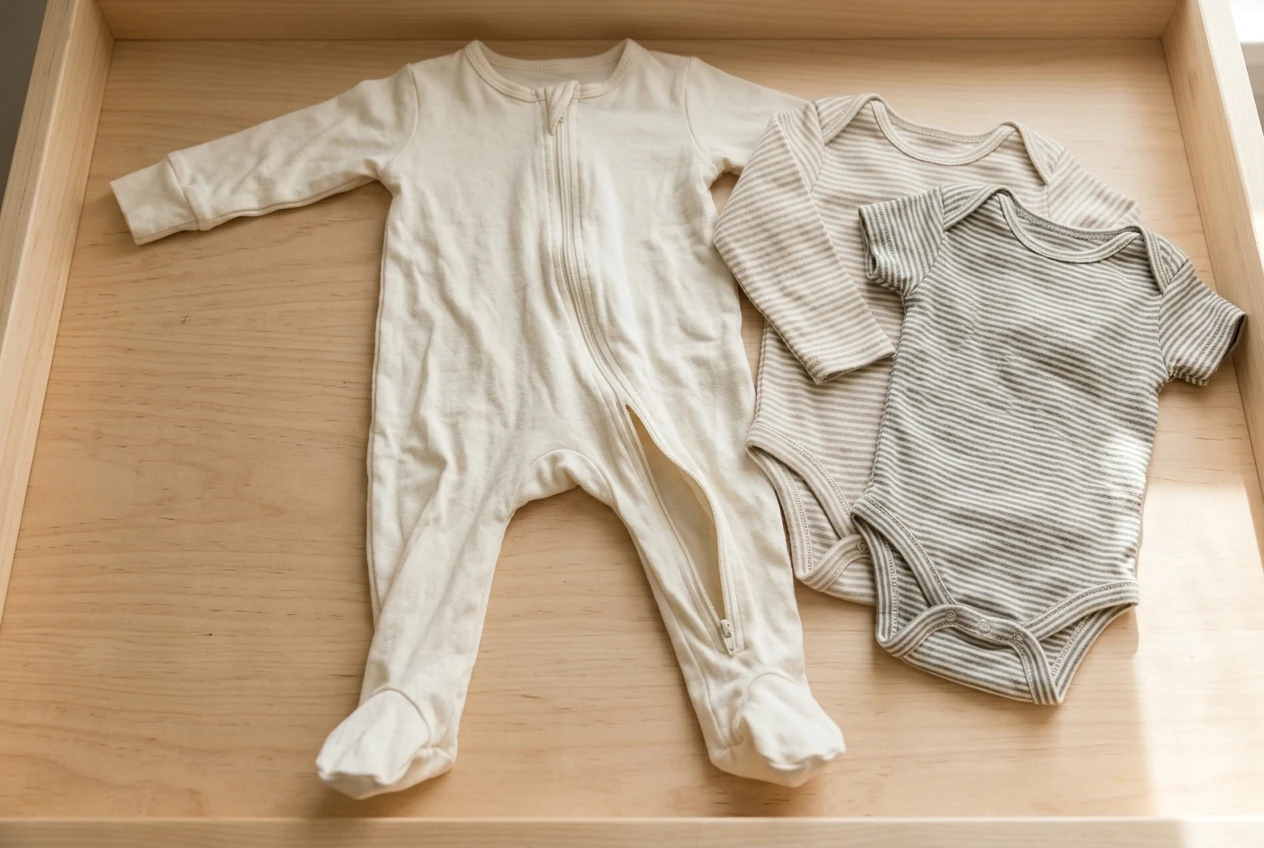
Footed or footless? Footed sleepers add warmth to the feet, which suits cooler bands. In warmer rooms, footless bodysuits or short-sleeve styles work better. Footless sleepers are also useful because the sack covers the feet in any case, and they let you add or remove warmth by choosing a sleeve length.
Zips and snaps. A two-way zip that opens from the bottom makes night diaper changes quicker, since the baby does not need to be undressed fully. Snaps along the legs work well on bodysuits. Check that the zip has a fabric guard under the chin so it does not rub the skin.
Sleeve length. A mix of short-sleeve and long-sleeve bodysuits lets you move between bands without buying a new wardrobe.
Washability. Pajamas get washed often. Choose pieces that tolerate frequent machine washing and stay soft afterward.
A practical starting set is about five or six bodysuits in a mix of sleeve lengths and two or three thin footed sleepers, so there is a spare when one is in the wash.
Can you use your daytime winter layers at night?
Some daytime pieces work at night, but most winter layers are made for staying warm while moving around, and they can be too warm or too bulky for sleep. A thin base layer is often fine. Thick fleece, padded sets and anything with a hood or loose trim should stay out of the crib.
The best crossover is a fitted, thin base layer of the kind you would wear for the first layer of a winter outfit. If you are choosing thermal pieces for daytime, our guide to the best thermal underwear for kids explains how fabric and fit affect warmth, and the same principles help when checking whether a piece suits a sleep sack. Treat any thermal piece as a base layer: confirm it is thin, snug and free of bulky seams, then compare it with the maker’s chart for your sack.
For a baby in a cold room, resist the instinct to double up. One suitable base layer and the right sack will keep a baby comfortable without the guesswork of layered bulk.
Pair this with our guide to layering kids for winter without the bulk, so daytime and nighttime outfits work together.
