Choosing between gloves and mittens gets easier once you stop asking which is better and ask what your child needs to do with their hands today.
A toddler riding in a stroller and a seven-year-old who has to write, open a lunch box and throw a snowball need different things from the same pair of hands.
This guide covers kids gloves vs mittens by age, by activity and by how cold the day is. It also lists the fit checks that matter for either type.
Why Mittens are Usually Warmer and Gloves Usually Easier To Use
In a mitten, the four fingers share one space and warm each other. A glove wraps each finger separately, which means more surface area exposed to cold air and more seams where heat escapes. That is why mittens are the usual choice when the priority is keeping hands warm.
Gloves win on dexterity. Separate fingers let a child pick up a pencil, work a zipper pull, tap a phone screen or hold a scooter handlebar with a proper grip. A child in mittens can do many of these things badly, and some not at all.
Warmth also depends on materials, insulation, and how well the cuff seals out snow, so a glove is not automatically colder than a mitten.
A thick, well-made glove can beat a thin, wet mitten. As a starting rule, though, mittens favor warmth and gloves favor control. Most of the decision is working out which of the two your child needs more at that moment.
Babies and Toddlers: When Mittens are the Sensible Default
For babies and toddlers, mittens are the easier choice almost every time. Fitting four tiny fingers into four tiny glove openings on a squirming child takes patience that most parents do not have at the door in the morning.
A mitten goes on in one motion: thumb in its slot, fingers in the big space.
Babies also have little need for finger control outdoors. They are carried, strapped into a stroller or sitting in a car seat, so what their hands need is to stay covered and warm.
Toddlers do want to grab things, but their grip is clumsy anyway, and a mitten does not hold them back much. For product picks, see our best kids waterproof mittens.
A few things help at this age:
- A wide, stretchy opening so the mitten goes on without a fight.
- A cuff that reaches past the wrist and tucks under or over the coat sleeve.
- A smooth inside. Check for loose threads or seams that could catch a tiny finger or rub the skin.
- A thumb that is not too long. Excess fabric at the fingertips ends up bunched and cold.
‘Want specific pairs to compare? See our best kids waterproof mittens.’
Some baby coats and sleep suits have fold-over cuffs that cover the hands. If yours does, you may only need mittens for the coldest or windiest days.
When checking whether a baby is warm enough, feel the chest or the back of the neck. Small hands often feel cool even when the child is fine.
The American Academy of Pediatrics has more on cold weather safety for kids.
Preschool and School Age: When Gloves Start To Earn Their Place
Somewhere in the preschool years, children start wanting to do things for themselves, and mittens begin to get in the way.
A child who is learning to zip their own coat, pick up a crayon or climb playground equipment will feel the difference quickly, and will often pull the mittens off to do it.
Bare hands in cold weather are the real problem, so a pair that is slightly less warm but stays on can be the better choice.
There is no exact age when this switch happens, and children vary a great deal. A useful sign is how your child behaves. If they are asking you to take mittens off so they can do something, or taking them off themselves, it is time to try gloves for at least some outings.
Many parents land on a mixed approach for school-age children. Gloves cover the school run, recess and anything that involves holding or fastening things.
Mittens come out for long stretches outdoors in cold, wind or snow.
Older children also tend to have opinions about how their gear looks, and a pair they are happy to wear will be worn more consistently than a warmer one that stays in the bag.
Match the Choice to the Day: Playground, Snow Play, School Run or Sledding
The activity often matters more than the age. Here is how the choice usually plays out:
- Playground on a chilly day. Gloves, because children need to grip bars, ropes and handles. Choose a pair with some grip on the palm.
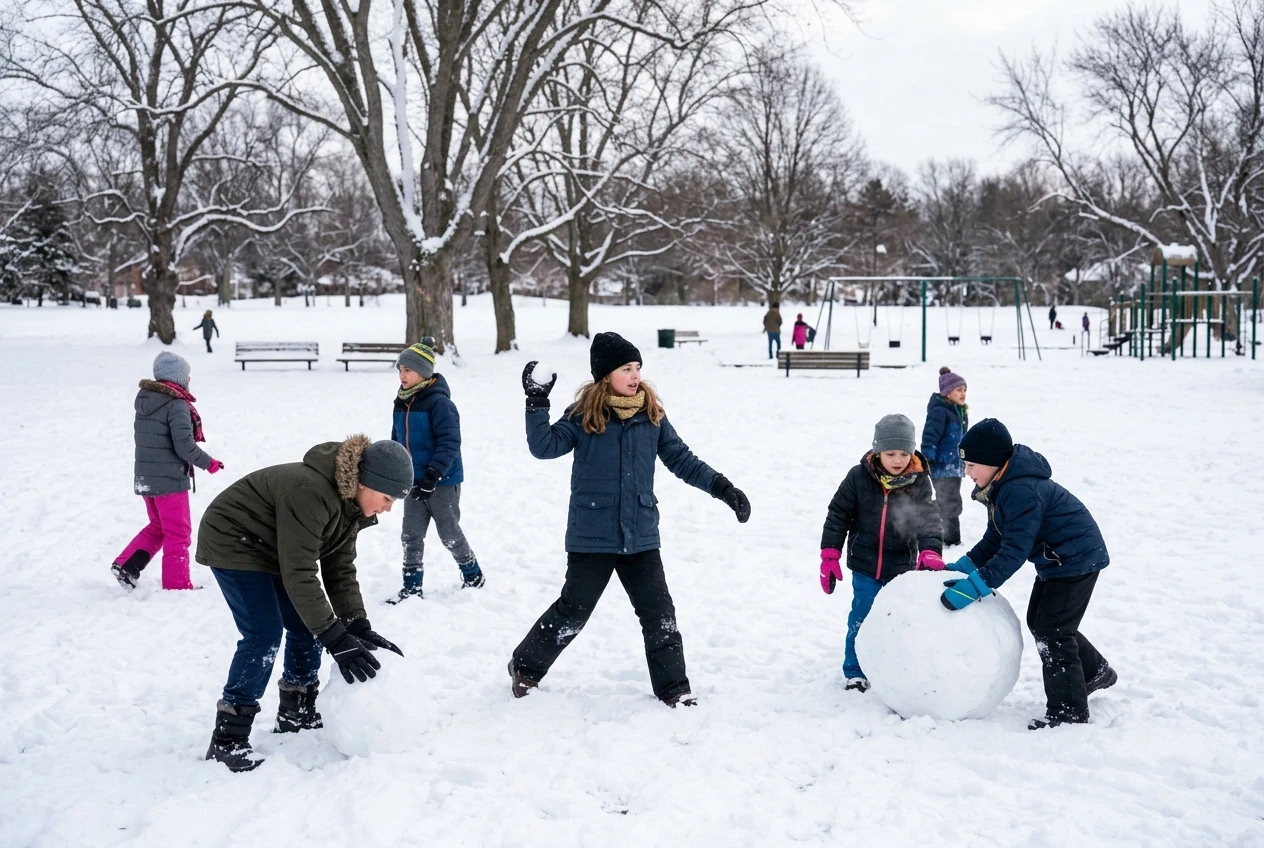
- Snow play. Mittens, ideally waterproof with a long cuff. Snowballs, forts and sledding all put hands in contact with wet snow for a long time. A glove with seams at every finger gets soaked faster. A child who insists on gloves for snowball throwing can wear waterproof ones, with a spare dry pair on hand.
- The school run. Gloves if your child carries a bag, opens gates or handles a scooter. Mittens if it is a short walk in very cold weather and the child mostly holds your hand.
- Sledding. Mittens with a snug cuff. Hands grip a rope or handle and take snow spray, so the main need is staying warm and dry rather than fine finger movement.
- Waiting at a bus stop or standing still. Mittens, since cold bites hardest when the body is not moving.
If your child will be on a scooter or bike in cold weather, gloves give a safer grip on the handlebars and let them reach the brake lever. Mittens can make that harder.
Fit Checks that Matter for Both: Cuffs, Length, Grip and Waterproofing
Whatever you choose, these checks decide whether the pair will work in practice.
Cuffs. A cuff that fits over the coat sleeve keeps snow out, while one that tucks inside can let snow slip in when arms are raised. Elastic at the wrist helps keep a pair on, but if it is too tight it can leave marks on a child’s wrist. If you are also choosing a coat, the sleeve length matters here, and our guide to winter jackets for girls covers what to look for in a coat that works with hand gear.
Length. Fingertips should reach the end of the glove or mitten without being squashed. Check that there is a little room, not a lot. Too much empty fabric at the tips makes gloves clumsy and mittens cold. Buying a size up so the pair lasts longer usually backfires, because a child cannot grip in oversized gloves and the pair slides off.
Grip. A textured palm helps with handles, ropes and scooter bars. Smooth, slippery fabric makes a child drop things, which makes them take the pair off.
Waterproofing. Wet hands get cold quickly, so for snow, a waterproof outer matters more than extra thickness. Be wary of any waterproofing claim you cannot check yourself. Look at the label and the description for what it actually says, and test the pair at home if you can: a few drops of water on the outer fabric will show whether it beads or soaks in.
Easy on and off. Check how wide the opening is. A child who can put them on alone will be more likely to put them back on after taking them off.
Mitten gloves, liner gloves and layering for kids who want both
If your child wants finger freedom and you want warmth, there are a few ways to combine the two.
- Liner gloves under mittens. A thin glove worn inside a mitten lets a child slip the mitten off for a quick task, such as unlocking a door or zipping a coat, without exposing bare hands. It also adds a layer of warmth on very cold days.
- Convertible mittens. Some mittens have a flap that folds back to reveal fingers or fingertips. They can suit older children, though the folded flap and the extra seams may not be as warm as a plain mitten.
- Thin gloves for mild days. On cool but not freezing days, a light pair of gloves may be all that is needed, and they can be kept in a school bag as a backup.
Layering also helps with the practical problem of damp hands. A child who comes in with wet outer mittens can swap them for a dry pair and keep the liner on. Having two pairs in rotation, one drying while the other is worn, is simple and effective.
How to stop lost mitts: clips, cuff style and easy-on design
Lost mittens are the most common frustration with kids’ hand gear, and a few design choices cut down on it.
- Mitten clips. These attach each mitten to the coat sleeve with a clip or cord. They work well for toddlers and young children who pull mittens off and drop them.
- Cord through the sleeves. A string that runs through the coat sleeves and connects the two mittens keeps the pair together even when both are off. Check that any cord is short and sits safely under the coat, and that your child’s coat does not already have a drawstring that could snag.
- Long cuffs. A cuff that extends over the coat sleeve is harder to shake loose.
- Name labels. A name written inside each mitten means a lost pair has a chance of being returned at school.
- Bright colors. Mittens that stand out in the snow or on the school floor are easier to spot, and easier for your child to find at pickup.
A pair your child can put on alone also tends to get lost less. Children who can dress their hands are more likely to keep track of them.
Quick decision chart: which one to buy for your child
| Your Child | Usual Best Choice | Why |
|---|---|---|
| Baby, mostly carried or in a stroller | Mittens (or coat with fold-over cuffs) | Easy to put on and keeps hands warm |
| Toddler, learning to walk and grab | Mittens with a long cuff and clips | Warm and harder to lose |
| Preschooler, wants to do things alone | Mittens for cold days, gloves for short outings | Balances warmth and independence |
| School-age, active at recess | Gloves with grip, plus mittens for snow | Dexterity for daily tasks, warmth when needed |
| Older child, cares about style | Gloves or liner and mitten combination | More likely to wear them |
| Snow play or sledding at any age | Waterproof mittens | Keeps hands dry and warm |
| Scooter or bike rider | Gloves with grip | Provides a safer hold on handlebars and brakes |
Pair the right hand protection with a hat that stays put: read our guide to winter hats for kids that actually stay on.
