
Most kids don’t take a hat off to be difficult. They take it off because something about it is wrong: it slides, it itches, it presses on the ears, or it leaves a gap that lets cold air in.
Once you know which of those is happening, finding the best winter hats for kids that stay on gets much easier, because each problem has a feature that fixes it.
This guide covers why hats come off, which features hold them in place, which styles suit each age, how to check fit quickly, and how to avoid losing the hat once you’ve found a good one.
Why Your Kid’s Hat Keeps Coming Off (It’s Usually One of Four Things)
Before you buy another hat, work out which of these is the culprit. Watch what your child does in the first minute outside: do they tug at the front, push it back, scratch under it, or shake their head?
1. The fit is wrong. A hat that is too big slides over the eyes or slips off backward. A hat that is too small pinches at the temples and gets pulled off within minutes. Both look like a child who “hates hats.”
2. The fabric itches or irritates. Scratchy wool against a forehead, a rough seam at the brow, or a pompom that tugs on the crown can all make a hat intolerable. Young children can’t always say what bothers them. They just remove it.
3. The crown is slippery. Smooth, loosely knitted or slick synthetic hats have nothing gripping the head. A hat that sits on top of the hair instead of hugging the head falls off with a gust of wind or a bend to tie a shoe.
4. Nothing secures it. Without a chin strap, a tie or a snug band, a hat depends entirely on friction. Babies in strollers, toddlers on swings and kids in the car seat all find ways to get free.
Often two of these overlap. A hat that is slightly big and also slippery will come off far faster than one with either problem alone. Fixing the fit and the fabric first usually solves most of it.
Features That Keep a Hat in Place: Chin Straps, Ear Flaps, Snug Knits and Stretch
Each feature below addresses one of the causes above.
Chin straps and ties
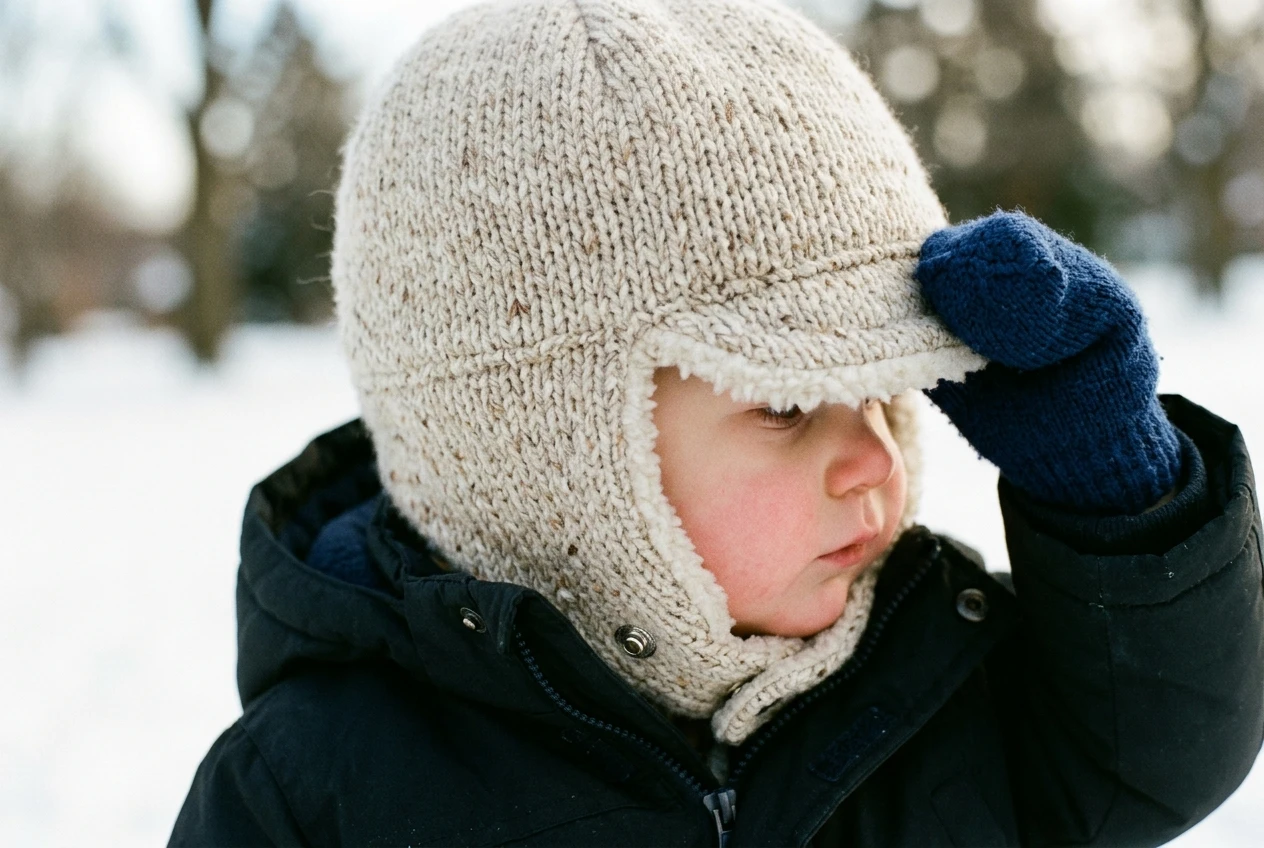
A strap is the most reliable fix for a hat that gets pulled off or blown off. Look for a strap that fastens with a snap or hook-and-loop closure instead of a knot, so it comes undone with a firm tug and is easy for you to open and close with cold hands. A strap that is adjustable matters too, since a loose strap does nothing and a tight one will bother the throat.
A strap also helps toddlers who yank hats off, because pulling the hat now means pulling against their own chin. Many children give up the habit quickly once the hat no longer comes away in one motion.
Ear flaps
Ear flaps add warmth where children feel cold first, and they also add weight and coverage that help the hat stay seated. They work best when they are lined with something soft and when they stop at the earlobe instead of pressing into the neck. Flaps that are too long fold forward and tickle the cheeks, which is another reason a child might pull the hat off.
Snug knits with stretch
A ribbed knit that stretches and recovers grips the head evenly. Look for a hat with some elastic content or a tight rib pattern, particularly around the band. A flat, loose knit has no grip and tends to ride up.
Check the stretch yourself: pull the band gently and let go. If it snaps back, it will hold. If it stays stretched out, it will sag within a few wears.
Soft linings
If itchiness is the problem, a fleece or soft jersey lining between the knit and the skin helps a lot. Choose flat seams, or seams placed away from the forehead and ears. Run the inside of the hat across the inside of your wrist. If you notice it, your child will notice it far more.
A wider band
A band that covers the forehead and the tops of the ears stays put better than a shallow cuff that sits at the hairline. A hat that comes down properly over the ears is also less likely to be tipped back by a scarf or hood.
Baby Hats: What Stays Put on a Head That Can’t Hold a Hat On
Babies have rounder heads, little neck control and no ability to adjust a hat. They also tend to lie back in strollers and car seats, which pushes the hat up and off.
For this age, the best choices are:
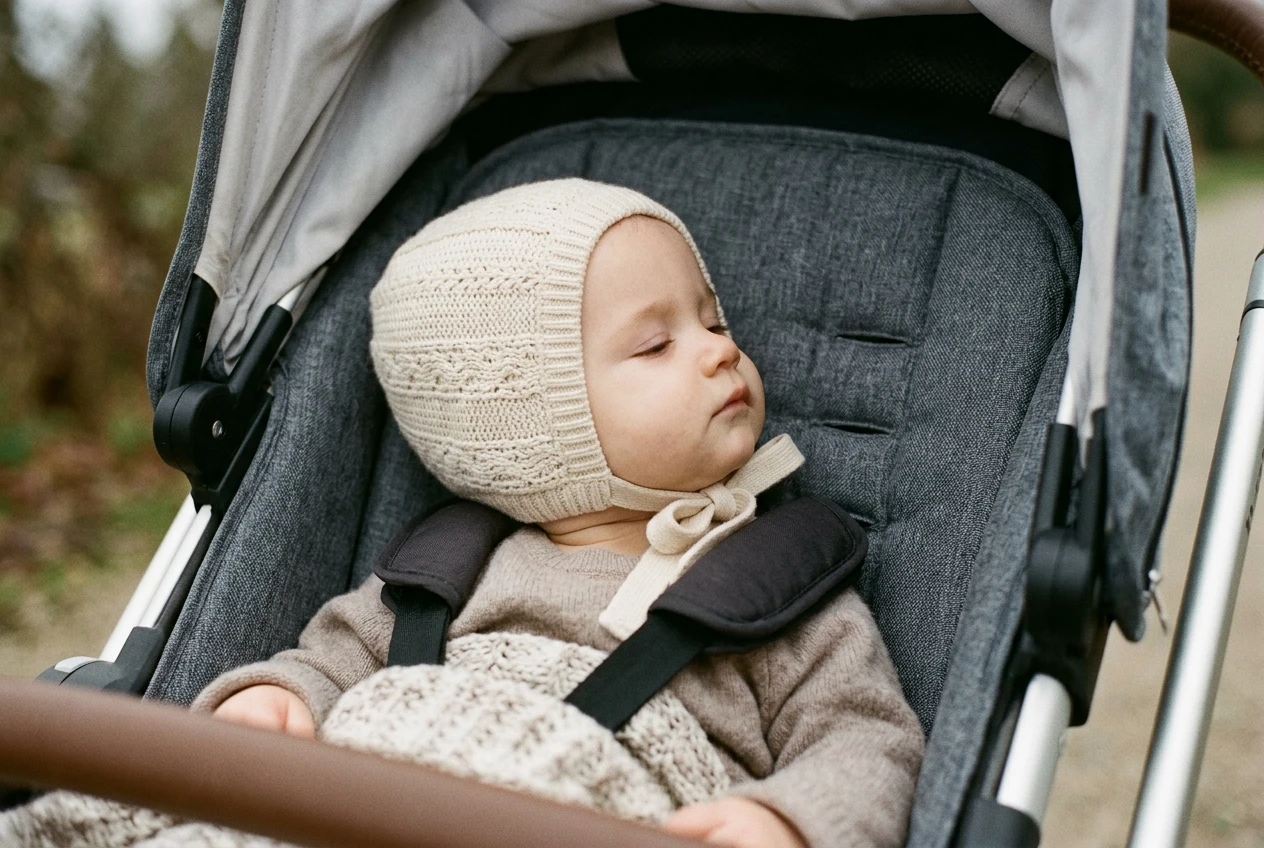
- Bonnet-style hats with a soft tie or snap under the chin. The strap keeps the hat from sliding up when your baby is leaning back against the stroller seat.
- Close-fitting knit beanies with a stretchy, ribbed band. These work well for newborns and young babies when the size is right.
- Hats with a soft fleece or cotton lining. A baby’s skin is sensitive, and a lining reduces both itching and the chance of a fussy, head-shaking baby.
Check any strap or tie carefully. It should be soft, short and easy to release, and it should never feel tight. Take the hat off before your baby sleeps, and take it off when you come indoors, since babies can overheat. If you are unsure about what is safe for your baby, your pediatrician or health visitor can advise.
Size up with care. A hat with room to grow looks sensible, but a baby hat that is too large slides over the eyes and gets pulled off. Buy for the current size and replace it as your baby grows.
Toddler Hats for Kids Who Pull Everything Off
Toddlers test every item of clothing. A hat is easy to remove and often fun to throw. For this age, make the hat hard to remove and comfortable enough that there is no reason to.
What tends to work:
- Earflap hats with a chin tie or snap strap. The strap prevents the quick pull-off, and the flaps give a longer, more secure fit.
- Balaclava-style hoods. These cover the head, ears and neck in one piece, with no strap and nothing to pull. They also stay under a coat hood, which helps on windy days.
- Soft, lined beanies with a snug rib. Choose these for toddlers who accept a hat but need one that doesn’t slip.
Keep the design simple. Large pompoms, dangling ties and decorations give a toddler something to grab. A plain hat in a color or character they like is more likely to stay on than a fancy one they can pick at.
It also helps to let your toddler take part in choosing and putting on the hat. Letting them pick between two options you’ve already approved gives them some control, which can reduce the battle. Put the hat on before the coat and before you leave the house, since a child who is already warm and calm resists less.
Hats for School-Age Kids Who Care How It Looks
At this age the problem often changes. The hat may fit perfectly, and your child still leaves it in a backpack because it looks babyish or because it flattens their hair. You’ll get further by finding something they actually want to wear.
Options that tend to be more acceptable:
- Plain, close-fitting beanies in neutral or team colors, worn with a folded cuff.
- Headbands with ear coverage, which suit kids who dislike the feeling of a hat on top of the head. They keep ears warm without covering the hair.
- Fleece-lined beanies for kids who feel the cold or have sensitive skin.
- Thin hats that fit under a helmet for kids who ride bikes, scooters or ski.
Strapped hats and ear flaps usually lose their appeal by this age, so the fit and the fabric do most of the work. A hat with a stretchy, snug band stays on without a strap. If your child is old enough to have opinions, give them a say in the shopping. A hat they chose is a hat they are more likely to wear to school.
How to Measure Your Child’s Head and Check the Fit in 30 Seconds
A correct fit fixes more hat problems than any other change, and it only takes a moment.
To measure:
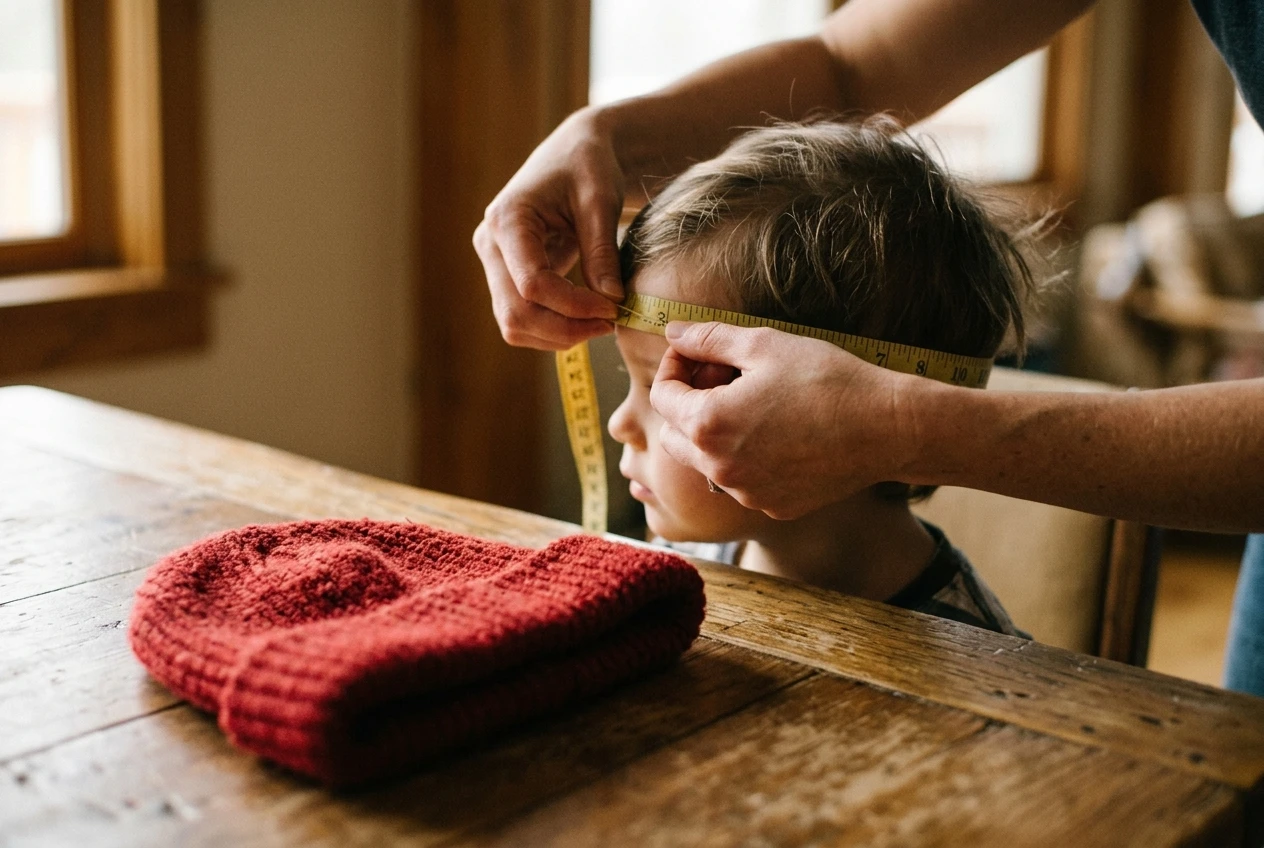
- Use a soft tape measure, or a piece of string you can hold against a ruler afterward.
- Wrap it around the head just above the eyebrows and ears, at the widest part of the back of the head.
- Keep it level and snug, but not tight.
- Compare the number to the size chart for the specific brand, since sizing varies between makers.
If your child is between two sizes, choose the larger size for a stretchy knit and the smaller size for a hat with an adjustable strap.
To check the fit once the hat is on:
- The band should sit just above the eyebrows, not on them.
- The hat should cover the tops of the ears if it is meant to.
- You should be able to slide one finger under the band, but the hat should not move when your child shakes their head.
- There should be no red marks on the forehead after ten minutes.
- Your child should be able to look up and down without the hat shifting.
Do the check again once your child has been wearing the hat for a few minutes. Some hats feel fine at first and then loosen as the knit warms and stretches.
How to Choose a Hat for Your Child’s Specific Needs
Instead of focusing on individual hat styles or brands that may change from season to season, start by identifying what is making your child’s current hat uncomfortable or difficult to keep in place. Use the guide below to find a style with features that address the problem. When shopping, check the product descriptions and photos for these details.
| The Problem | Hat Style to Look For | Why It Helps |
|---|---|---|
| Your child keeps pulling the hat off | Earflap hat with a snap or hook-and-loop chin strap | A secure fastening makes the hat harder to remove accidentally. |
| The hat keeps slipping backward | Bonnet or fitted beanie with a wide, stretchy ribbed band | A snug, even fit helps the hat stay in place. |
| Your child complains that the hat feels itchy | Fleece- or jersey-lined hat with flat seams | Soft lining and smooth seams help reduce skin irritation. |
| Your child’s ears and neck get cold | Balaclava or hood-style hat | One piece covers the head, ears, and neck without needing constant adjustments. |
| Your child dislikes pressure on the top of their head | Ear-warmer headband or thin fleece ear band | Keeps the ears warm without covering the crown of the head. |
| The hat won’t fit comfortably under a helmet | Thin, close-fitting skull cap or helmet liner | Minimal bulk helps preserve the helmet’s intended fit. |
| The hat slips off while your baby is in the stroller | Well-fitted bonnet with secure, soft ties | Helps keep the hat in place as your baby leans back or moves around. |
Shopping tip: Fit and comfort matter just as much as style. Choose a hat that stays in place without feeling tight, irritating the skin, or interfering with safe helmet use.
For babies, avoid loose ties or cords that could pose a strangulation risk, and always follow safe-sleep guidance when indoors or sleeping.
Don’t forget clothing layers: Sometimes a hat isn’t the only reason your child feels uncomfortable. Bulky jackets, tight collars, or too many layers around the neck can make a hat feel restrictive. Choose comfortable layers that work well with the hat, and adjust clothing to suit the weather and your child’s activity level..
Keeping Track of Hats: Name Tags, Clips and a Backup Plan for the Car and School Bag
A hat that fits well is wasted if it is left on a bus seat. A few habits cut down on losses.
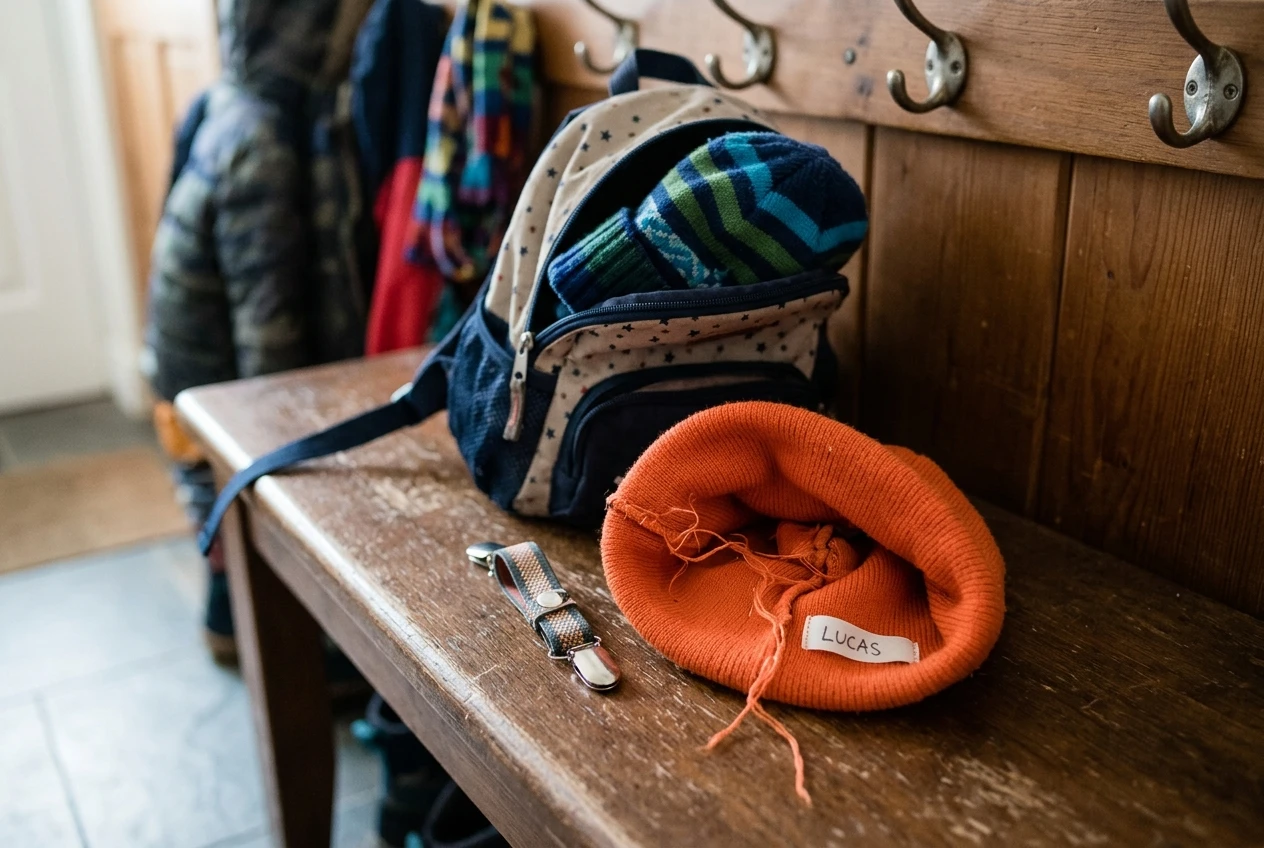
- Label every hat. Use a sewn-in label or a laundry-safe marker on the inside band. Schools often collect lost items, and a name gets a hat back.
- Use mitten clips or coat clips for strapped hats. A clip attached to the coat collar keeps a hat from being dropped when it comes off.
- Choose a bright color. A distinctive hat is easier to spot in a pile of coats and easier to find on the ground.
- Keep a spare hat in the car. Leave a simple, inexpensive hat in the glove compartment or under the seat for the morning your child’s usual hat is missing.
- Keep a second one in the school bag. A spare that lives in the bag means a forgotten hat is not a problem at pick-up.
- Set a routine. Hat goes in the coat sleeve or the same pocket every time, so it is always in the same place when you reach for it.
Rotating two or three hats also helps, because it gives each one time to dry out between wearings. A damp hat is cold and uncomfortable, and children tend to pull them off.
Finish the Outfit
A hat works best when the rest of your child’s winter layers keep them warm too, since a child who is cold elsewhere is likelier to be fussy about everything. Pair the hat with a warm coat: see our picks in The Best Winter Jackets For Girls and choose a hat that matches.