Rain boots go through a lot—muddy puddles, wet playgrounds, rainy walks, and everything toddlers can find outside.
This guide to cleaning toddler rain boots explains how to remove dirt and mud, clean the inside of the boots, deal with odors, and dry them properly so they’re ready for the next rainy-day adventure.
The good news is that cleaning most children’s rain boots doesn’t require anything complicated.
If you’re putting together a complete rainy-day wardrobe for your child, our complete guide to rain gear for kids covers rain boots, raincoats, and other essentials for wet-weather play.
If you’re still choosing a pair for your child, our guide on how to choose rain boots for kids covers important features such as waterproof materials, fit, flexibility, and traction.
Why Clean Your Toddler’s Rain Boots?
Rain boots are designed to get wet and muddy, but regular cleaning can help keep them looking and smelling fresh. Dirt and mud can build up around the soles, while moisture trapped inside the boots can contribute to unpleasant odors.
A quick cleaning after particularly muddy adventures can also help prevent dirt from becoming harder to remove later.
Before cleaning, however, check the manufacturer’s care instructions. Rubber, PVC, EVA, and other boot materials can have different care recommendations, so it’s best to follow the instructions provided with your child’s boots whenever possible.
Keeping rain boots clean is only part of keeping little feet comfortable. A proper fit matters too, and our guide explains how toddler rain boots should fit without being too tight or too loose.
What You’ll Need
You don’t need a long list of cleaning supplies to clean most toddler rain boots.
- Lukewarm water
- Mild soap or gentle dish soap
- Soft cloth or sponge
- Soft-bristled brush
- Clean towel
- Old toothbrush for small or hard-to-reach areas
- Newspaper or clean paper towels for drying the inside
Avoid harsh cleaners, abrasive scrubbers, and strong chemicals that could damage the material or finish of the boots.
If you’re also looking for rain boots made without PVC, our guide to the best non-toxic toddler rain boots explores PVC-free and natural rubber options.
How to Clean Toddler Rain Boots
1. Remove Loose Dirt and Mud
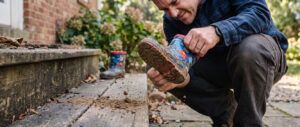
Start by taking the boots outside and knocking off any loose dirt or dried mud.
If mud is stuck to the soles or sides, let it dry first rather than trying to scrub it off while it’s wet. Once the mud has dried, you can usually brush or gently tap away much of it.
Pay particular attention to the tread on the bottom of the boots, where small stones, dirt, and mud can become trapped.
2. Rinse the Boots
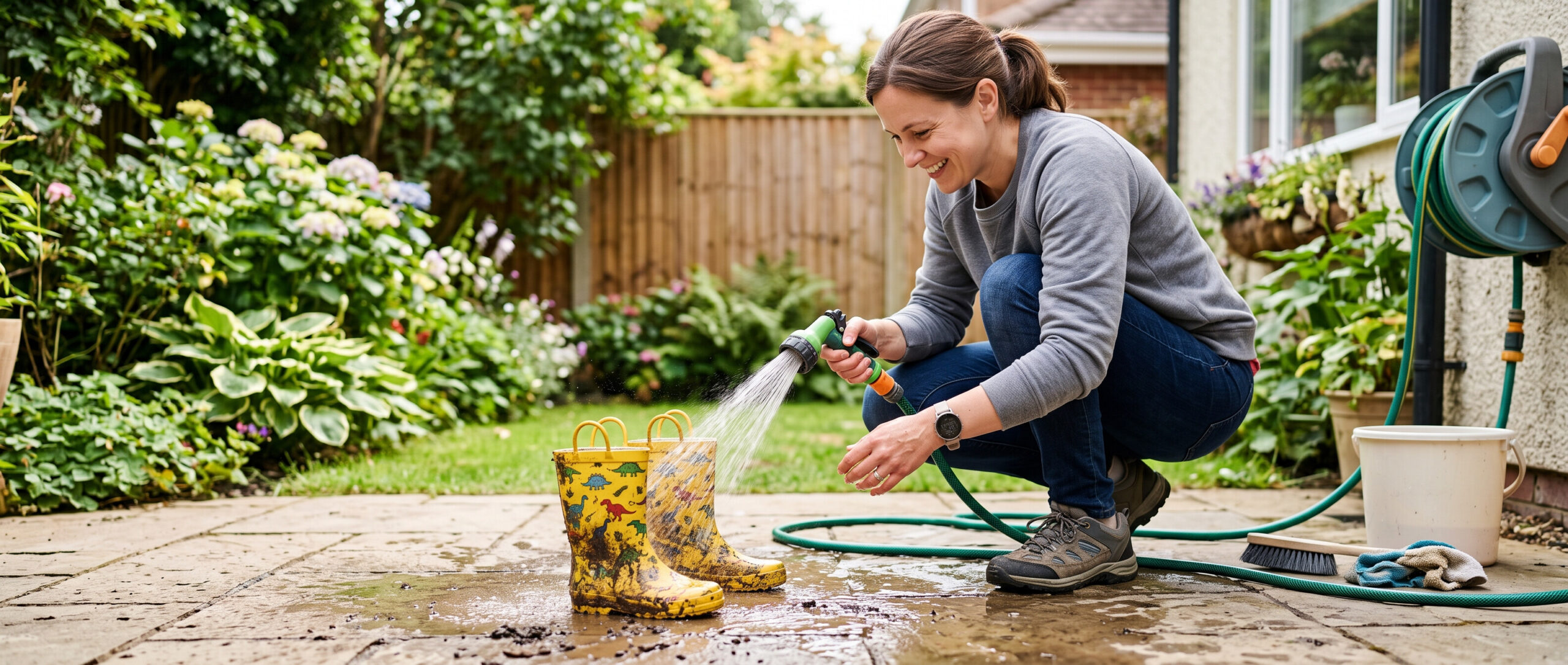
Use lukewarm water to rinse away the remaining dirt.
You can rinse the boots under a gentle stream of water or use a damp cloth if you don’t have access to an outdoor hose. Avoid using very hot water, particularly if the manufacturer doesn’t recommend it.
If the boots have removable insoles, take them out before cleaning the inside.
3. Wash With Mild Soap
Mix a small amount of mild soap with lukewarm water.
Dip a soft cloth or sponge into the solution and gently wipe the outside of the boots. For stubborn dirt, use a soft-bristled brush and work in small circular motions.
A soft toothbrush can be useful around:
- Pull-on handles
- Seams
- Tread patterns
- Decorative details
- Areas around the sole
There’s no need to scrub aggressively. Gentle cleaning is usually enough to remove everyday dirt and mud.
4. Clean the Soles
The soles often need a little extra attention because they’re where most of the mud collects.
Use your soft brush to loosen dirt from the tread. If small pieces of mud or gravel are stuck in the grooves, carefully work them out rather than using a sharp object that could damage the sole.
Once you’ve removed the buildup, rinse the soles thoroughly.
5. Clean the Inside of the Boots
Even waterproof rain boots can become damp inside from sweat or wet socks.
Wipe the inside of the boots with a clean, damp cloth and a small amount of mild soap if needed. Don’t saturate the lining unless the manufacturer’s instructions specifically say that the boots can be washed that way.
If the boots have removable insoles, clean them separately according to the manufacturer’s instructions.
For boots that have developed an odor, cleaning the inside and allowing everything to dry completely is often the best place to start.
How to Dry Toddler Rain Boots
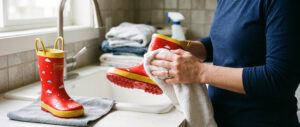
Proper drying is just as important as cleaning.
After washing the boots, wipe away excess water with a clean towel and leave them somewhere well ventilated and away from direct heat.
Open the boots as much as possible so air can circulate inside. You can also loosely place clean newspaper or paper towels inside to absorb moisture, replacing them if they become damp.
Avoid These Common Drying Mistakes
Don’t place rain boots directly beside a heater, radiator, fireplace, or other strong heat source unless the manufacturer specifically recommends it.
Excessive heat can damage or distort some boot materials.
It’s also best not to put rain boots in a clothes dryer.
Give the boots plenty of time to dry completely before putting them away or having your child wear them again.
How to Remove Odors From Toddler Rain Boots
If your toddler’s rain boots have started to smell, moisture trapped inside is often part of the problem.
Try this simple routine:
- Remove the insoles if they’re removable.
- Clean the inside with a damp cloth and mild soap.
- Clean the insoles separately according to their care instructions.
- Allow the boots and insoles to dry completely.
- Store the boots somewhere cool and well ventilated.
Avoid covering up odors with strong fragrances. Keeping the boots clean and thoroughly dry is a better long-term approach.
How Often Should You Clean Toddler Rain Boots?
There’s no need to thoroughly wash rain boots after every wear.
A quick rinse or wipe is usually enough when your child has only encountered a little dirt or water. A more thorough cleaning makes sense when the boots have been covered in mud, used frequently, or have started to develop an odor.
A simple routine might look like this:
Lightly dirty: Wipe or rinse after use.
Muddy: Remove the dried mud and wash with mild soap and water.
Smelly or damp inside: Clean the inside and allow the boots to dry completely.
At the end of the season: Give the boots a thorough cleaning and make sure they’re completely dry before storing them.
How to Store Rain Boots Between Uses
Once your child’s rain boots are clean and completely dry, store them somewhere cool and dry.
Keep them standing upright rather than leaving them buried under other shoes or clothing. Good airflow can help prevent moisture and odors from building up inside.
If your child wears rain boots seasonally, give them another quick inspection before putting them away for an extended period. Check the soles, seams, handles, and overall condition for signs of wear.
What Not to Use on Rain Boots
When cleaning children’s rain boots, simpler is usually better.
Avoid:
- Bleach or harsh chemicals
- Abrasive cleaning products
- Rough scrubbers
- Very hot water
- Direct high heat for drying
- Sharp tools for removing stuck dirt
- Washing machines or dryers unless the manufacturer specifically says they’re safe
Different brands and materials can have different care requirements, so always check the manufacturer’s recommendations for your particular boots.
If your child’s current boots are no longer in good shape after a season of puddle jumping, it may be time for a new pair. Take a look at our guide to the best rain boots for toddler boys for waterproof options from trusted brands.
Frequently Asked Questions
Can I put toddler rain boots in the washing machine?
It’s best not to assume that rain boots are machine washable. Check the manufacturer’s care instructions first. For most boots, hand cleaning with mild soap and water is a safer approach.
How do I get mud off toddler rain boots?
Let dried mud loosen naturally, then brush away as much as possible with a soft brush. Rinse the remaining dirt with lukewarm water and clean the boots with mild soap and a soft cloth.
How do I clean the inside of rain boots?
Remove the insoles if possible and clean them separately according to their care instructions. Wipe the inside of the boots with a damp cloth and mild soap, then allow everything to dry completely in a well-ventilated area.
How can I stop toddler rain boots from smelling?
Regularly clean the inside and allow the boots to dry completely between uses. Removing and drying the insoles can also help if they’re designed to be removed.
Can I dry rain boots with a hair dryer?
I wouldn’t recommend using direct heat unless the manufacturer specifically says it’s safe. Let the boots air-dry in a well-ventilated area instead.
Final Thoughts
Keeping toddler rain boots clean doesn’t have to become another chore on your to-do list.
A quick rinse after muddy adventures, occasional cleaning with mild soap, and thorough air-drying can go a long way toward keeping them fresh and ready for the next rainy day.
And when the boots are clean and dry, they’re ready for what toddlers do best—getting muddy all over again!
If you’re replacing an old pair or buying rain boots for the first time, getting the right size is just as important as choosing the right style. Our guide explains how to measure kids’ feet for rain boots at home before ordering a new pair.