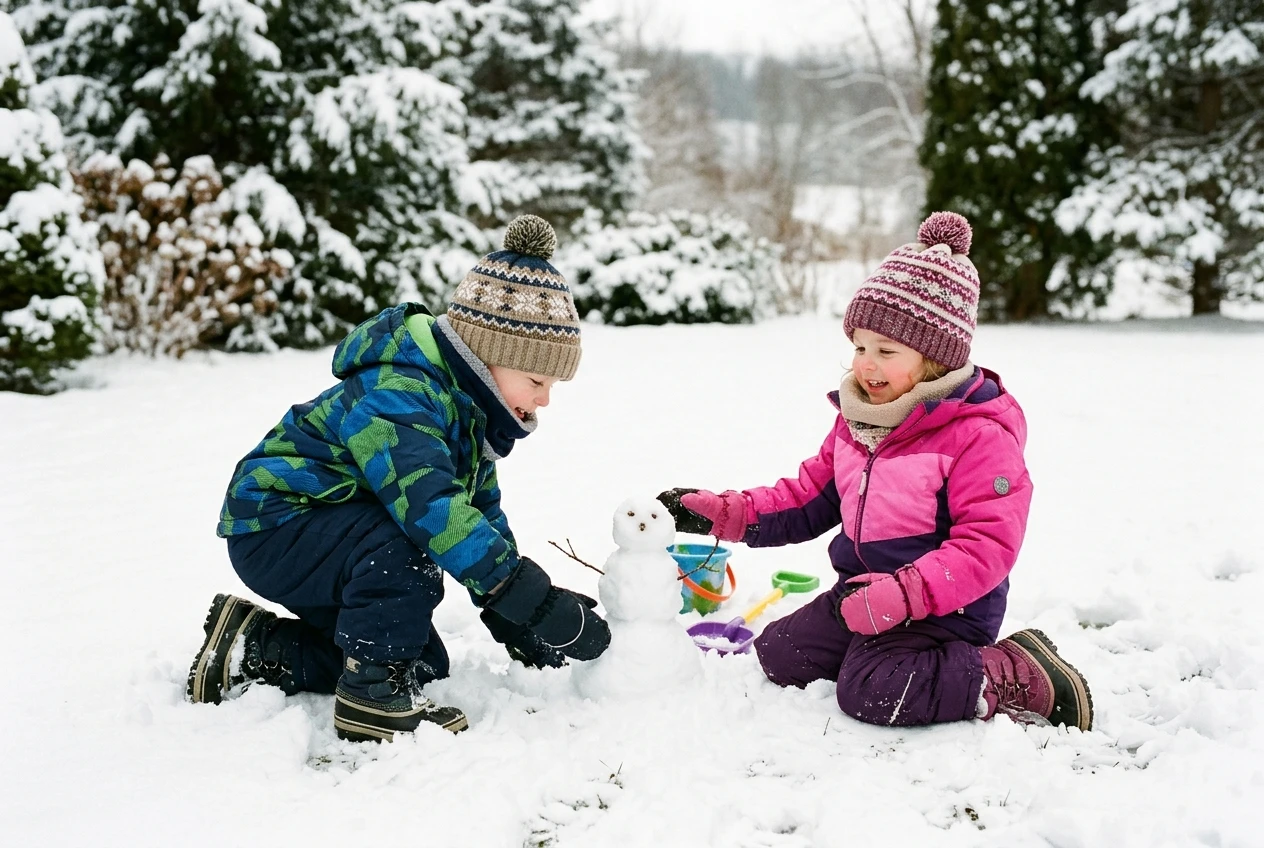
Learning how to layer kids for winter comes down to three thin pieces: a snug moisture-wicking base layer, one warm mid layer such as fleece, and a weatherproof shell.
Thin layers trap warmth without stiff bulk, so your child can still move, buckle into a car seat and fit into a coat.
How do you layer kids for winter without the bulk?
Use several thin layers that each do one job, instead of one thick garment that tries to do everything. Warmth comes from air trapped between the layers and inside the fabric, not from the weight of the clothing.
A thin base, a mid layer with some loft and a shell that blocks wind and wet traps that air without padding the child like a sleeping bag.
Layers also let you adjust. A child who runs hot in the car or at school can lose the mid layer and keep the base, which a single heavy sweater or puffy coat does not allow.
The system in short:
- Base layer: fits close to the skin and moves sweat away.
- Mid layer: holds in body heat.
- Shell: keeps out wind, snow and rain.
What does each layer actually do?
Each layer handles a different problem, and the outfit only works when all three are doing their part. If one fails, the others cannot make up for it.
The base layer sits against the skin and pulls moisture away from it. Damp skin loses heat quickly, so a base that stays wet leaves a child cold even under a good coat. It needs to fit snugly, because a loose base cannot move moisture along.
The mid layer is the insulation. Fleece, wool knit or a light insulated vest holds warm air near the body. Because this layer does most of the heating, you can make it thicker or thinner depending on the day.
The shell is the outer barrier. It stops wind from pushing through the other layers and keeps snow and rain from soaking them. On a dry, calm day a shell can be quite light, while on a wet or windy day it matters more than anything under it.
Which fabrics keep kids warm without making them bulky?
Fabrics that stay warm and dry quickly give you the most heat for the least thickness, and the choice matters most in the base layer.
Cotton is comfortable but soaks up moisture and dries slowly, so it is a poor choice against the skin for kids who will be active outside.
| Fabric | Good for | Keep in mind |
|---|---|---|
| Merino wool | Base layers and socks; keeps insulating when damp and wicks moisture | Usually costs more, and some pieces need gentle washing |
| Polyester and other synthetics | Base layers and leggings; dry fast and wick well | Can hold odor more than wool |
| Fleece | Mid layer; warm for its weight and breathable | Does not block wind on its own |
| Synthetic insulation | Light puffy vests and jackets; keeps insulating when damp | Can feel stiff if the fill is heavy |
| Down | Very warm for its weight and compresses small | Loses much of its insulation when wet |
| Cotton | Indoor wear and casual layers | Holds moisture and dries slowly, so avoid it against the skin outdoors |
How do you build an outfit step by step?
Build the outfit from the skin outward, and check the fit of each piece before adding the next. Following the same order every morning also makes getting out of the house faster.
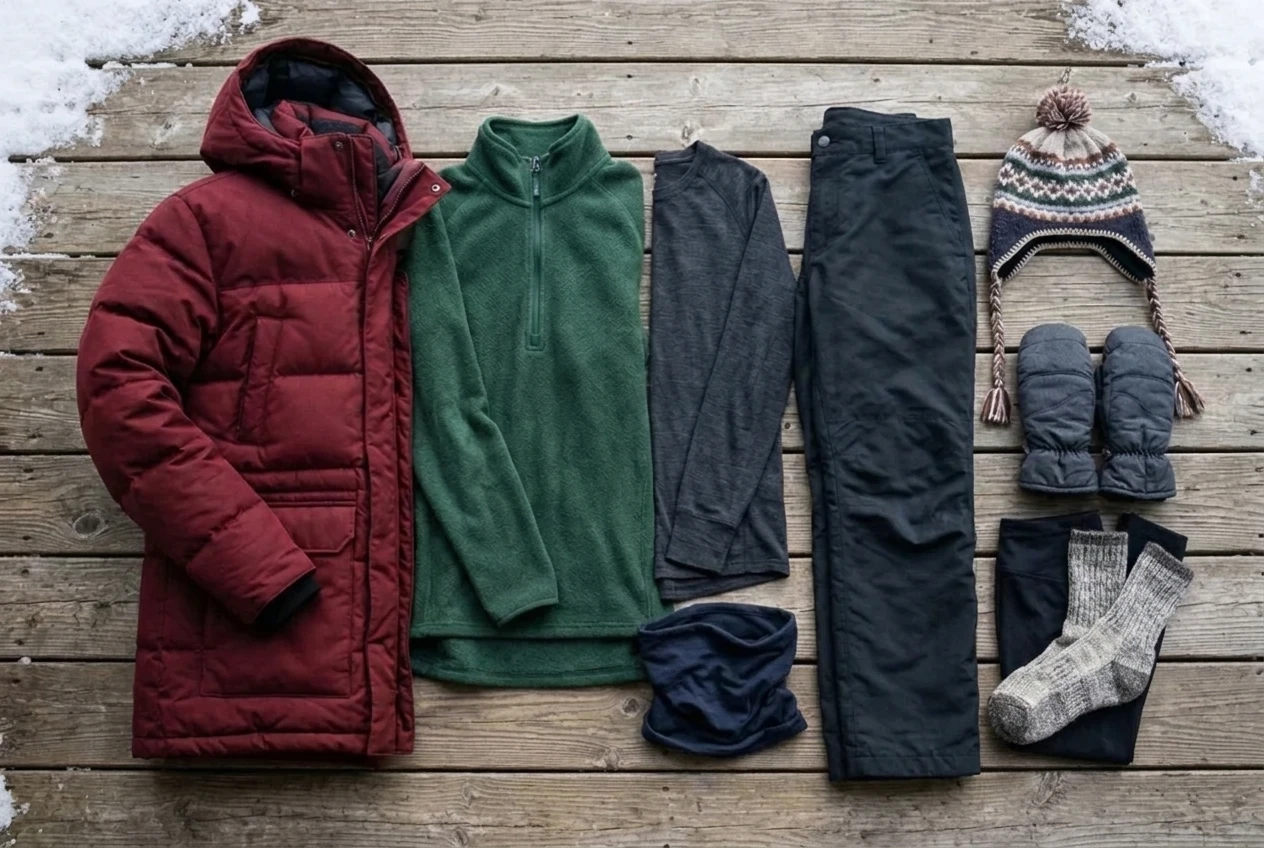
- Start with the base layer. Put a snug long-sleeve top and leggings or long underwear on first. They should lie flat against the skin with no loose fabric bunching at the armpits or knees.
- Add socks. Pick one pair of wool or synthetic socks. Two thick pairs squeezed into boots cut off circulation and leave less room for warm air, which makes feet colder.
- Add the mid layer. Choose a fleece or knit top, and pants with some warmth if it is very cold. Make it thicker for standing around, such as at a bus stop, and thinner for active play.
- Put on the shell. The coat should close easily over the mid layer, and your child should be able to raise both arms over the head and hug themselves without the sleeves riding up.
- Finish with accessories. Add a hat that covers the ears, mittens or gloves and a neck gaiter if needed. For help with these, see the guides linked at the end of this article.
Before leaving, do a quick movement check. Ask your child to squat, reach up and sit. If any of those is hard, one layer is too thick or too tight.
How Do you Layer a Baby or Toddler Safely, Including in a Car Seat?
For babies and toddlers, keep the layers under the car seat harness thin and put the thick pieces on top of the harness after buckling. Bulky coats and snowsuits compress in a crash, which can leave the harness looser than it looks.
Car seat safety guidance consistently advises against wearing puffy outerwear under the straps.
A safe car routine looks like this:
- Dress your child in a base layer and a thin fleece or knit mid layer.
- Buckle the harness snugly against those layers, following your car seat manual.
- Check that you cannot pinch any slack in the strap webbing at the collarbone.
- Lay the coat or a blanket over the child on top of the buckled harness, or put the coat on backwards over the straps.
Babies cannot tell you they are too warm or too cold, and they cannot take layers off themselves.
A common rule of thumb is to dress a baby in one more layer than you would wear yourself, then check by touch.
Keep hats off once you are in a heated car or indoors, because babies lose extra heat through their heads and can also overheat there.
For sleep, use a wearable blanket or sleep sack instead of loose blankets in the crib. Follow your pediatrician’s guidance on safe sleep and room temperature.
Toddlers who walk need more freedom than babies. A one-piece snowsuit is warm, but if it limits their walking or sitting, a two-piece outfit with a separate jacket is easier to get in and out of, and easier to adjust.
How Can You Tell if Your Child is Too Hot or Too Cold?
Feel the back of your child’s neck or their chest: it should be warm and dry, not sweaty and not cool. Hands and feet are a poor guide, because they often feel cold even when the child’s core is warm.
Signs a child is too hot:
- Sweaty hair or a damp neck
- Flushed cheeks
- Fussiness or complaints about itching
- Fast breathing after being active
Signs a child is too cold:
- A cool chest or back
- Shivering
- Pale, cold cheeks or nose
- Unusual quietness or wanting to be carried
Sweat is the bigger risk for active kids. A child who sweats under a thick mid layer while sledding or running will cool off fast once they stop, and damp clothes will chill them.
If your child is working hard, unzip the shell or remove the mid layer during play, and put it back on when they rest.
Check older kids too, but let them tell you. School-age children can usually say when they are uncomfortable, and many will hide a jacket in a backpack if it feels too hot.
Layers that are easy to remove make that less likely to turn into a daily argument.
What Are the Common Layering Mistakes that Add Bulk?
Most bulk comes from thick pieces where thin ones would do, or from layers that do the wrong job. These are the mistakes that cause the most trouble:
- Cotton against the skin. It holds moisture, so parents add more layers to compensate and the outfit gets thicker without getting warmer.
- Two heavy mid layers. A fleece under a thick sweatshirt under a coat limits movement. One good mid layer does more than two mediocre ones.
- Tight layers. Clothing that is too snug flattens the air pockets that hold heat and can restrict circulation. Layers should be close fitting but not squeezing.
- A coat sized up too far. Extra room helps for layers, but a coat that is much too big lets cold air in at the cuffs and hem and makes it hard for kids to use their arms.
- Thick socks in snug boots. The boots have no space for warm air, so feet end up colder.
- Bulky scarves. They add volume at the neck and can catch on playground equipment. A neck gaiter or a snug hooded layer is a simpler option.
- Skipping the shell on wet days. Fleece and wool soak through in rain or wet snow, and no amount of extra insulation fixes that.
Which Pieces are Worth Buying to Make Layering Easier?
A small set of well-chosen basics saves more than a closet of heavy items, because the same pieces combine for different temperatures. Buy for the system, not for single outfits.
- Two or three base layer sets. Long-sleeve tops and leggings in merino or a synthetic blend. With this many, one set can be in the wash while another is worn.
- A zip-front fleece. It goes on and off quickly, and a zipper is easier than pulling a pullover over a squirming toddler’s head.
- A light insulated vest. It adds core warmth without restricting the arms, and it is easy to wear under a shell on colder days.
- A shell with room. Look for a waterproof or water-resistant jacket with adjustable cuffs and a hood that fits over a hat. Size it to fit over the mid layer, not so large that it hangs off the child.
- Fleece-lined or thermal pants. These help in very cold weather, and waterproof snow pants are worth having if your child plays in snow.
- Wool or synthetic socks. Buy a few pairs in the right size for their boots.
- A neck gaiter. It keeps the neck warm and stays in place under a hood.
When a child outgrows pieces mid-season, replace the base layer and shell first, since fit matters most there. Mid layers can run a little loose without harming the system.
Browse the Hub’s winter jacket picks, along with the guides on winter hats that stay on and kids gloves vs mittens, to finish your child’s cold-weather outfit.
