To keep kids feet warm in winter, put them in dry, moisture-managing socks, usually merino wool or a wool blend, and boots with room for toes to move over those socks.
Cold feet are usually caused by damp cotton or a tight boot that restricts blood flow, not by too little thickness.
Why do kids’ feet get cold even in thick socks?
Kids’ feet get cold in thick socks because the socks are often damp, compressed, or both. Thickness only insulates while the fabric stays dry and has air trapped in it. Once a sock is wet or squashed flat, it stops doing much.
Three problems cause most cold feet:
- Damp cotton. Children’s feet sweat, especially during a run around the yard or a walk to school in heated clothes. Cotton absorbs that moisture and holds it against the skin, and wet fabric pulls heat away from the foot faster than dry fabric does.
- A boot with no spare room. A snug boot presses a thick sock flat and can squeeze the foot enough to slow circulation. Toes with no space to move and no air around them get cold quickly.
- Too many layers in one boot. Two thick socks in a boot sized for one fill the space that warm air needs. The extra fabric makes the fit tighter, which brings the second problem back.
Cold ground matters too. A thin or flexible sole lets cold come up from the pavement or snow, so a child standing still at a bus stop loses heat faster than one who is running. That is a boot issue, and no sock fully fixes it.
Which sock fabrics keep kids’ feet warmest and driest?
Wool and wool blends are the most reliable choice, because wool keeps insulating when it picks up a little moisture and moves sweat away from the skin. Synthetic blends are a solid second option, and cotton is the one to avoid on cold days.
Here is how the common fabrics compare for winter wear:
- Merino wool. Soft enough that many kids tolerate it, warm for its weight, and slow to hold odor. It is usually the best all-round pick for school days and outdoor play.
- Wool blends with nylon or polyester. The synthetic fibers add durability and help socks dry faster, which matters for kids who wear through heels and toes.
- Synthetic wicking socks. Polyester or similar fibers move moisture away from the foot and dry quickly. They suit kids who dislike the feel of wool.
- Cotton. Fine for indoors or a warm car, but a poor choice for outdoor winter wear because it stays wet.
- Thin liner socks. A thin wicking or silk liner can sit under a regular winter sock, but only when the boot has room for both (more on that below).
Check the details as well as the fiber. Flat toe seams prevent rubbing, and a cuff that stays up without squeezing the calf keeps socks from sliding down inside the boot. Red rings on the leg after a day of wear mean the cuff is too tight.
If a child complains that wool itches, try a finer merino blend before giving up on the fabric, or switch to a synthetic wicking sock. A sock the child refuses to wear keeps nobody’s feet warm.
How should winter boots fit over socks?
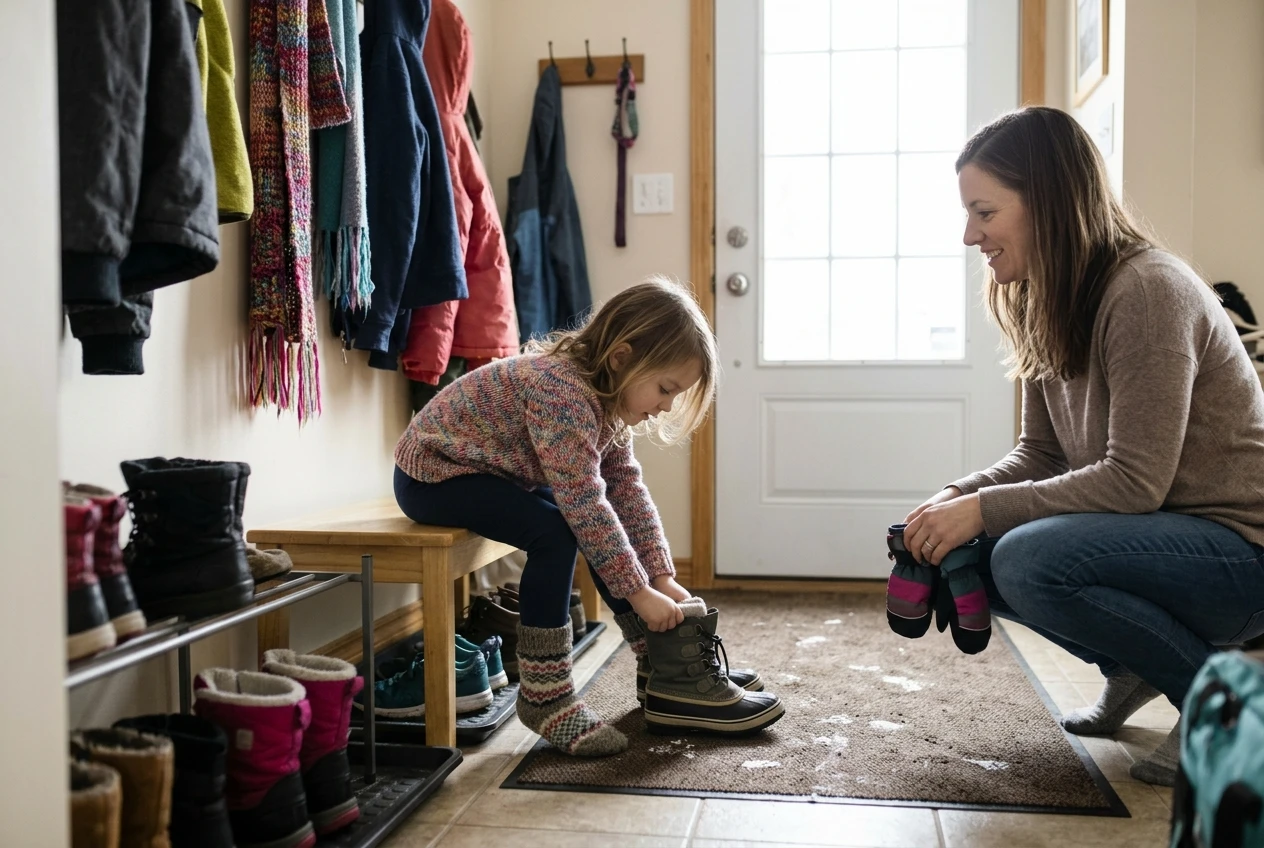
A winter boot should fit with the child’s winter socks already on, with space to wiggle the toes and no pressure across the top of the foot. Try boots on over the exact socks the child will wear outside, never over thin socks or bare feet.
Follow this sequence in the shop or at home:
- Put on the thickest sock the child will realistically wear in the boot.
- Slide the foot in and fasten the boot fully, including any strap, laces, or draw-cord.
- Have the child stand, then check that the toes can lift and spread. With the child standing, there should be roughly a thumb’s width between the longest toe and the front of the boot.
- Ask the child to walk and crouch. The heel should stay mostly in place, with only slight lift.
- After a few minutes, take the boot off and look at the foot. Red lines or deep marks mean it is too tight.
Boots that are too big cause a different problem. The foot slides, rubs, and blisters, and a child tripping over oversized boots will not want to wear them. Buying a size up for growth is reasonable, but the extra space should be small enough that the foot still sits securely.
Fit changes over a winter, so repeat the test partway through the season. Children often outgrow boots before they wear them out, and a boot that fit in November can start squeezing toes by January.
Beyond fit, look at what the boot is made to do. A waterproof upper keeps socks dry from outside, and a removable liner makes drying easier. A sole with some thickness and grip blocks cold from the ground and keeps small feet steady on ice.
What is the best sock and boot combination for each kind of winter day?
The right pairing depends on how long the child is outside and how much they move. A short walk with a heated classroom at the end needs less than an afternoon sitting on a sled hill.
| Kind of Day | Socks | Boots | What to Watch For |
|---|---|---|---|
| School Run (Short Walk or Bus Stop, Then Indoors) | One medium wool-blend or synthetic sock | Insulated, easy-to-wear boots that fit with room for toes | Sweaty feet once indoors, so pack a spare pair if boots stay on all day |
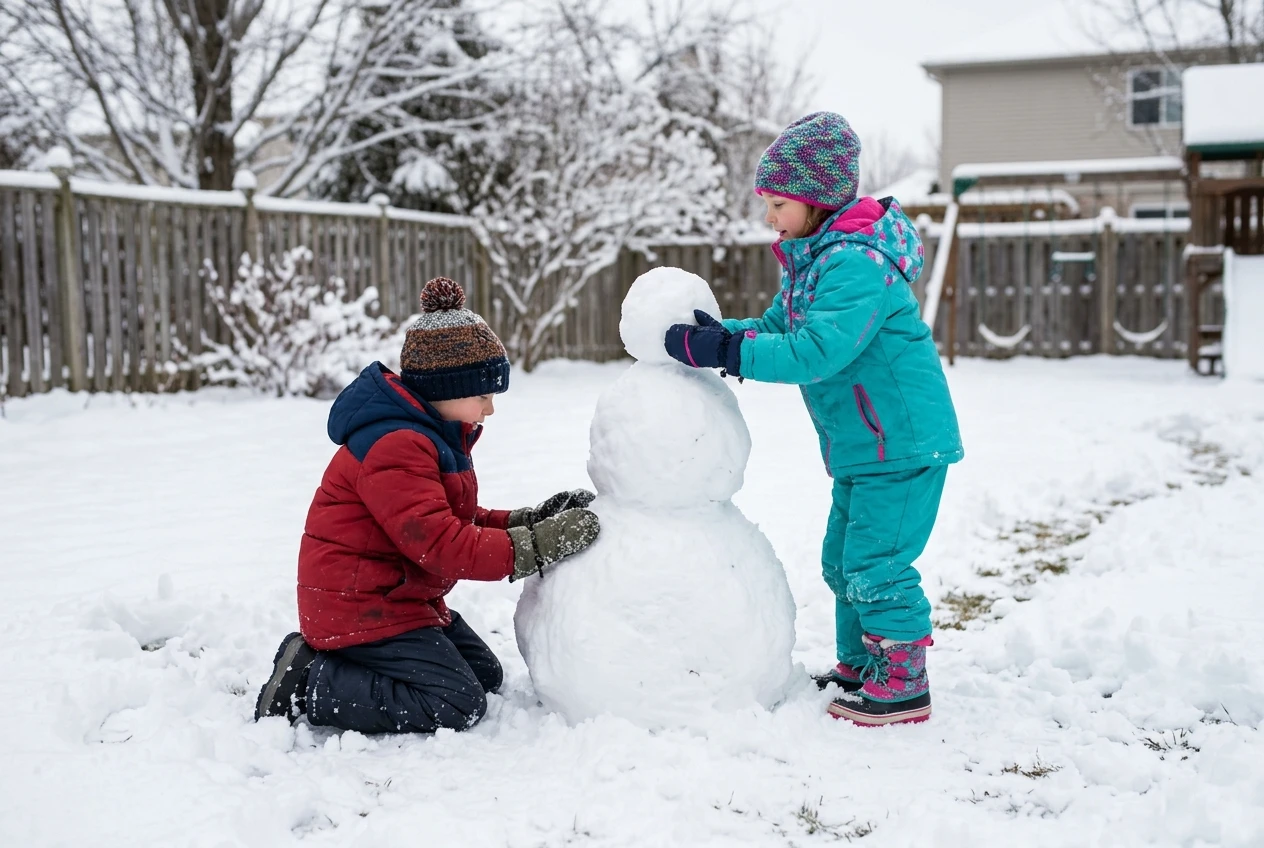
| Snow Play (Wet, Active, Short Breaks) | One warm merino or wool-blend sock, with a spare pair ready | Waterproof boots with a snug cuff that keeps snow out | Snow getting in at the top; wet socks need changing, since warm feet go cold fast when damp |
| Long Outdoor Stretch (Sledding, a Rink, a Sports Sideline) | Warm wool sock, possibly a thin liner underneath if the boot has room | Insulated waterproof boots with a thick sole | Standing still loses heat quickly, so check toes regularly and bring spare socks |
| Car-Heavy Day (Car Seat, Shops, Quick Stops) | Medium wool blend | Slip-on or easy boots that come off in the car if it is warm | Overheating in the car, then cooling down fast outside |
A spare pair of socks in the bag is the single most useful addition on any day with snow or a long time outdoors. Changing into dry socks restores warmth faster than any extra layer.
How many sock layers should a child wear?
Most children need one good sock layer, and two only when the boot is large enough to hold both without any squeezing. A tight fit works against warmth, so adding a second layer to a boot that was already snug usually makes feet colder.
A simple way to decide:
- Start with one sock. Put it on, add the boot, and check the fit using the steps above.
- Add a thin liner only if there is room. If the boot still feels loose with one sock and the child can wiggle their toes, a thin wicking liner under the sock is fine.
- Never layer two thick socks in a boot sized for one. The compressed layers insulate less and restrict circulation.
- Skip layering if the child is sweating. More fabric means more moisture, and damp socks bring on cold feet.
If one sock is not warm enough, the answer is usually a better sock (wool instead of cotton) or a better boot (more insulation, thicker sole), not a second pair.
How do you keep feet warm for babies and toddlers who can’t tell you they’re cold?
For babies and toddlers, check warmth by feeling the chest or the back of the neck rather than the feet, because small feet and hands normally feel cooler than the body. If the torso is warm, the child is likely comfortable. If it feels cool, add a layer or move indoors.
A few habits make feet easier to manage in young children:
- Choose socks that stay on. A snug cuff or a bootie-style design stops the sock from sliding off in a stroller, which leaves bare feet exposed without a parent noticing.
- Use soft-soled booties or pram boots for non-walkers. Babies who are not walking need warmth more than grip, so thick boots with stiff soles are unnecessary.
- Check toes at stops. Slide a finger into the cuff and feel the toes now and then. Damp or cold toes mean a sock change.
- Do not leave bulky boots on in a car seat. Remove them and tuck a blanket over the child’s legs and feet once they are buckled in.
- Watch for signs of discomfort. Fussiness, pulling at the boots, or toes that look pale or very red are all reasons to stop and warm up.
Feet are only part of keeping small extremities comfortable. Heads and hands lose warmth quickly too, so our guide to winter hats for kids that actually stay on and our comparison of kids gloves vs mittens by age and dexterity cover the rest.
How do you dry and care for winter socks and boots so they keep working?
Dry socks and boots fully after every wear, because damp footwear is what makes the next day’s outing cold. Wool and insulated boots can be ruined by heat or left clammy by slow drying, so a gentle routine matters.
Here is what works at home:
- Take boot liners out. If the boots have removable liners, pull them out and let them air dry separately. Sweat collects in the liner overnight.
- Open the boots up. Loosen laces and straps, pull the tongue forward, and stand the boots somewhere with airflow.
- Keep boots away from direct heat. Radiators, fireplaces, and heaters can crack leather, warp glue, and damage waterproof layers. Room-temperature air is slower but safer.
- Rotate pairs if you can. Two pairs of boots or at least two pairs of winter socks give each one a full day to dry.
- Wash socks as the label says. Skip fabric softener on wool and wicking socks, because it can coat the fibers and reduce their ability to move moisture.
- Dry wool socks flat or on a low setting. High heat can shrink them and make them rougher against the skin.
- Pull socks inside out before washing. This cleans the part that touches the foot and extends the life of the sock.
Replace socks when the heels and toes wear thin or when they no longer hold their shape. A sock that has gone flat has lost most of its insulation, regardless of how thick it looks.
Warm feet work best when the rest of the child is comfortable too. See how to layer kids for winter without the bulk so warm feet are matched by a warm, comfortable body.
