
The best bodysuit under baby sleep sack wear is a soft cotton one that fits close to the body without squeezing, has a stretchy neckline, and closes with snaps that are easy to open in the dark.
Pick the sleeve length by how warm the room is, and size it so nothing bunches at the legs or waist.
What makes a bodysuit snug enough to wear under a sleep sack?
A snug bodysuit lies flat against the torso and stays in place when the baby moves. The fabric should stretch over the body and spring back, with no loose folds at the chest, belly or hips.
Snug is not the same as tight. If the leg openings leave red marks, or the fabric pulls across the chest when the baby breathes or squirms, the size is too small. If you can pinch a handful of fabric at the belly, it is too big.
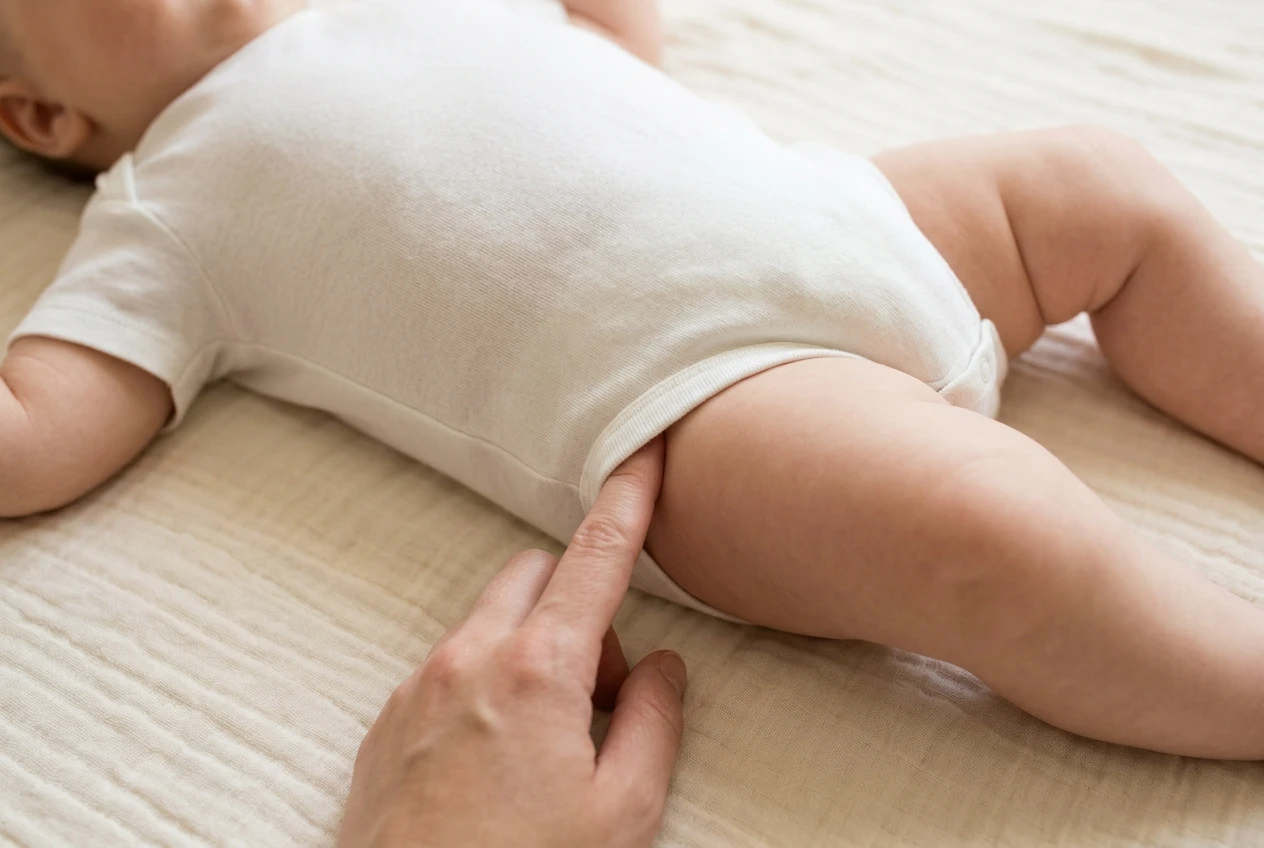
Fit matters under a sleep sack because loose fabric rides up and bunches inside the sack, which is uncomfortable and makes diaper changes harder. A close fit also keeps the base layer’s thickness predictable, so the warmth you planned is the warmth the baby gets.
Check what the sleep sack’s manufacturer suggests about clothing underneath. Instructions differ between products, and the label on your sack is the final word on what suits it.
For additional guidance, Health Canada’s recommendations for dressing babies for sleep explain why properly fitted sleepwear and appropriate room-temperature clothing are important for keeping babies safe and comfortable.
Why is cotton the usual choice for the layer next to baby’s skin?
Cotton is soft, comfortable and easy to wash, making it a popular choice for baby bodysuits worn next to the skin.
It absorbs moisture and is available in lightweight fabrics that work well for everyday layering. Since bodysuits are washed frequently, look for cotton that feels smooth, holds its shape and stays comfortable after repeated washing.

-
Fabric feel: it should feel smooth and flexible in your hand, not stiff or scratchy.
-
Weave or knit: a fine, even knit usually drapes close to the body. A loose, open knit can sag.
-
Stretch content: a small amount of elastane in the blend can help a bodysuit keep its shape. Pure cotton is fine too, but it may relax faster after repeated washing.
-
Label wording: “100% cotton” on the care label is a direct statement of content. Marketing phrases like “cotton-feel” do not mean the same thing.
When choosing clothing for bedtime, it’s important to consider sleepwear safety as well as fabric softness. Health Canada’s children’s sleepwear safety guidelines explain how fabric type and garment fit affect flammability, and why properly fitted sleepwear is important.
If you’re looking for more options for everyday baby clothing, take a look at our guide to organic baby girl long-sleeve onesies, which covers comfortable styles and fabric choices for little ones.
Rough seams, thick appliqués, glittery prints and stiff embroidery do not belong on a base layer. Choose plain or lightly printed bodysuits, and press a thumb over any decoration on the inside to see whether it is raised.
Short sleeve, long sleeve or sleeveless: which bodysuit suits which room?
Match the sleeve length to how warm the room is: sleeveless or short sleeves for warm rooms, long sleeves for cool ones. The sleeve length changes how much of the arm the cotton covers, and the sleeve opening of most sleep sacks leaves the arms to the bodysuit.
|
Sleeve style |
Best for |
Things to check |
|---|---|---|
|
Sleeveless |
Warm rooms and summer nights |
Armholes should sit close without gaping |
|
Short sleeve |
Mild rooms, and the most useful year-round piece |
Sleeve should not twist or ride up under the sack’s armholes |
|
Long sleeve |
Cool rooms and winter nights |
Cuffs should be snug at the wrist but not tight |
If you’re considering a sleep sack with sleeves, our guide to baby fleece sleep sacks with sleeves explains what to look for when choosing this style.
Short sleeves are the most flexible choice if you are buying only one style, because they cover the shoulders and still leave room for adjustment. For the exact bodysuit weight and layer count for a given room temperature, the guide linked at the end of this article covers it.
How do you check size and fit before you buy?
Check the label size against your baby’s current measurements, then confirm the fit by touch once the bodysuit is on. Brands size differently, so go by the brand’s own size chart and not by what a previous bodysuit said.
Use this routine when you try a new bodysuit:
- Put it on and snap the crotch closed. The snaps should close without pulling the fabric tight across the hips.
- Slide a finger under the neckline and the leg openings. It should fit with a little resistance, not slide in loosely and not need force.
- Lay the baby down and bend the legs. The fabric should follow the movement without riding up the belly.
- Check the torso length. If the bodysuit pulls at the crotch or the snaps strain, go up a size.
- Look at the skin after a few minutes for pressure marks around the thighs, neck or arms.
Cotton can shrink in the wash, so a bodysuit that fits perfectly the first time may be snugger after a few cycles. If a size is borderline, the larger one is usually the safer choice, provided it still sits close once washed.
Babies grow quickly, so a bodysuit that fits well now may not in a few weeks. Check the fit again each time you replace the pile.
Which necklines, snaps and tags make night changes easier?
Envelope (lap) necklines, flat snaps and printed labels make night changes simplest. They let you handle a wet or messy diaper without waking a baby fully and without pulling fabric over the face.
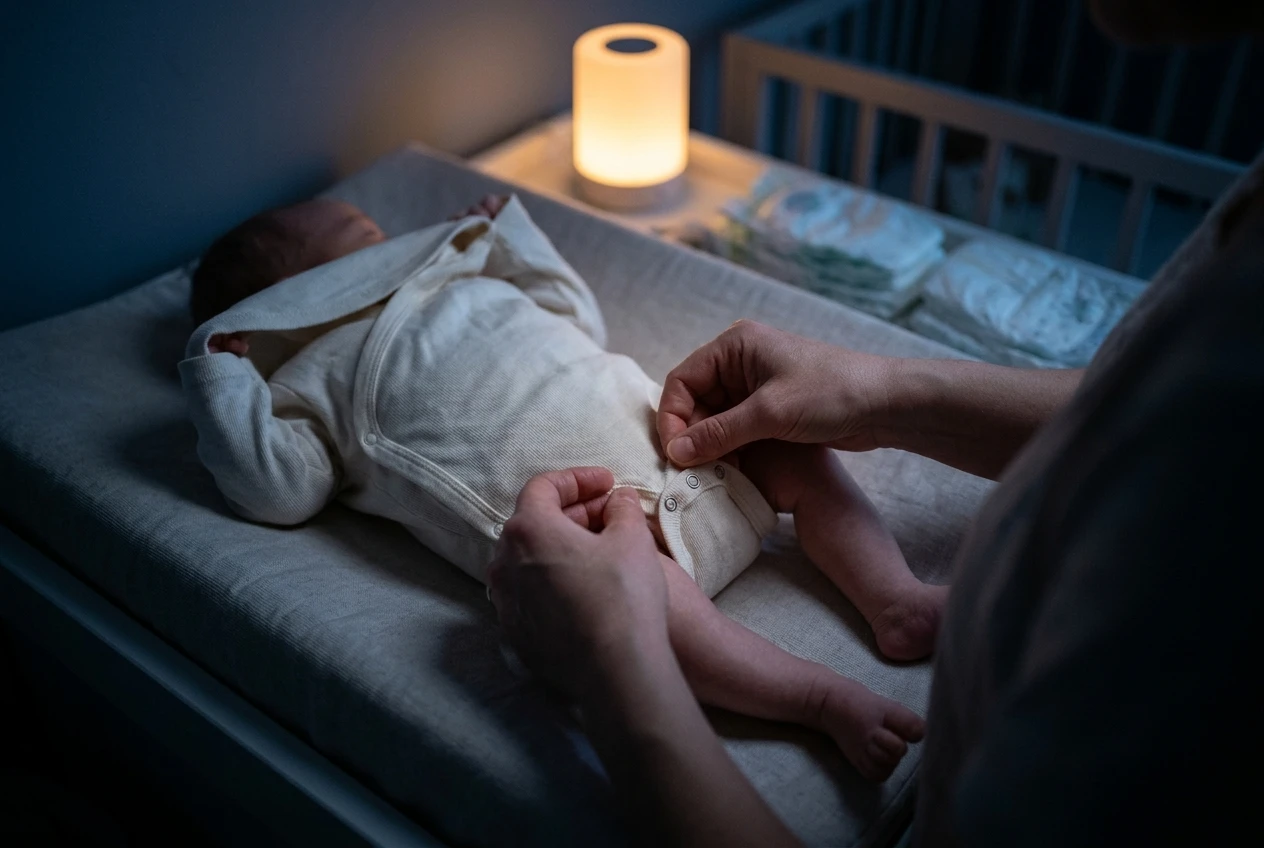
Neckline. An envelope neckline has overlapping fabric at the shoulders so the opening stretches wide. It goes on over the head easily, and for a messy diaper it can be pulled down over the body and off through the legs instead of up over the face. A narrow, non-stretch neckline makes every change harder.
Snaps. Look for these features:
- Snaps that close with light, even pressure, not ones that need a hard press.
- A snap placket that lies flat, with no hard edges pressing on the skin.
- Snaps that line up on both sides, so you do not misalign them in the dark.
- Metal or plastic snaps that feel secure after a few test closings.
Bodysuits with a double row of snaps or a wide opening make diaper changes quick, and the extra row helps the fabric lie flat.
Tags. A scratchy tag at the back of the neck can irritate skin in a sleep sack, where the baby lies against the mattress. Choose bodysuits with printed labels or very soft tags, and cut any stiff tag out carefully so no sharp edge stays behind. Keep the care label information by noting the instructions before you cut it.
How do you wash bodysuits so they stay snug and soft?
Follow the care label, wash before first wear, and avoid heat settings the label does not allow. Cotton usually tolerates regular washing well, and washing before the first wear removes finishing residue left from manufacturing.
A few habits help the fit last:
- Close the snaps before washing so they do not catch on other items.
- Turn bodysuits inside out to protect the surface from pilling.
- Skip heavy fabric softener, which can leave a coating on the fabric. Baby-safe detergent is usually enough.
- Dry on the setting the label allows, since high heat is the usual reason cotton shrinks.
- Check the neckline and leg openings after washing, because they are the first places to lose their stretch.
If the neckline has gone loose or the leg openings no longer hold, replace the bodysuit. A worn-out base layer no longer sits close, which defeats its purpose under a sleep sack.
How many bodysuits do you need for a sleep sack routine?
Five to seven bodysuits cover most routines, because you want one on the baby, one spare for a night change, and enough in the drawer while the others are in the wash. A baby who leaks or spits up often may need more spares.
Think in terms of how often you do laundry. If you wash every two days, a smaller set works. If laundry happens once a week, buy toward the upper end.
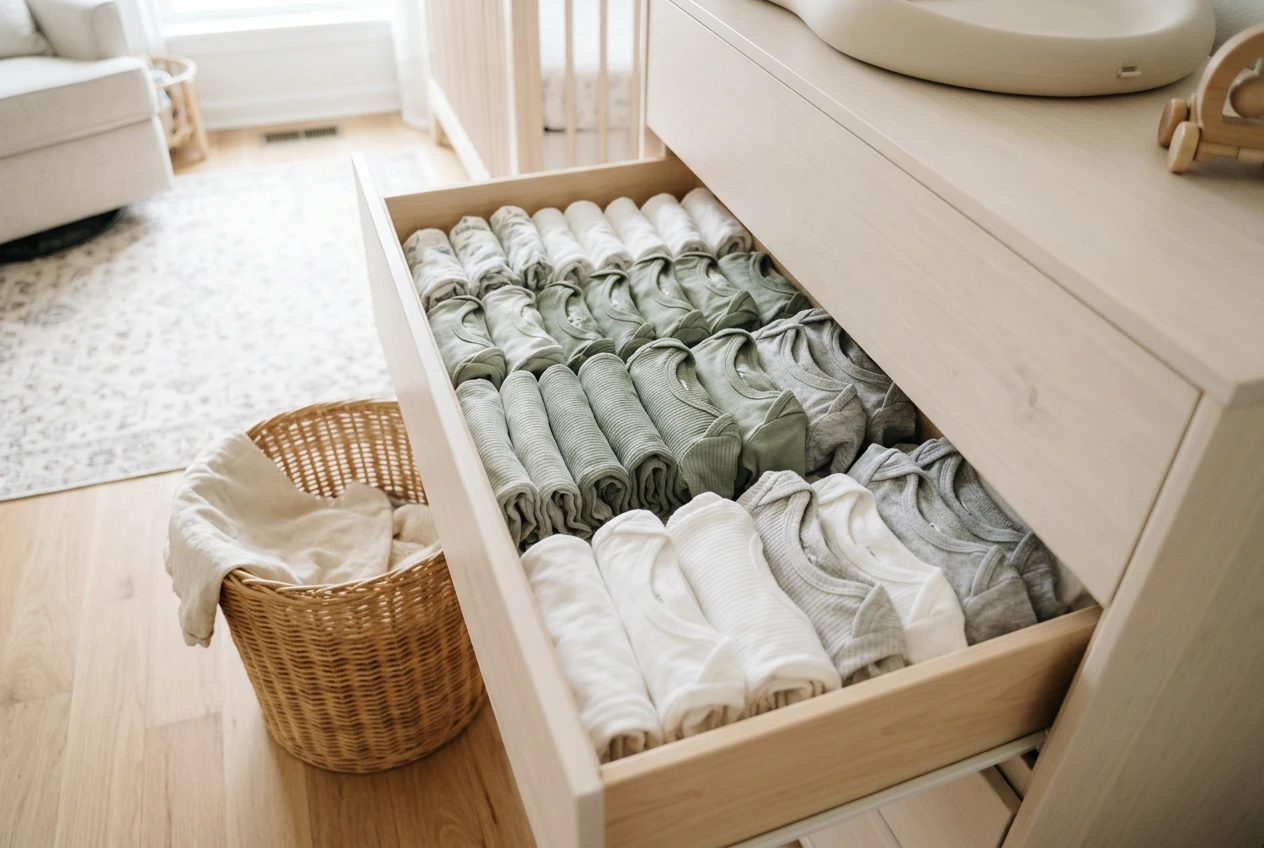
A simple mix keeps things easy:
- A few short sleeve bodysuits as the everyday base.
- A couple of long sleeve bodysuits for cooler nights.
- One or two sleeveless bodysuits if your baby’s room runs warm.
Buying in multi-packs of the same size and style makes matching and sorting easy, and it makes sure a replacement fits the same way as the one it replaces.
Once you have your bodysuits, the next question is which weight to put on tonight.
The guide What to Wear Under a Baby Sleep Sack by Room Temperature walks you through it by room, so you can choose the sleeve length and layers before bedtime.
