
Between footed vs footless sleepers under a sleep sack, choose footed for cooler rooms and footless for warmer ones, for growth spurts, and for babies whose feet outgrow the sleeper first. Both fit inside the sack. Foot coverage is the only difference, so match it to the room, your baby’s size and how you handle night diaper changes.
Which is better under a sleep sack, footed or footless?
Neither is better in every case; the right one depends on how much foot warmth your baby needs and how fast they are growing. A sleep sack already surrounds the feet, so the sleeper’s feet add a second layer there rather than the only one.
This article compares the two on foot coverage alone. Choosing the sleeper’s fabric weight for your nursery’s temperature is a separate question, and it is covered in the guide linked at the end.
How do footed and footless sleepers compare side by side?
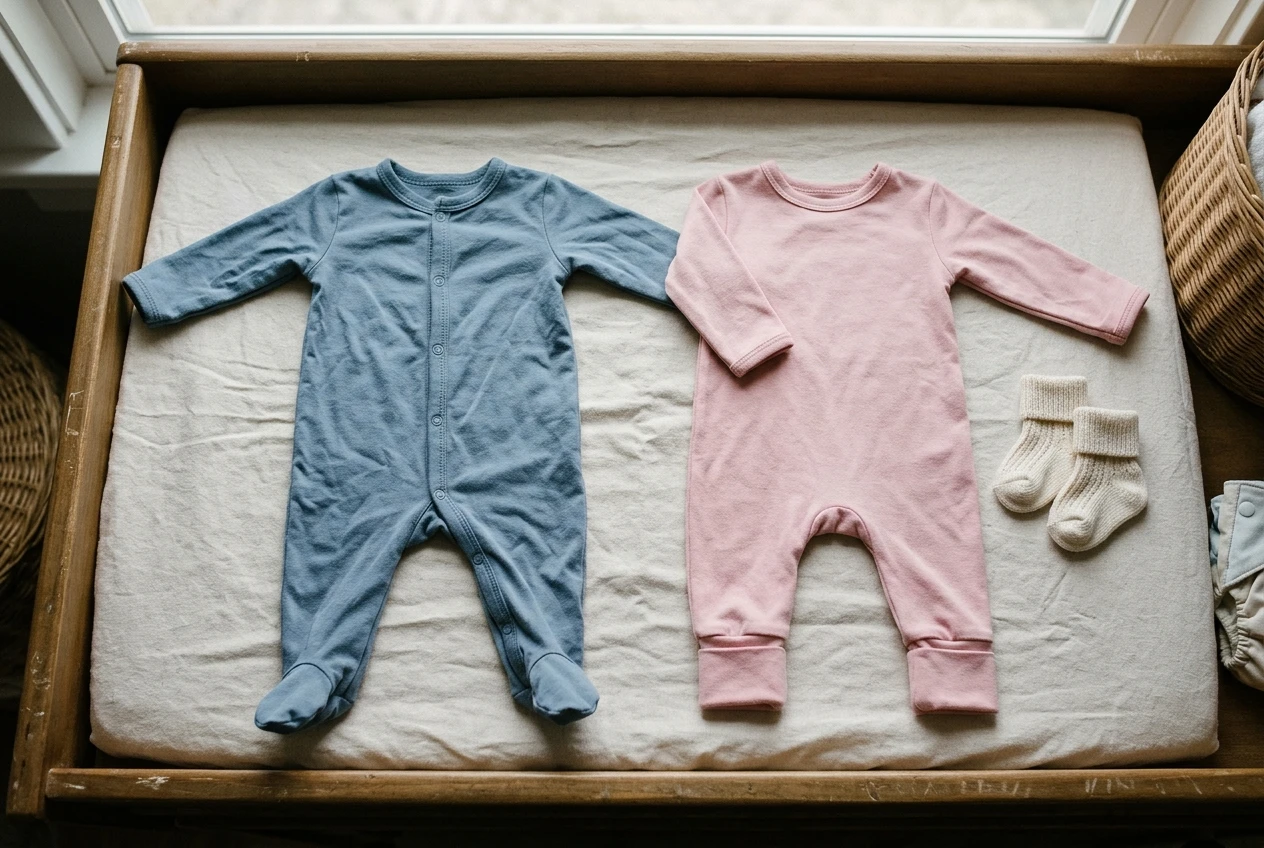
Footed sleepers cover the feet with the same fabric as the body, and footless sleepers end at the ankle with a plain hem or a fold-over cuff. The table shows how that one difference plays out.
Factor | Footed sleeper | Footless sleeper |
|---|---|---|
Foot warmth | Built in, cannot come off | Needs socks if feet run cold |
Fit inside the sack | Foot fabric adds bulk at the bottom | Smooth, flat lower layer |
Diaper changes | Same zipper or snap routine, nothing extra to find | Same routine, but a loose sock may need rematching |
Growth | Outgrown when toes press the end of the foot | Often usable a little longer, since foot room is not the limit |
Washing | Foot fabric can wear or pill first | Socks can go missing in the wash |
Best for | Cooler rooms, babies who kick socks off | Warmer rooms, growth spurts, layering flexibility |
No row decides the question by itself. Read down the column that matches your biggest worry.
When do footless sleepers make more sense?
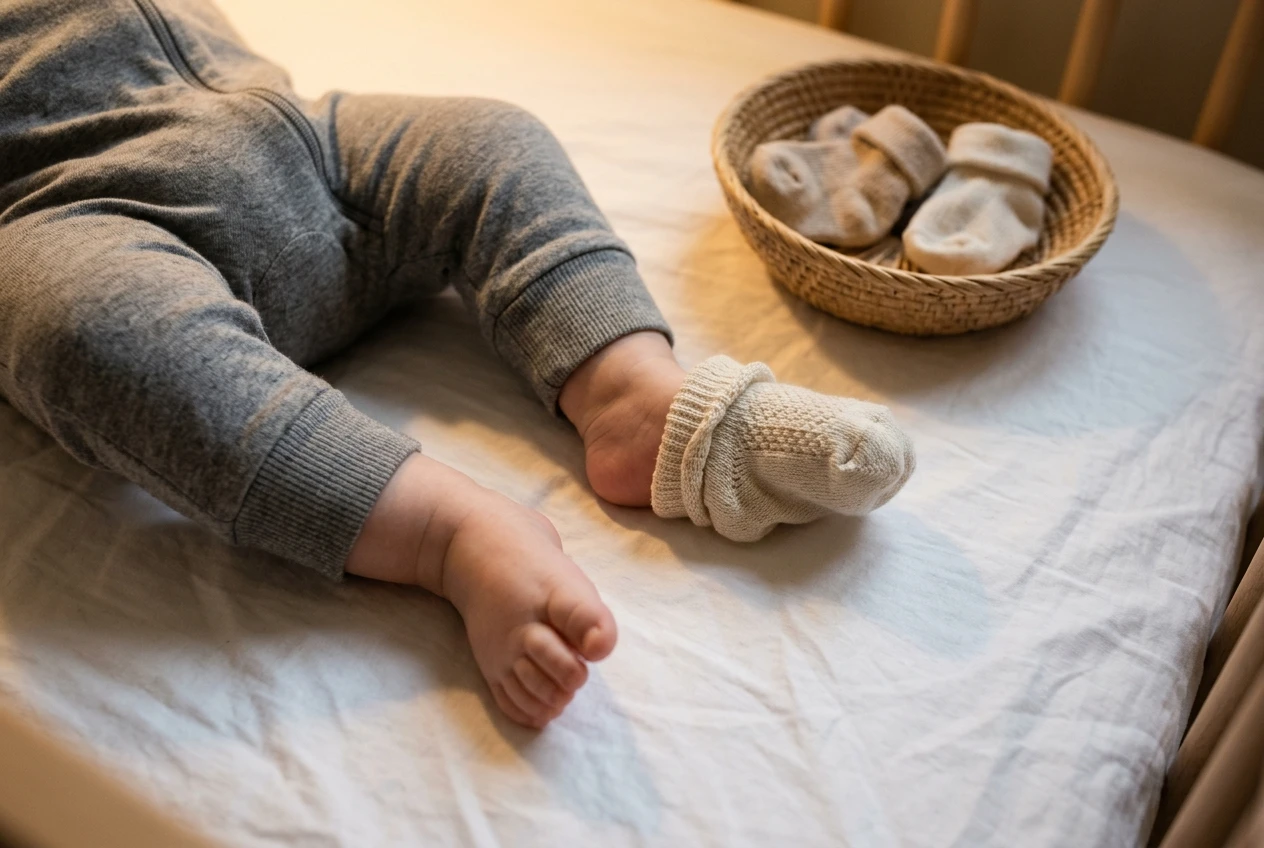
Footless sleepers make more sense when your baby’s feet tend to be warm, when the room is mild, or when you want to control foot coverage separately from body coverage. You can add a pair of socks on a cool night and leave them off on a warm one, which a footed sleeper does not allow.
They also suit babies in the middle of a growth spurt. Length is the first thing a footed sleeper fails on: when toes curl against the end of the foot, the sleeper is too small, even if the torso and arms still fit. A footless sleeper has no end-of-foot limit, so it often stays in rotation for a few more weeks.
A few other situations favor footless:
- Your baby’s feet feel warm to the touch when you check them.
- You already have a drawer of baby socks you like.
- You want one sleeper style that works across a wide range of room temperatures.
- Your baby is between sizes and you want the longer-wearing option.
The drawback is the socks themselves. Babies pull them off, and a sock that ends up loose in the sack is one more thing to fish out at 3 a.m.
When are footed sleepers the better choice?
Footed sleepers are the better choice when the room is on the cool side or your baby kicks off socks every night. The feet are part of the garment, so there is nothing to lose, rematch or put back on.
They also simplify the routine. One garment covers the whole body, and in a dark room that means one less item to handle. For parents restocking in bulk, buying a single style also makes it easy to grab any sleeper from the drawer without a second thought.
Footed sleepers work best when:
- Your baby’s feet and hands feel cool when you check them at bedtime.
- Socks never stay on.
- You prefer a minimal bedtime routine.
- The sleeper is a snug size with room left in the foot.
If you are shopping for a footed style, the best lightweight footed sleepers for babies in a sleep sack are covered separately, with a focus on thin fabric that does not add too much bulk.
Does foot coverage change how a sleeper fits inside the sack?
Yes, slightly. The foot of a footed sleeper adds fabric at the bottom of the sack, and in a snug sack that fabric can bunch under the toes or fold the baby’s feet inward.
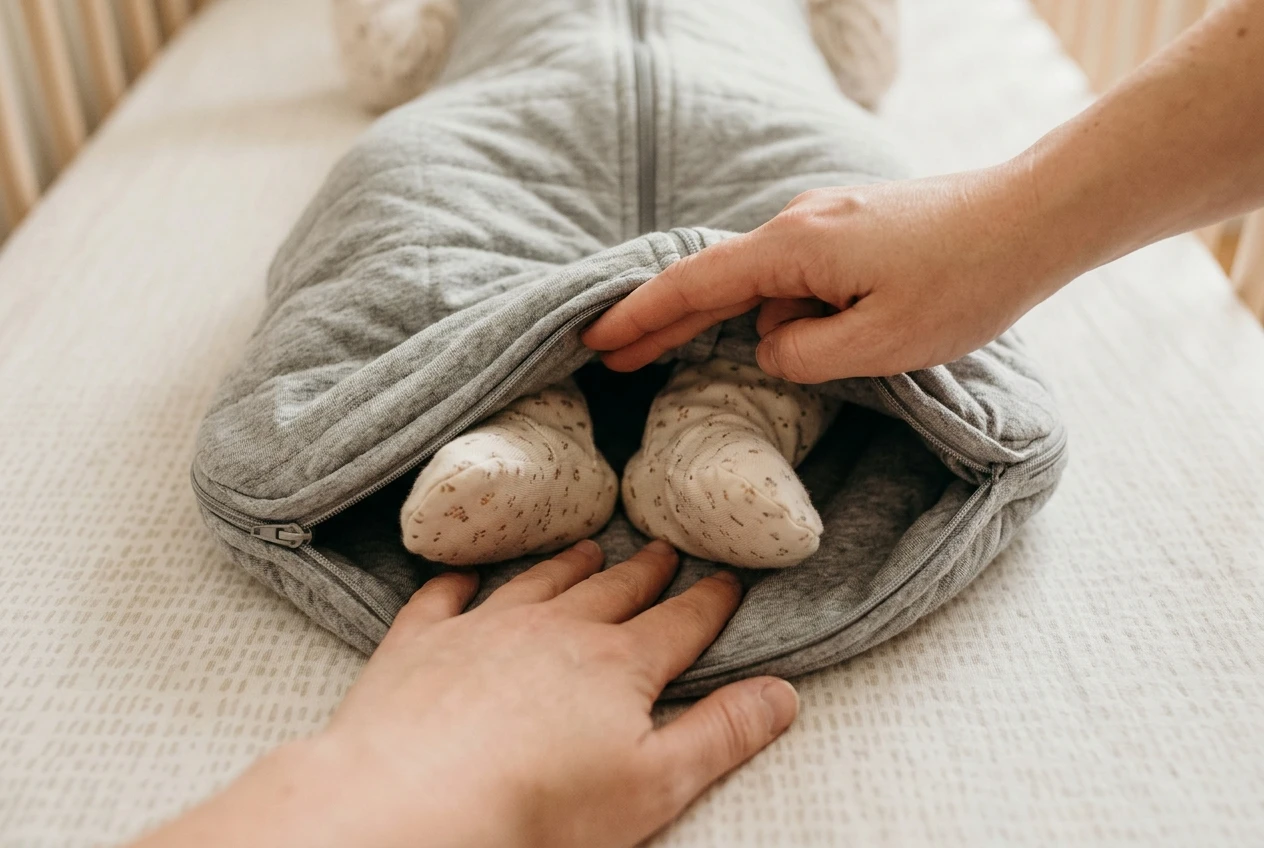
Check the fit at the bottom before you close the sack:
- Zip the sleeper and lay your baby down with legs relaxed.
- Confirm the toes sit flat inside the sleeper’s foot, not curled against the seam.
- Slide the baby into the sack and zip it up.
- Check that the bottom of the sack is not pulling the sleeper’s feet tight or folding them.
- Make sure your baby can still move their legs freely.
A footless sleeper gives a flatter lower layer, so the sack’s bottom lies smoothly over the ankles. If the sleeper has a snug ankle cuff, make sure it is not tight enough to leave a mark on the skin after wear. Any elastic that leaves a line is too small or too tight.
Whichever style you choose, the sleeper should fit close to the body, with no loose fabric bunched at the chest or neck inside the sack. A sleeper that is too large looks cozy but adds extra material in the sack, and that is the opposite of what you want.
What about growth, wash wear and middle-of-the-night diaper changes?
Each of these three practical issues points in a slightly different direction, so it helps to take them one at a time.
Growth
Footed sleepers run out of room at the toes first. When your baby’s toes press against the end of the foot, or the foot fabric looks stretched flat, move up a size. Footless sleepers give you more warning, because you will see short sleeves or an ankle that rides up before the fit becomes a problem.
If you are between sizes, the larger footless option is the more forgiving choice, as long as it is not so big that fabric bunches inside the sack.
Wash wear
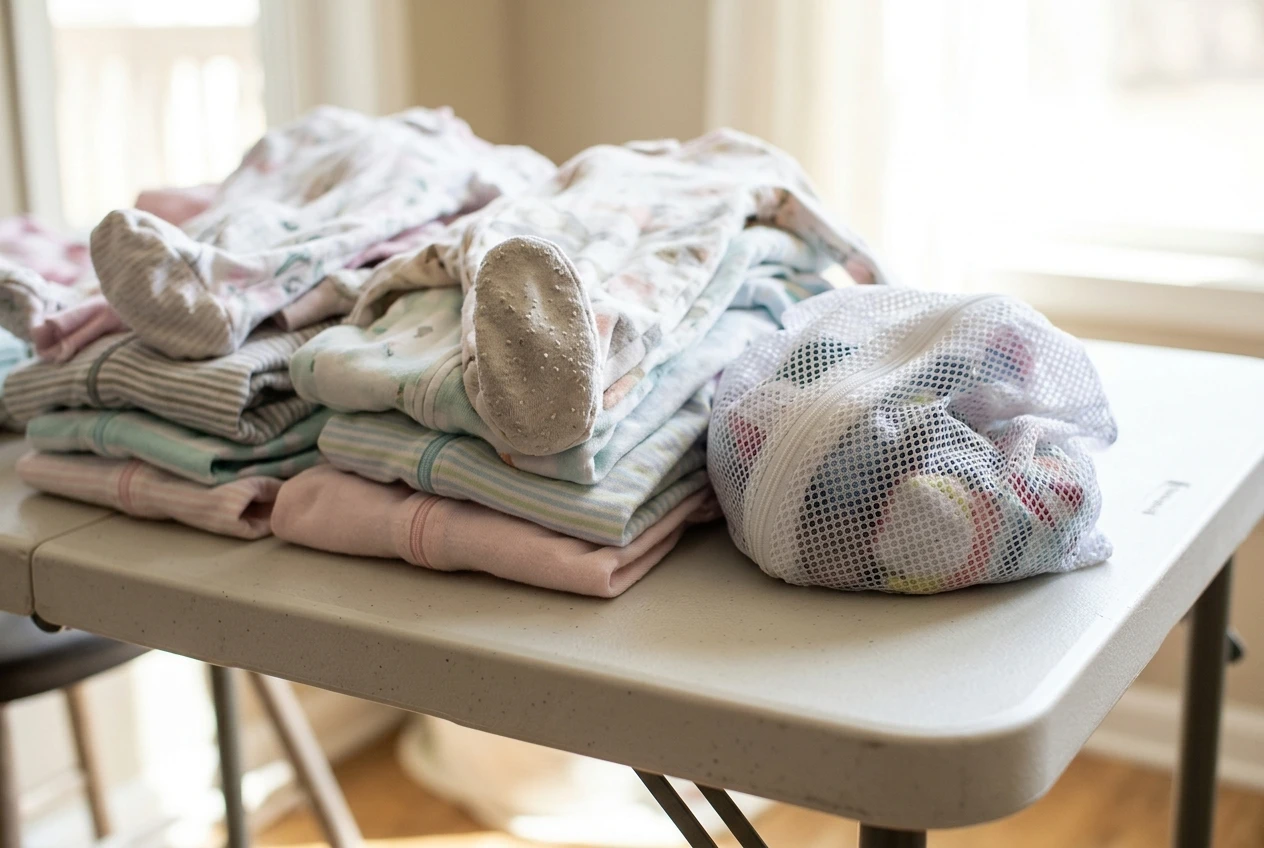
The feet on a footed sleeper take the most friction, since they rub against the sack lining and the mattress sheet. Check the soles and toes for thinning or pilling when you fold laundry. A footless sleeper avoids that spot, but it brings socks into the wash, and small socks go missing easily. A mesh laundry bag for socks solves that, and it costs very little.
Middle-of-the-night diaper changes
The sack is the main obstacle at night, so a sleeper with a two-way zipper that opens from the bottom helps more than foot style does. With either type, you unzip the sack, open the sleeper from the bottom, change the diaper and close everything back up.
The only real difference is the socks. With a footless sleeper, you may have a sock to put back on or a missing one to find. With a footed sleeper, the feet stay covered while you work, which keeps your baby warmer during the change and keeps things quick.
How do you decide in under a minute?
Answer these four questions and count which style gets more yes answers.
- Do your baby’s feet feel cool at bedtime or when you check overnight? Yes points to footed.
- Does your baby pull socks off? Yes points to footed.
- Is your baby growing quickly or between sizes? Yes points to footless.
- Is the room mild, or do you like adjusting layers by night? Yes points to footless.
If the answers split evenly, buy footed for the coldest months and footless for the rest, and keep a small mix on hand. Many parents end up with both anyway, because the right choice shifts as the seasons and the baby’s size change.
Foot coverage is one piece of the layering decision. To match your chosen style to the actual temperature of your nursery, read the guide on what to wear under a baby sleep sack by room temperature, then pick the sleeper weight that fits.
