
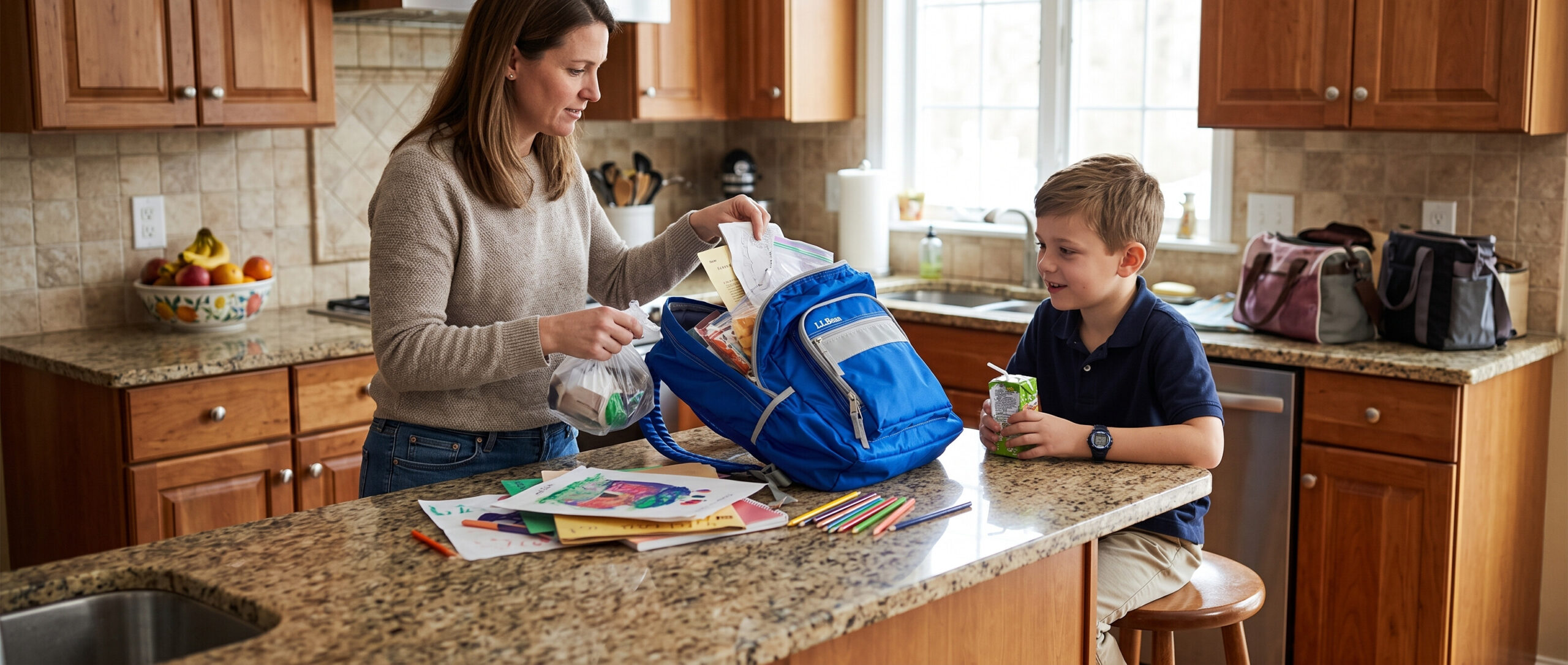

Looking for easy ways to clean a backpack? School backpacks go through a lot during the year, from lunch spills and crumbs to muddy playgrounds and everyday wear.
The good news is that keeping your child’s backpack clean doesn’t have to be difficult.
Whether you’re cleaning a school backpack, daycare backpack, or sports bag, these easy ways to clean a backpack can help you tackle everyday dirt and stains without damaging the bag.
Before You Clean Your Child’s Backpack
Before reaching for soap and water, check the backpack’s care label. Cleaning instructions can vary depending on the material, and some backpacks should only be spot-cleaned.
If there are no care instructions, it’s safest to start with the gentlest cleaning method.
You’ll also want to gather a few basic supplies:
- Mild laundry detergent or gentle dish soap
- Soft cloth or sponge
- Soft-bristled brush or old toothbrush
- Clean towel
- Lukewarm water
- Small vacuum or handheld vacuum, if available
Avoid strong bleach, harsh cleaners, and abrasive scrubbers unless the manufacturer specifically recommends them.
1. Empty the Backpack Completely
Before cleaning, remove everything from the backpack.
Check every compartment and pocket because small items have a way of hiding in the bottom of a school bag.
Remove:
- Books and folders
- Lunch containers
- Water bottles
- School supplies
- Clothing
- Toys and personal items
- Crayons and markers
- Receipts, wrappers, and other small pieces of paper
Once everything is out, turn the backpack upside down and gently shake it outside or over a garbage can to remove loose crumbs and dirt.
Don’t forget to check the smaller zippered pockets.
Tip for parents:
This is a good opportunity to get your child involved. Have them empty their own backpack and decide what actually needs to go back in. It can turn a cleaning job into a quick backpack organization session.
2. Remove Loose Dirt and Crumbs
Once the backpack is empty, remove as much dry dirt as possible before adding water.
Use a soft brush to loosen dirt from seams, corners, and the bottom of the bag. If you have a handheld vacuum, it can also be useful for picking up crumbs from inside the compartments.
Removing loose debris first makes the actual cleaning much easier.
3. Spot Clean Stains First
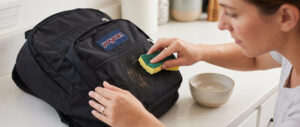
If you’re wondering how to clean a school backpack, you don’t necessarily need to wash the entire bag.
For small stains or spills, spot cleaning may be all that’s necessary.
Mix a small amount of mild detergent with lukewarm water. Dip a soft cloth or sponge into the solution and gently dab the stained area.
For stubborn marks, use a soft-bristled toothbrush to gently work the cleaning solution into the fabric.
Avoid scrubbing aggressively, as this can damage the material or cause the colour to fade.
After cleaning, wipe the area with a clean damp cloth to remove any soap residue.
4. Clean the Inside of the Backpack
The inside of a backpack can collect crumbs, dirt, pencil shavings, and spills that aren’t always obvious.
After removing loose debris, wipe the interior with a soft cloth lightly dampened with mild soapy water.
Pay particular attention to:
- The bottom of the main compartment
- Corners and seams
- Areas around pencil cases
- Lunch compartments
- Pockets where snacks are stored
If your child’s backpack has a separate lunch compartment, give it some extra attention. Food and drink spills can quickly lead to unpleasant odors.
Don’t saturate the inside of the backpack. A lightly damp cloth is usually sufficient for routine cleaning.
5. Don’t Forget the Straps and Back Panel
The shoulder straps and padded back panel are two areas that can collect plenty of dirt and sweat, especially when children carry their backpacks every day.
Gently wipe these areas with a cloth and mild soapy water.
For fabric that has accumulated more dirt, a soft brush can help loosen it.
Pay attention to the areas that come into regular contact with your child’s clothing.
6. How to Deal With a Smelly Backpack
Sometimes dirt isn’t the biggest problem—odor is.
Food spills, damp clothing, sweaty sports gear, and forgotten snacks can all leave a backpack smelling unpleasant.
Start by finding the source of the odor. Check all the pockets and compartments carefully.
Once you’ve cleaned the affected area, allow the backpack to air out completely.
Leave all of the compartments open and place the backpack somewhere well ventilated and out of direct heat.
For persistent odors, check the manufacturer’s cleaning instructions before using any deodorizing product. Some materials and finishes may not react well to household cleaners.
7. Can You Put a Backpack in the Washing Machine?
This is one of the most common questions parents have when cleaning a school backpack.
The answer is: it depends on the backpack.
Some backpacks are machine washable, while others should only be hand-washed or spot-cleaned. Always check the manufacturer’s care instructions before putting a backpack in the washing machine.
If the label says machine washing is allowed, follow the manufacturer’s instructions carefully. Remove loose items and any detachable accessories first.
If you’re unsure, hand washing is the safer option.
A backpack with leather details, special coatings, structured padding, or other decorative features may require more careful cleaning.
8. How to Dry a Backpack Properly
Proper drying is just as important as cleaning.
After washing or wiping down the backpack:
- Gently remove excess water with a clean towel.
- Open all compartments and pockets.
- Leave zippers open so air can circulate.
- Hang or place the backpack somewhere well ventilated.
- Allow it to dry completely before using it again.
Avoid putting a backpack in a dryer unless the manufacturer specifically says that it is safe.
It’s also best to avoid excessive direct heat, which can damage certain fabrics, coatings, padding, or plastic components.
Never pack a damp backpack away. Moisture trapped inside can lead to unpleasant odors and potentially mildew.
9. How Often Should You Clean a School Backpack?
There isn’t one cleaning schedule that works for every child.
A quick clean every few weeks can help prevent dirt and crumbs from building up, while a more thorough cleaning can be done when the backpack becomes visibly dirty or develops an odor.
You may want to clean it more frequently if your child:
- Carries lunch or snacks in the backpack
- Plays sports after school
- Uses the backpack outdoors frequently
- Has frequent food or drink spills
- Carries muddy clothing or equipment
- Uses the same backpack every day
A simple routine can make cleaning much easier.
Weekly: Empty the backpack and remove crumbs and trash.
Every few weeks: Wipe down dirty areas and check the pockets for spills.
As needed: Deep clean the backpack according to the manufacturer’s care instructions.
Keeping your child’s backpack organized can also help you spot spills, forgotten food, and unnecessary items before they become a bigger problem. For more ideas, see my guide to Organizing Your Child’s Backpack for the First Day of School.
10. How to Keep a Backpack Cleaner for Longer
A little prevention can go a long way.
Encourage your child to:
- Empty food wrappers and containers every day.
- Keep drinks securely closed.
- Use a lunch bag rather than placing loose food inside the backpack.
- Keep muddy shoes and sports clothing in a separate bag when possible.
- Avoid putting wet clothing directly inside the backpack.
- Clean out unnecessary papers and items regularly.
- Keep the backpack off wet or muddy floors when possible.
You can also make backpack clean-out day part of your regular weekly routine. It only takes a few minutes and can prevent a much bigger cleaning job later.
When Should You Replace a Child’s Backpack?
Regular cleaning can help extend the life of a backpack, but even a well-cared-for bag will eventually need to be replaced.
Look for signs such as:
- Broken or stuck zippers
- Torn seams
- Damaged shoulder straps
- Worn-out padding
- Holes or significant fabric damage
- A backpack that no longer fits comfortably
- Not enough room for your child’s current school supplies
- Damage that affects how the backpack functions
If your child’s backpack is no longer comfortable, functional, or appropriately sized, it may be time to look for a replacement.
As children move into middle school, their backpack needs may change as they begin carrying more books, binders, technology, and other school essentials. My guide to How to Choose the Perfect Backpacks for Middle School Students can help you determine what to look for.
If you’re shopping for a new one, you may also want to take a look at my guide to the best backpacks for elementary school kids or my roundup of 10 best boys backpacks for school.
Final Thoughts
Keeping a school backpack clean doesn’t have to become another big chore on your to-do list. Regularly emptying the bag, removing crumbs and dirt, treating spills quickly, and following the manufacturer’s cleaning instructions can help keep it looking and smelling fresh.
The best cleaning method will always depend on the backpack’s material and care instructions, so when in doubt, start with gentle spot cleaning.
With these easy ways to clean a backpack, you can help your child’s school bag stay cleaner and in better condition throughout the school year.
