Choosing the right backpack size for your child is about more than finding a bag that looks cute or has enough room for their belongings.
A backpack that is too large can feel heavy and uncomfortable, while one that is too small may not hold everything they need for school, daycare, or travel.
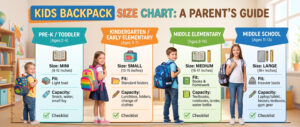
This kids backpack size chart can help you find a backpack that is appropriate for your child’s age, height, and daily needs. We’ll also look at how a backpack should fit and what to consider when choosing the right size.
Kids Backpack Size Chart
Children grow quickly, so age can only provide a general starting point when choosing a backpack. Your child’s height, build, and what they need to carry are also important.
| Age/School Stage | Approximate Backpack Height | Typical Backpack Capacity | Best For |
|---|---|---|---|
| Toddlers | 10–12 inches | 5–10 L | Daycare, preschool, small personal items |
| Preschool | 12–14 inches | 8–12 L | Preschool, daycare, snacks, small essentials |
| Kindergarten | 14–16 inches | 10–15 L | Folders, lunch, water bottle, school supplies |
| Elementary School | 15–18 inches | 15–20 L | School books, folders, lunch, supplies |
| Older Elementary | 16–19 inches | 18–25 L | Larger books, binders, sports or activity gear |
| Middle School | 17–20 inches | 20–30 L | Textbooks, binders, laptop, school supplies |
These measurements are general guidelines rather than strict rules. Backpack dimensions and capacity vary between brands, so always check the manufacturer’s measurements before purchasing.
What Size Backpack Fits My Child?
The best backpack size depends partly on your child’s height and body frame. A backpack should not overwhelm your child or extend far below their lower back.
For younger children, a smaller backpack is usually easier to carry. Toddlers and preschoolers generally don’t need a large school backpack because they are carrying fewer items.
As children move into elementary and middle school, they may need more space for folders, books, lunch containers, water bottles, and other school supplies. This is when moving up to a larger backpack can make sense.
Rather than choosing a backpack based on age alone, compare the backpack’s dimensions with your child’s height and torso.
How to Measure a Child for a Backpack
You don’t need complicated measurements to get a good idea of the backpack size your child needs.
1. Measure Your Child’s Height
Have your child stand straight without shoes and measure from the floor to the top of their head.
This gives you a general idea of their overall size and can help you compare them with the backpack manufacturer’s recommended age or height range.
2. Consider Their Torso
Torso length is particularly useful when choosing a backpack for an older child.
Measure from the base of the neck down to approximately the top of the hips. The backpack should sit comfortably against the child’s back without extending too far below the waist.
3. Compare the Backpack Dimensions
Check the manufacturer’s listed height, width, and depth rather than relying only on the age recommendation.
A backpack may be advertised for a certain age group but still fit differently depending on its design.
How Should a Backpack Fit a Child?
A properly fitted backpack should sit comfortably against your child’s back and allow them to move freely.
Look for these basic fit guidelines:
- The backpack should sit close to the child’s back.
- The bottom of the backpack should rest around the waist or slightly above the hips.
- The top of the backpack should not extend far above the shoulders.
- Shoulder straps should be adjusted so the backpack does not hang too low.
- Both shoulder straps should be used rather than carrying the backpack over one shoulder.
- The backpack should not be so wide or deep that it interferes with your child’s movement.
For younger children especially, a backpack that looks appropriately sized on their back is often more practical than choosing the largest bag they can possibly carry.
Backpack Size by Age
Toddler Backpack Size
Toddlers usually need a small backpack for daycare, preschool, outings, or carrying a few personal items.
A backpack around 10–12 inches tall is often enough for this age group. Look for lightweight designs with padded shoulder straps and an easy-to-use zipper.
There’s generally no need for a large-capacity backpack when your child is only carrying a snack, change of clothes, a small toy, or a few other essentials.
If you’re looking for a smaller option for daycare or preschool, you may also want to see our guide to the best mini backpacks for toddlers going to daycare.
Preschool Backpack Size
Preschoolers may need slightly more room than toddlers, especially if they bring a lunch container, water bottle, extra clothing, and school supplies.
A backpack around 12–14 inches tall can be a useful starting point.
Make sure the backpack isn’t too deep or heavy for your child. A smaller backpack that fits properly is usually more comfortable than a larger bag with extra unused space.
Kindergarten Backpack Size
Kindergarten children often need to carry more than preschoolers, including folders, artwork, lunch, snacks, and a water bottle.
A backpack around 14–16 inches tall may provide enough space for these items without being excessively large.
Look for a design with several compartments so your child can organize their belongings without needing a very large backpack.
Looking for specific backpack ideas for this age group? Take a look at our guide to the best back-to-school backpacks for kindergarten students.
Elementary School Backpack Size
Once children reach elementary school, backpack requirements can vary considerably.
A child in Grade 1 may need considerably less space than a child in Grade 5. A backpack around 15–18 inches tall and approximately 15–20 liters can be a useful range for many elementary school children.
Older elementary students may need additional capacity for larger books, binders, school projects, and extracurricular activities.
For more detailed recommendations, see our guide to the best backpacks for elementary school kids.
Middle School Backpack Size
Middle school students often carry considerably more than younger children.
A backpack around 17–20 inches tall with approximately 20–30 liters of capacity may be appropriate, depending on the student’s schedule and school requirements.
Students who carry binders, textbooks, laptops, lunch, sports clothing, or other equipment may need a larger-capacity backpack.
You can also read our guide on how to choose the perfect backpack for middle school students for more tips on finding the right backpack for this age group.
For older elementary and middle school girls, you can also explore our guide to stylish and functional backpacks for tween girls.
Backpack Capacity: How Many Liters Does Your Child Need?
Backpack capacity is measured in liters and tells you approximately how much the backpack can hold.
A smaller backpack of 5–10 liters may be sufficient for a toddler or preschooler.
A 10–15-liter backpack can work well for kindergarten and younger elementary students, while older elementary students may need around 15–25 liters.
Middle school students often benefit from approximately 20–30 liters, although the ideal capacity depends on what they need to carry each day.
Remember that a larger backpack isn’t automatically better. Extra space can encourage children to carry unnecessary items and can make the backpack heavier.
Lightweight Backpacks for Kids
Weight is another important consideration when choosing a backpack.
When comparing two backpacks that are similar in size, a lighter backpack may be more comfortable for your child because more of the weight will come from the items they actually need to carry.
Look for:
- Lightweight materials
- Padded shoulder straps
- A comfortable back panel
- Multiple compartments for organization
- Adjustable straps
- A size that fits your child’s body
The backpack itself should not add unnecessary weight.
What Should You Look for in a Kids’ Backpack?
Once you’ve determined the appropriate size, consider the backpack’s overall design.
Adjustable Straps
Adjustable shoulder straps allow you to customize the fit as your child grows.
Padded Shoulder Straps
Padding can make a backpack more comfortable, particularly when your child needs to carry it for longer periods.
Multiple Compartments
Separate compartments can make it easier to organize school supplies, lunch, water bottles, and smaller items.
Water Bottle Pocket
An exterior water bottle pocket is convenient and can help prevent spills inside the main compartment.
Durable Materials
A backpack used every day needs to withstand regular wear and tear. Look for sturdy materials and well-constructed seams and zippers.
Easy-to-Use Zippers
Younger children should be able to open and close their backpack independently. Large zipper pulls can be particularly helpful for preschool and elementary school children.
Choosing the Right Backpack Size for School

The right backpack size isn’t necessarily the biggest one that fits your child’s school supplies.
Instead, think about what your child actually carries each day.
A preschooler may only need space for a lunch, water bottle, and change of clothes. An elementary school student may need room for folders, books, lunch, and school supplies. A middle school student may need considerably more capacity.
If you’re unsure between two sizes, compare the actual backpack dimensions with your child’s height and torso length. This can give you a much better idea of how the backpack will sit on their back.
Kids Backpack Size Chart: Quick Guide
Here’s a quick summary:
- Toddlers: 10–12 inches, approximately 5–10 L
- Preschool: 12–14 inches, approximately 8–12 L
- Kindergarten: 14–16 inches, approximately 10–15 L
- Elementary school: 15–18 inches, approximately 15–20 L
- Older elementary: 16–19 inches, approximately 18–25 L
- Middle school: 17–20 inches, approximately 20–30 L
These ranges are starting points rather than exact requirements. Your child’s height, torso length, build, and daily carrying needs should all be considered.
More Backpack Guides
If you’re looking for more help choosing a backpack for your child, these related guides can help you find options for different ages and school stages.
Final Thoughts
Choosing the right backpack size for your child can make school days more comfortable and help them carry what they need without an oversized bag.
Use the backpack size chart as a starting point, then check the backpack’s actual dimensions and adjust the straps to achieve a comfortable fit. As your child grows and their school needs change, their ideal backpack size may change too.
The goal is to find a backpack that fits your child well, has enough room for their essentials, and isn’t larger or heavier than necessary.