When it comes to keeping little feet dry, choosing the right boots can make a big difference. But with so many options available, parents may wonder: neoprene vs rain boots for toddlers—which is better?
The answer depends largely on when and where your toddler will wear them.
Traditional rain boots are a great choice for puddle jumping and mild, wet weather. Neoprene boots, on the other hand, can offer extra warmth and flexibility, making them useful for colder and wetter conditions.
In this guide, we’ll compare neoprene boots and traditional rain boots to help you choose the best option for your little one.
Neoprene vs Rain Boots for Toddlers at a Glance
| Feature | Neoprene Boots | Traditional Rain Boots |
|---|---|---|
| Waterproof | Yes | Yes |
| Warmth | Usually warmer | Usually less insulated |
| Flexibility | Soft and flexible | Can be stiffer |
| Best Weather | Cool and wet conditions | Mild and rainy weather |
| Ease of Cleaning | Easy to wipe clean | Very easy to rinse clean |
| Weight | Can be heavier | Often lightweight |
| Best For | Cold rain, mud, and cooler days | Puddles, rain, and everyday wet weather |
What Are Neoprene Boots?
Neoprene is a flexible, synthetic material commonly used in wetsuits and some waterproof boots. Toddler neoprene boots often combine neoprene with rubber, giving little feet protection from wet conditions while providing additional warmth and flexibility.
Unlike a basic rain boot, neoprene can provide some insulation. This makes these boots especially useful during cool spring days, rainy fall weather, and muddy outdoor adventures.
However, not every boot described as a “neoprene boot” is made entirely from neoprene. Some styles have a rubber lower section with neoprene around the upper part of the boot, so it’s always worth checking the product description.
If you’re looking for a toddler boot that combines waterproof protection with the added warmth of neoprene insulation, here is one example worth considering.
BOGS Baby Classic – Best Neoprene-Insulated Rain Boot
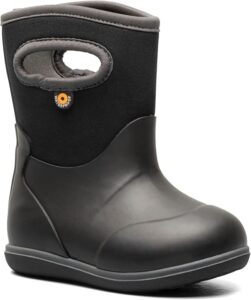
The BOGS Baby Classic Solid combines a 100% waterproof rubber upper with 3mm Neo-Tech insulation, making it a great option when a regular unlined rain boot isn’t warm enough.
Easy-on handles make getting dressed simpler, while MaxWick technology helps move moisture away from little feet.
Key Features:
- 100% waterproof
- 3mm Neo-Tech insulation for added warmth
- Easy-on handles
- MaxWick technology helps keep feet dry
- DuraFresh helps control foot odour
- Flexible and lightweight design
- Comfort rated to -10°C (14°F)
Best For: Toddlers who need waterproof protection with extra warmth for cool, wet weather.
Where To Buy: Amazon
What Are Traditional Rain Boots?
Traditional rain boots are designed primarily to keep feet dry in wet conditions. They are commonly made from materials such as natural rubber, synthetic rubber, or PVC.
For toddlers, classic rain boots are often a simple choice for rainy days, puddle jumping, muddy playgrounds, and wet grass. Unlined versions are generally best suited to milder weather because they don’t provide much insulation.
Many toddler rain boots also feature helpful details such as easy pull-on handles, wide openings, and treaded soles.
For parents looking for a lightweight, straightforward boot for puddle jumping and mild rainy weather, a traditional rain boot may be all their toddler needs.
Kamik Stomp – Best Traditional Rain Boot
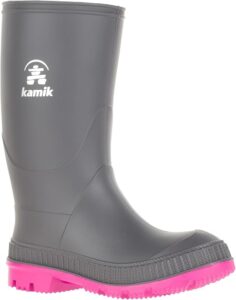
The Kamik Stomp is a simple, practical rain boot made with a 100% waterproof, phthalate-free synthetic rubber upper.
The slip-on design makes it easy for toddlers to get ready, while the removable felt footbed adds a little extra comfort for wet-weather adventures.
Key Features:
- 100% waterproof synthetic rubber upper
- Removable felt footbed
- Easy slip-on design
- Non-marking synthetic rubber outsole
- Vegan-friendly and latex-free
- Made in Canada and recyclable
- Available in toddler sizes
Best For: Toddlers who need a lightweight, waterproof boot for rainy days, puddle jumping, and muddy outdoor play.
Where To Buy: Amazon
Neoprene Boots: The Pros and Cons
Pros of Neoprene Boots
Extra Warmth
One of the biggest advantages of neoprene boots is their ability to provide additional insulation. They can be a better choice when your toddler will be playing outside in cool and wet weather.
Flexible and Comfortable
Neoprene is a soft and flexible material that can move more easily with an active toddler. This may make some neoprene styles feel more comfortable during outdoor play.
Great for Mud and Wet Conditions
Many neoprene boots are designed for more than just light rain. They can be a practical option for toddlers who spend plenty of time outdoors in mud, wet grass, and puddles.
Cons of Neoprene Boots
Can Feel Too Warm
The extra insulation that makes neoprene useful in cooler weather can also make it less comfortable on mild or warm days. Little feet may become sweaty when the temperature rises.
Often More Expensive
Neoprene boots can cost more than a basic pair of toddler rain boots.
May Be Heavier
Depending on the design and amount of rubber used, some neoprene boots can be heavier than lightweight rain boots. This is something to consider for younger toddlers who are still gaining confidence with walking.
Traditional Rain Boots: The Pros and Cons
Pros of Traditional Rain Boots
Great for Rainy Days
Classic rain boots are designed to handle puddles, mud, and wet grass. They are a simple and practical choice for everyday rainy weather.
Easy to Clean
After a muddy adventure, most rain boots can simply be rinsed or wiped clean.
Often Lightweight
Many toddler rain boots are designed to be lightweight and easy for little ones to walk in. Lightweight footwear can be especially helpful for younger toddlers.
Easy for Toddlers to Put On
Many styles feature pull-on handles or wide openings, helping toddlers learn to put their own boots on and take them off.
Cons of Traditional Rain Boots
Less Warmth
Unlined rain boots generally don’t provide much insulation. On cold or near-freezing days, your toddler may need warm socks—or a different type of boot altogether.
Some Styles Can Feel Stiff
The flexibility of rain boots varies depending on the material. Some rubber or PVC styles may feel stiffer than neoprene, especially in colder temperatures.
Which Is Better for Rainy Weather?
For mild rainy days, traditional rain boots are usually the better choice.
They are simple, waterproof, easy to clean, and designed specifically for splashing through puddles. If your toddler only needs boots for occasional rainy days or daycare outdoor play, a lightweight pair of classic rain boots may be all they need.
If you’re looking for fun and practical styles for boys and girls, check out my guide to the best rain boots for toddlers.
However, if the weather is cold and wet, neoprene boots may provide a more comfortable option because of their added warmth.
My Recommendation:
- Mild and rainy: Traditional rain boots
- Cool and wet: Neoprene boots
- Cold, muddy conditions: Insulated neoprene or thermal boots
- Warm weather: Lightweight, unlined rain boots
Are Neoprene Boots Good for Toddlers?
Yes, neoprene boots can be a good choice for toddlers, particularly for families who spend a lot of time outdoors during cooler weather.
The key is choosing a pair that fits properly and isn’t unnecessarily heavy for your child. Look for boots with:
- A flexible sole
- Good traction
- Easy pull-on handles or loops
- Enough room for comfortable movement
- A secure fit around the foot
Keep in mind that warmer isn’t always better. If your toddler will be wearing boots during mild spring or summer rain, a heavily insulated neoprene style may make their feet too warm.
Are Rain Boots Better for Daycare?
For many toddlers, traditional rain boots are a practical choice for daycare.
They are easy to put on, simple to clean, and suitable for puddles and muddy outdoor play. Many daycare programs encourage families to keep rain gear available for outdoor time, especially during rainy seasons.
If your toddler attends daycare during cooler fall or early spring weather, you may prefer a lined or neoprene boot for additional warmth.
If you’re looking for cute and practical styles for rainy-day adventures, take a look at my guide to cute toddler rain boots.
It can also be helpful to check with your daycare about its specific requirements. Some centres may have recommendations about the type of footwear children need for outdoor play.
What About Rain Boots With a Neoprene Lining?
You don’t necessarily have to choose between one or the other.
Some toddler boots combine the benefits of rubber and neoprene. These styles may feature a waterproof rubber lower section with neoprene around the upper portion of the boot or as a lining.
This combination can provide:
- Waterproof protection
- Extra warmth
- A more flexible fit
- Better comfort during cool, wet weather
These hybrid styles can be a great option for families looking for a versatile boot for the changing weather of spring and fall.
How to Choose the Right Boots for Your Toddler
When comparing neoprene vs rain boots for toddlers, consider these important factors.
1. Think About the Weather
Start with the conditions your toddler will experience most often.
If you mostly deal with rain and mild temperatures, traditional rain boots should work well.
If you regularly experience cold rain, mud, and chilly mornings, neoprene boots may be worth considering.
2. Consider Your Toddler’s Activity Level
An active toddler who loves exploring muddy trails and wet grass may benefit from a more durable boot.
For occasional puddle jumping or short walks to daycare, a lightweight traditional rain boot may be the more practical option.
And if your toddler loves being outside on especially wet days, a waterproof rain suit can provide another layer of protection from rain and puddles.
3. Look for a Comfortable Fit
A boot should have enough room for your toddler’s toes without being so loose that their foot slides around inside.
Avoid buying boots that are excessively large just to leave room for growth. A poor fit can make walking more difficult.
4. Check the Weight
Heavy boots can be tiring for little legs.
When possible, choose a lightweight style that your toddler can comfortably walk and play in.
5. Don’t Forget About Traction
Wet grass, mud, and slippery surfaces can be challenging for toddlers.
Look for boots with a textured or treaded outsole to help provide better grip during outdoor play.
6. Consider How Easy They Are to Put On
Toddlers often want to do things independently.
Features such as pull handles, loops, and wide openings can make getting ready easier for both parents and little ones.
Neoprene vs Rain Boots for Toddlers: Frequently Asked Questions
Are neoprene boots waterproof?
Many neoprene boots are designed to be waterproof, particularly styles that combine neoprene with rubber. However, always check the manufacturer’s product description because waterproof construction can vary by style.
Are neoprene boots warmer than regular rain boots?
In general, neoprene provides more insulation than an unlined traditional rain boot, making it a better option for cooler, wet weather.
Can toddlers wear rain boots in cold weather?
Rain boots can be worn in cool weather with warm socks, but unlined styles may not provide enough warmth for very cold conditions. For cold, wet weather, consider a lined rain boot, neoprene boot, or an appropriate insulated winter boot.
Are neoprene boots too hot for summer?
They can be. Because neoprene provides insulation, it may feel too warm during mild or hot weather. A lightweight, unlined rain boot is usually a better choice for warm rainy days.
Should toddlers wear socks with rain boots?
Yes, socks can help improve comfort and reduce friction inside the boot. For cooler weather, thicker socks may provide additional warmth, as long as the boots still fit comfortably.
Which Is Better: Neoprene or Rain Boots?
For mild, rainy weather, traditional rain boots are usually the better choice. For cooler weather, neoprene or neoprene-insulated boots provide additional warmth. If you live somewhere with changing seasons, having both types can give your toddler the most flexibility.
Final Thoughts: Which Is Better?
When comparing neoprene vs rain boots for toddlers, there isn’t one option that’s best for every child or every season.
Traditional rain boots are a great choice for mild, rainy weather, puddle jumping, and everyday daycare use. They are often lightweight, easy to clean, and simple for toddlers to put on.
Neoprene boots are better suited to cooler and wetter conditions when extra warmth and flexibility are helpful.
For many families, the ideal solution may actually be having different boots for different seasons.
If your toddler spends plenty of time outdoors, a lightweight pair of traditional rain boots for warmer rainy days and a warmer neoprene or lined pair for cooler weather can help keep little feet comfortable throughout the year.
The most important thing is choosing a pair that fits well, is comfortable for your toddler to walk in, and provides the right amount of protection for the weather.