Organic Cotton Pajamas for Winter Sleep: What to Look For
Organic cotton pajamas for winter should carry a recognized organic certification such as GOTS, not just the words “organic cotton.” Choose a knit weight that suits your child’s room, from lightweight jersey to thicker interlock. The fit should be snug, with the cut matched to your child’s age and the correct flame-resistance tag.
Does “organic cotton” on the label really mean organic?
Only if a certification stands behind the words. “Organic cotton” in a product name or a banner can describe a small share of the fabric, and nothing on the page may prove it.
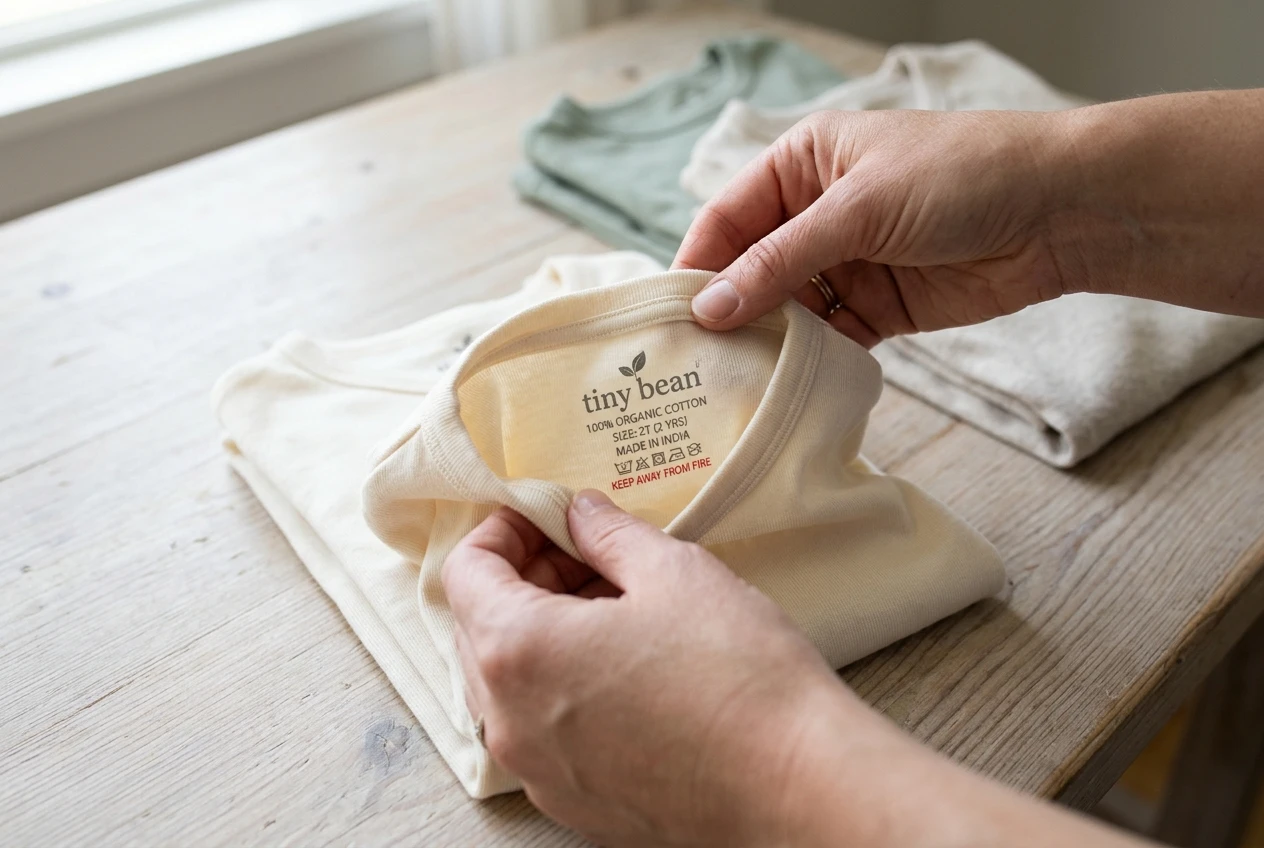
Look for these on the tag or product page:
- GOTS (Global Organic Textile Standard). Under this standard, a product labeled “organic” must contain at least 95 percent certified organic fibers, and one labeled “made with organic” must contain at least 70 percent. A genuine GOTS label also carries the certifier’s license number.
- OCS (Organic Content Standard). This tracks how much organic fiber is in a product, but it does not cover how the fabric was dyed or processed.
- Oeko-Tex Standard 100. This tests the finished product for harmful substances. It is useful, but it is not an organic certification, so a pair can have it without being organic.
Phrases like “made with natural fibers,” “eco-friendly,” “pure cotton” and “organic-inspired” are not certifications. Neither is a leaf icon with no standard named beside it.
If the listing is unclear, ask the seller three things: which standard certifies the fabric, what the license number is, and what percentage of the fiber is organic. A seller with real certification can answer in one message.
Vague replies are a reason to choose a different pair.
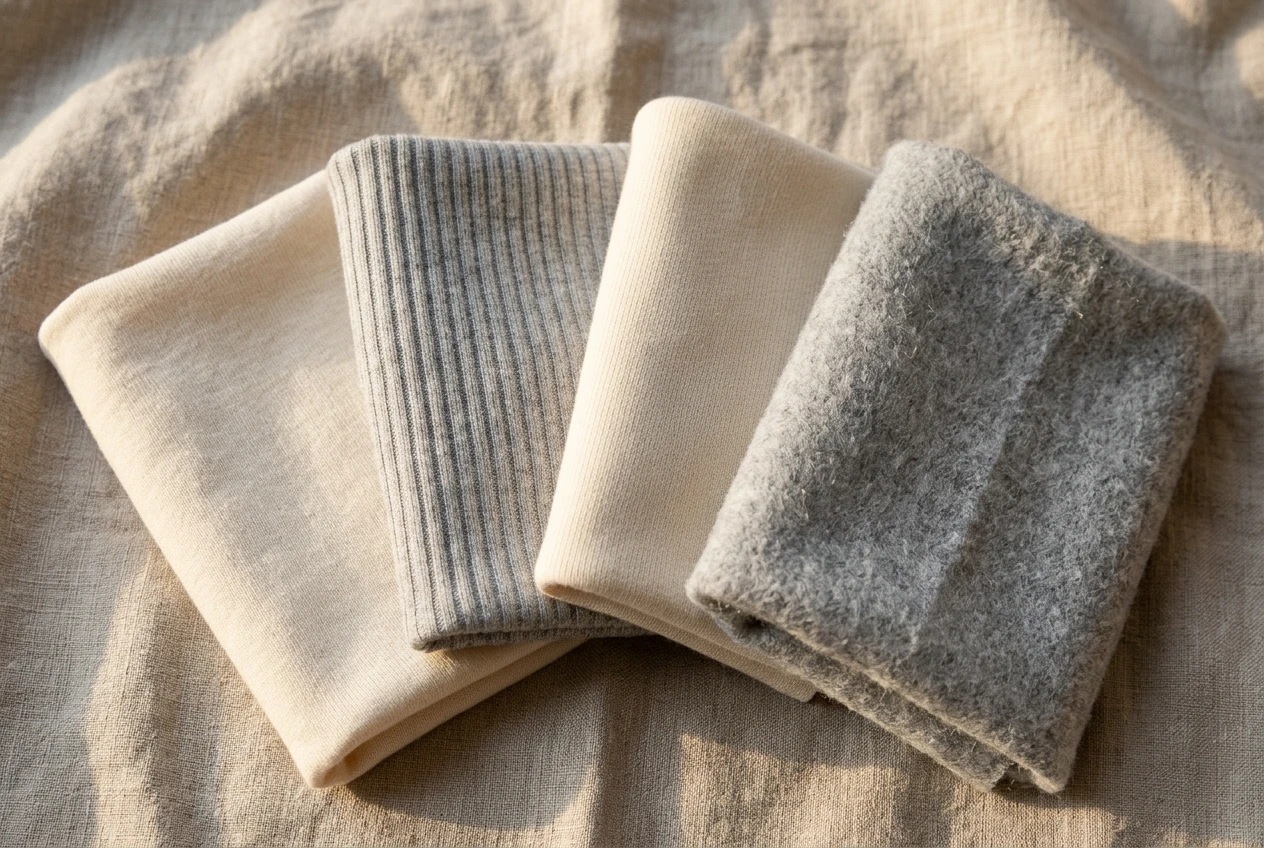
Which organic cotton knit is warmest: jersey, rib, interlock or flannel?
Flannel is usually the warmest of the four, and jersey the lightest. Flannel is technically a woven fabric rather than a knit. It is brushed to raise a soft, fuzzy surface, and it sits on shelves beside the knits, so it belongs in the comparison.
|
Fabric |
Feel |
Warmth |
Stretch |
Best use |
|---|---|---|---|---|
|
Jersey |
Soft, smooth, light |
Light |
Good |
Mild bedrooms, layering, kids who run warm |
|
Rib |
Soft with a textured, stretchy surface |
Light to medium |
High |
Snug-fitting sets, cuffs and necklines |
|
Interlock |
Smooth, dense, double-knit |
Medium |
Moderate |
Cold-season everyday pajamas that keep their shape |
|
Flannel |
Fuzzy, brushed surface |
Medium to high |
Low |
Cold bedrooms, kids who run cold |
Fabric weight matters as much as fabric type. A heavy jersey can be warmer than a thin flannel, so check whether the listing gives a weight, often shown in grams per square meter (GSM). A higher number means a thicker fabric. If no weight is listed, read the description for words like “lightweight” or “mid-weight,” or ask the seller.
Flannel has less give than a knit, and pajamas cut from it are often made roomy. If you want a snug fit, check the tag before assuming a flannel set qualifies.
Why should winter pajamas fit snugly?
Pajamas should fit snugly because loose fabric is the main safety concern with children’s sleepwear. Fabric that hangs away from the body can catch fire more easily than fabric that lies close to the skin. Roomy sleeves and legs also bunch and twist as a child moves in bed.
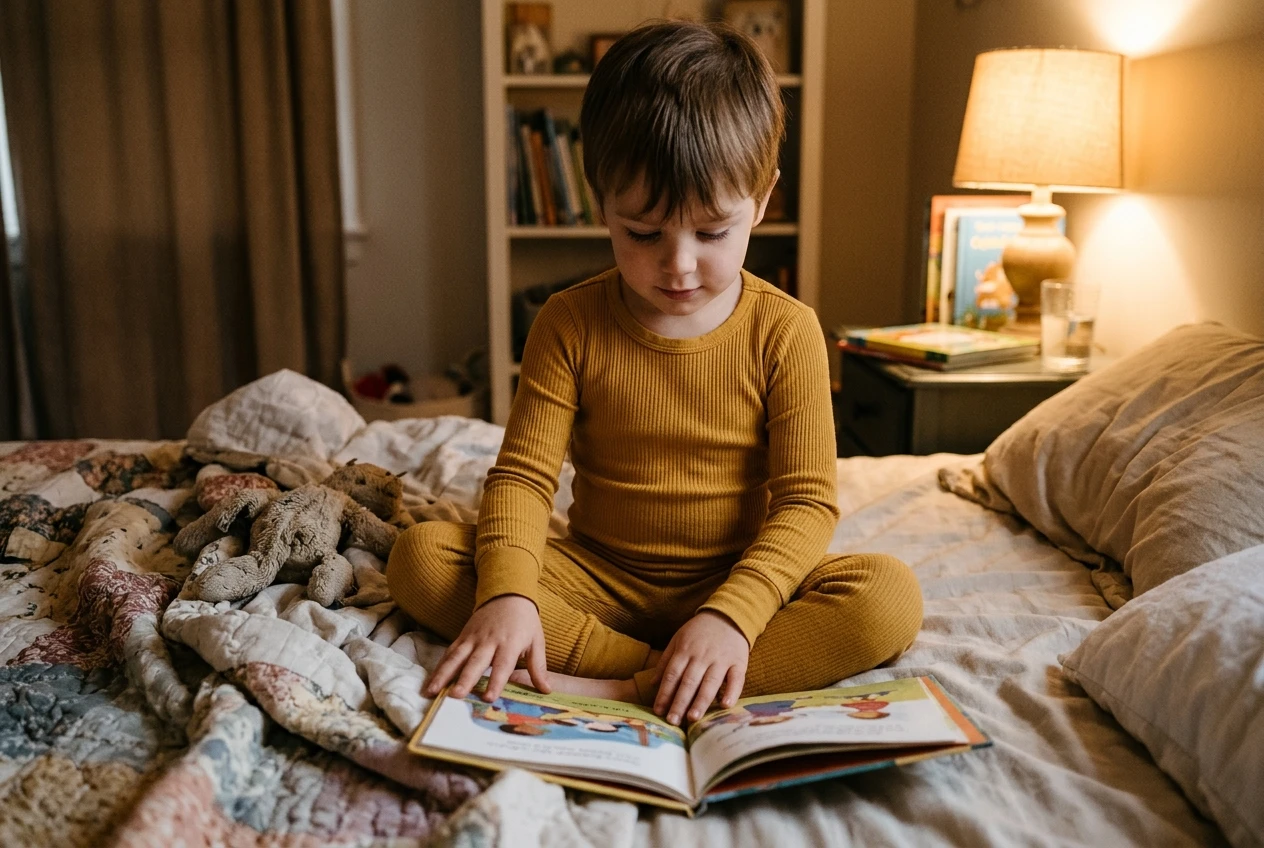
Cozy does not have to mean roomy. A snug cotton set holds warmth close to the body, and a thicker fabric adds warmth without extra volume. A baggy set with a lot of air inside is less reliable.
Check your country’s flame-resistance labeling before you buy, because the rules differ:
- United States: Children’s sleepwear in sizes 9 months through 14 must either be made of flame-resistant fabric or be snug-fitting. Snug-fitting garments, which include most cotton pajamas, carry a tag or label that reads something like “Wear snug-fitting, not flame resistant.” Garments for babies under 9 months are not covered by the same requirement.
- Other countries: The UK, Australia and the EU each have their own nightwear rules and labels. In Canada, children’s sleepwear falls under the [Textile Flammability Regulations](https://laws-lois.justice.gc.ca/eng/regulations/SOR-2001-181/), so check the tag for the flame-resistance information they require. Look for the tag your national rules require, and check your consumer safety agency’s website if you are unsure.
If the tag says the garment is not flame resistant, it should be worn snug. If the pajamas run big on your child, they are the wrong size, however soft they feel.
How warm should winter pajamas be without overheating?
Winter pajamas should be warm enough that your child is comfortable without a heavy extra layer, and no warmer than the room requires. Overheating is as real a concern as being cold, and a warm bedroom plus thick flannel plus a heavy blanket adds up quickly.
Match the pajamas to the room:
- Cool room: Interlock or flannel in a snug two-piece set, with a blanket suited to your child’s age.
- Moderate room: Mid-weight jersey or rib, with a light blanket or none.
- Warm room: Lightweight jersey, short sleeves or short legs if needed.
Signs your child is too warm include a damp neck or damp hair at the nape, flushed cheeks, a sweaty back, and restless sleep with kicked-off covers. Cold hands and feet alone are not a reliable sign of being cold, so feel the chest or back of the neck instead.
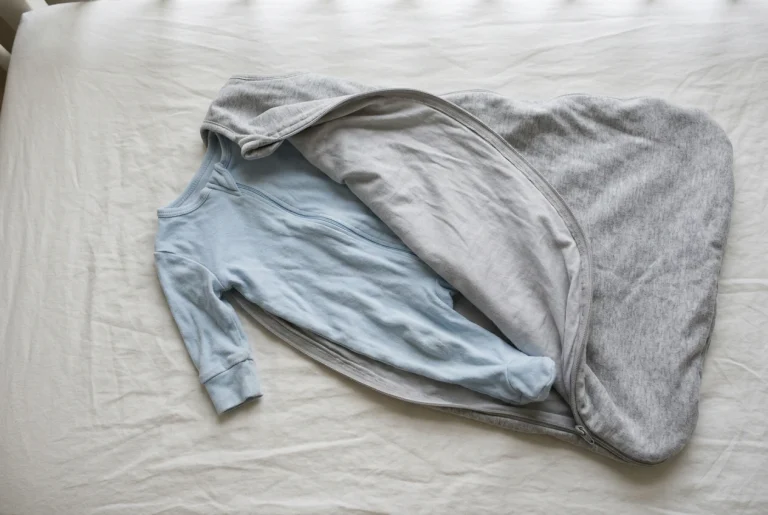
For babies, the guidance gets more specific. The article on spotting and fixing a baby who is too hot at night goes through the signs in detail, and the baby sleep clothing chart for 62, 68 and 72 degree rooms covers what to dress an infant in at each temperature. This article stays with children past the sleep sack stage.
Two-piece, one-piece or footed: which suits your child’s age?
The right cut depends on how your child moves, sleeps and uses the toilet. Here is how it usually breaks down by stage:
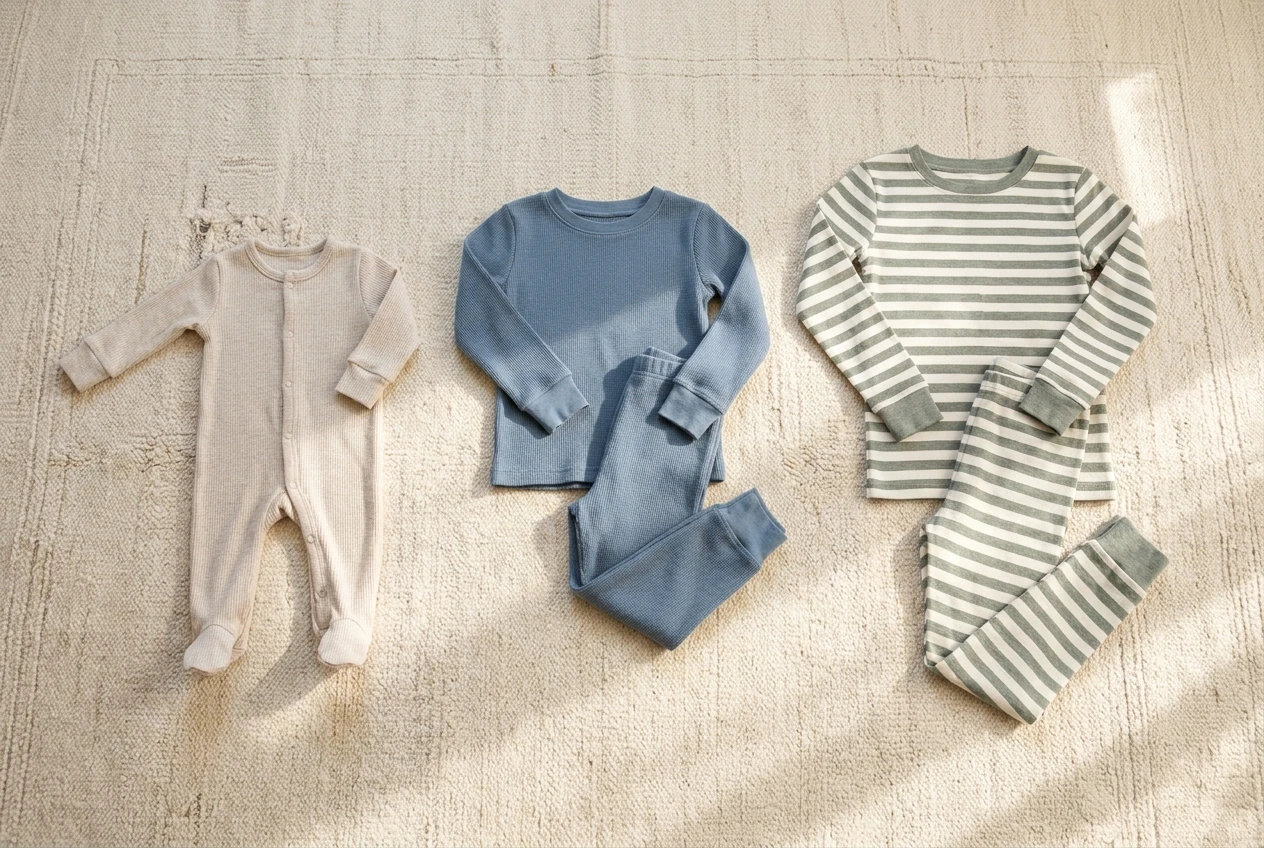
- Babies, up to about 12 months: One-piece sleepers, often footed, are the norm. If your baby sleeps in a sleep sack, see footed vs footless sleepers under a sleep sack for how to choose.
- Toddlers, about 1 to 3 years: Footed one-piece sleepers still work for many children, especially in cold rooms. Check that the feet are not tight and that your child has outgrown none of the length, since a too-short footed sleeper pulls at the toes. Two-piece sets are easier once potty training starts.
- Preschool, about 3 to 5 years: Two-piece sets are the most practical choice. Kids this age want to dress themselves, and separate tops and bottoms are easier to manage in the dark. Footed styles are still fine if your child likes them and fits them well.
- School age, about 6 years and up: Two-piece sets or nightgowns in a snug cut. Choose bottoms with a soft, flat waistband and cuffs that stay at the ankle.
For any age, look at the details that touch the skin. Flat seams, a tag-free neck and a soft waistband are worth checking, especially for children with sensitive skin. Zippers on one-piece styles should have a fabric guard under the chin.
How do you wash organic cotton pajamas so they keep their fit?
Wash them as the care label directs, usually in cool or warm water on a gentle cycle, and dry them on low heat or flat. Organic cotton shrinks the way other cotton does, mostly in the first few washes and mostly in length.
Because snug fit matters, buying a size up to allow for shrinking is a gamble. Use the brand’s size chart with your child’s height and chest measurement, buy the size that fits now, and wash cool to limit shrinkage. If a brand says its fabric is pre-washed or pre-shrunk, that lowers the risk but does not remove it.
A few habits help the pajamas last:
- Turn them inside out before washing to protect the surface of brushed or textured fabrics.
- Skip fabric softener unless the care label allows it, since some labels advise against it.
- Wash new pajamas before the first wear, both to remove finishing residue and to see how they behave.
- Avoid high-heat dryer cycles, which cause most of the shrinkage.
Label checklist before you buy
- A named organic certification (GOTS or similar), with a license number or a way to verify it
- The percentage of organic fiber, not just the word “organic”
- A fabric type and weight that suits your child’s bedroom
- A snug-fit cut, or the flame-resistance tag your country requires
- Flat seams, a soft waistband and a tag-free neck
- Care instructions you will actually follow
- A size chart based on measurements, not only age
Browse the winter pajamas on Adorable Apparel for Kids and check each pair against the label checklist above.