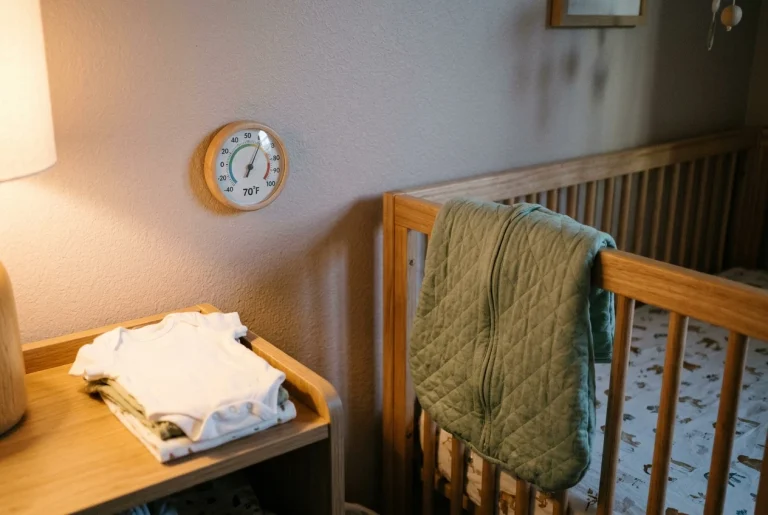
Baby Sleep Clothing Chart for 62, 68 and 72 Degree Rooms
A baby sleep clothing temperature chart pairs the room temperature with a full outfit: a snug base layer, sleepwear over it and a sleep sack of the right weight. At 62°F, dress in the most layers.
At 68°F, use a middle outfit. At 72°F, use the lightest. Always follow your sleep sack’s own warmth label.
What should my baby wear to sleep at 62, 68 and 72 degrees?
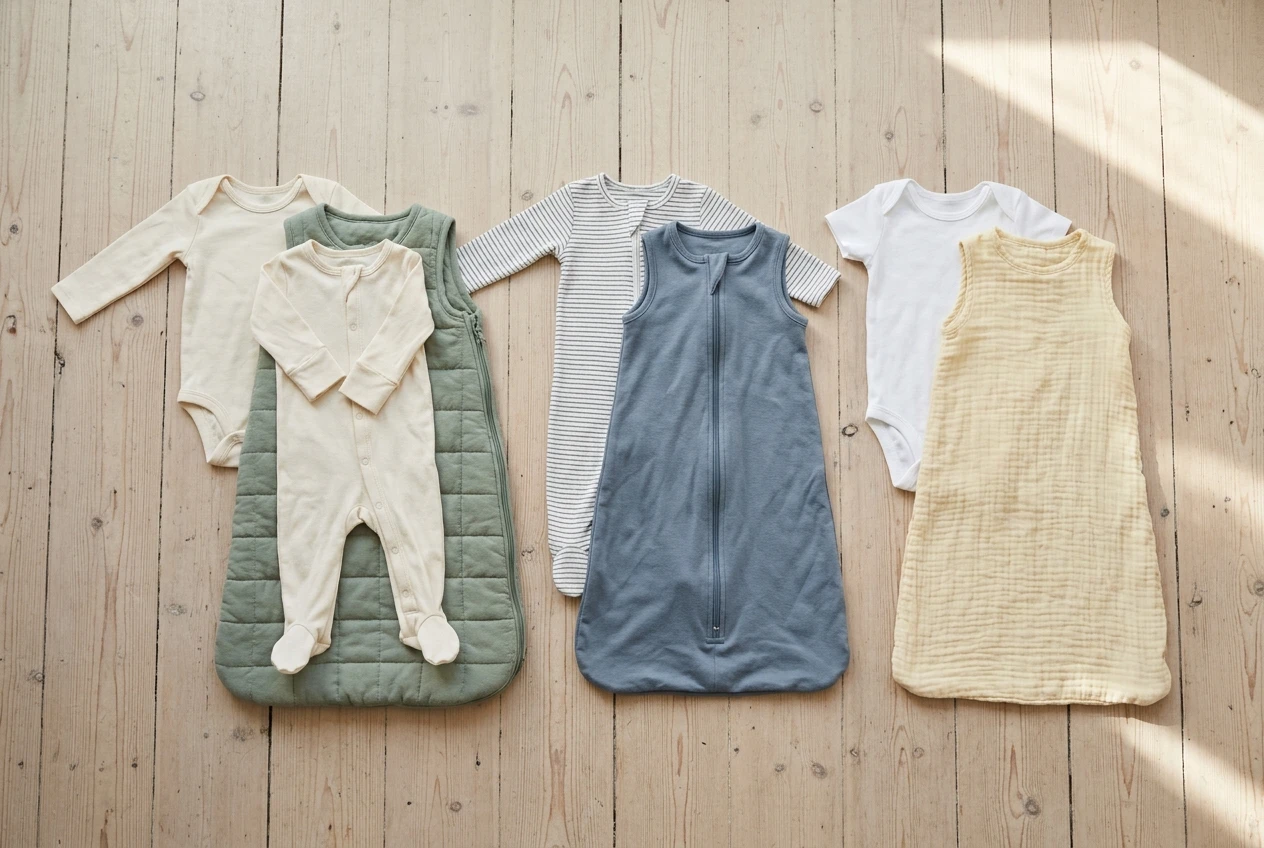
At 62°F, use a long-sleeve base, a footed sleeper and a warm sleep sack. At 68°F, drop to a lighter sleeper and a medium sack. At 72°F, use a short-sleeve bodysuit and a light sack. Screenshot the chart below to keep it on your phone.
|
|
62°F room |
68°F room |
72°F room |
|---|---|---|---|
|
Base layer |
Long-sleeve cotton bodysuit |
Long-sleeve or short-sleeve cotton bodysuit |
Short-sleeve or sleeveless cotton bodysuit |
|
Sleepwear |
Footed long-sleeve sleeper |
Lightweight footed sleeper or a thin footless sleeper |
None, or a thin footless sleeper |
|
Sleep sack weight |
Warmest weight |
Medium weight |
Lightest weight |
Treat the chart as a starting point. Sleep sacks are labeled with their own warmth rating and usually a suggested room-temperature range, and that label is more specific than any general chart. If the label for your sack puts your room in a different category, follow the label.
Fabric matters as much as the number of layers. A snug cotton bodysuit sits against the skin without bunching, and a thin sleeper adds warmth without much bulk. A thick fleece sleeper under a warm sack at 62°F can add up to more than a baby needs, so build the outfit from thinner pieces and add or remove one at a time.
How do I know the outfit is right once my baby is down?
Feel the chest or the back of the neck, because those areas show your baby’s core temperature better than hands and feet. Skin there should feel warm and dry, neither sweaty nor cool. Hands and feet often feel cooler than the rest of the body and are a poor guide.
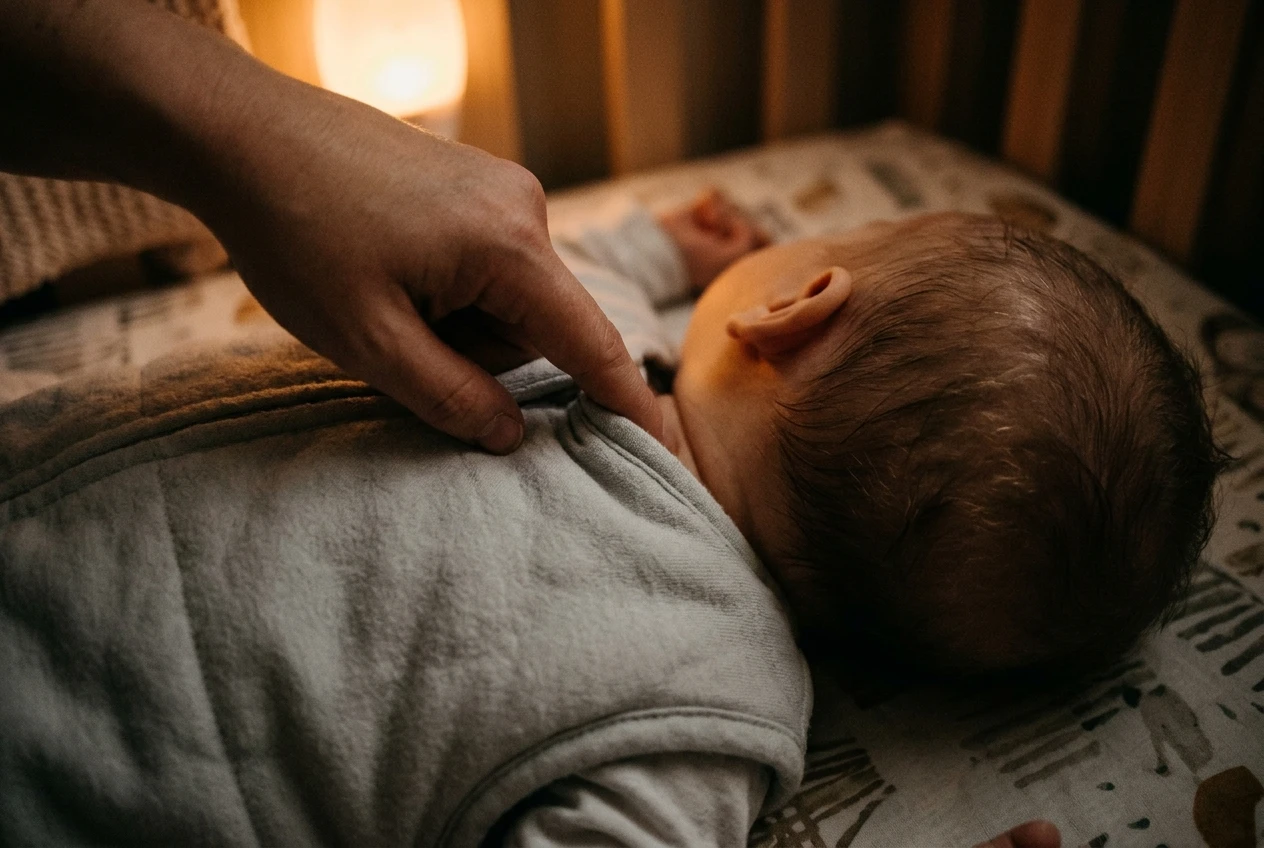
Here is a quick check you can do after the bedtime routine:
- Slip a finger under the sleep sack’s neckline and touch the chest or the back of the neck.
- If the skin feels damp, hot or flushed, remove a layer or switch to a lighter sack.
- If the skin feels cool, add a layer under the sack, or move up a weight if the sack’s label calls for it.
- Check again at the next wake-up or the next time you look in.
Damp hair, flushed cheeks and a sweaty neck are common signs of overdressing. For a closer look at what to watch for and how to adjust, see Is Your Baby Too Hot at Night? How to Spot and Fix It.
What if my room is between the three temperatures?
Keep the sleep sack weight the label recommends for your room and adjust the layer under it. A layer is easy to swap in the middle of the night, while changing a sack means a full outfit change. Rooms rarely sit at exactly 62, 68 or 72 degrees, so you will use this rule often.
Use these rules of thumb:
- Around 65°F: this is halfway between the first two columns. Start with the lighter of the two outfits, check the chest, and add a layer if your baby feels cool.
- Around 70°F: this is halfway between the last two columns. Start with the 72°F outfit and add the thin footless sleeper only if the chest feels cool.
- Anywhere else: pick the closest column and check the chest.
Where you put the thermometer changes the reading. Place it in the room at about mattress height, within reach of the air your baby is actually sleeping in but out of your baby’s reach. Keep it away from vents, radiators, windows and direct sun, which can all push the number up or down. A reading taken by the door or on an outside wall may not match the air near the crib.
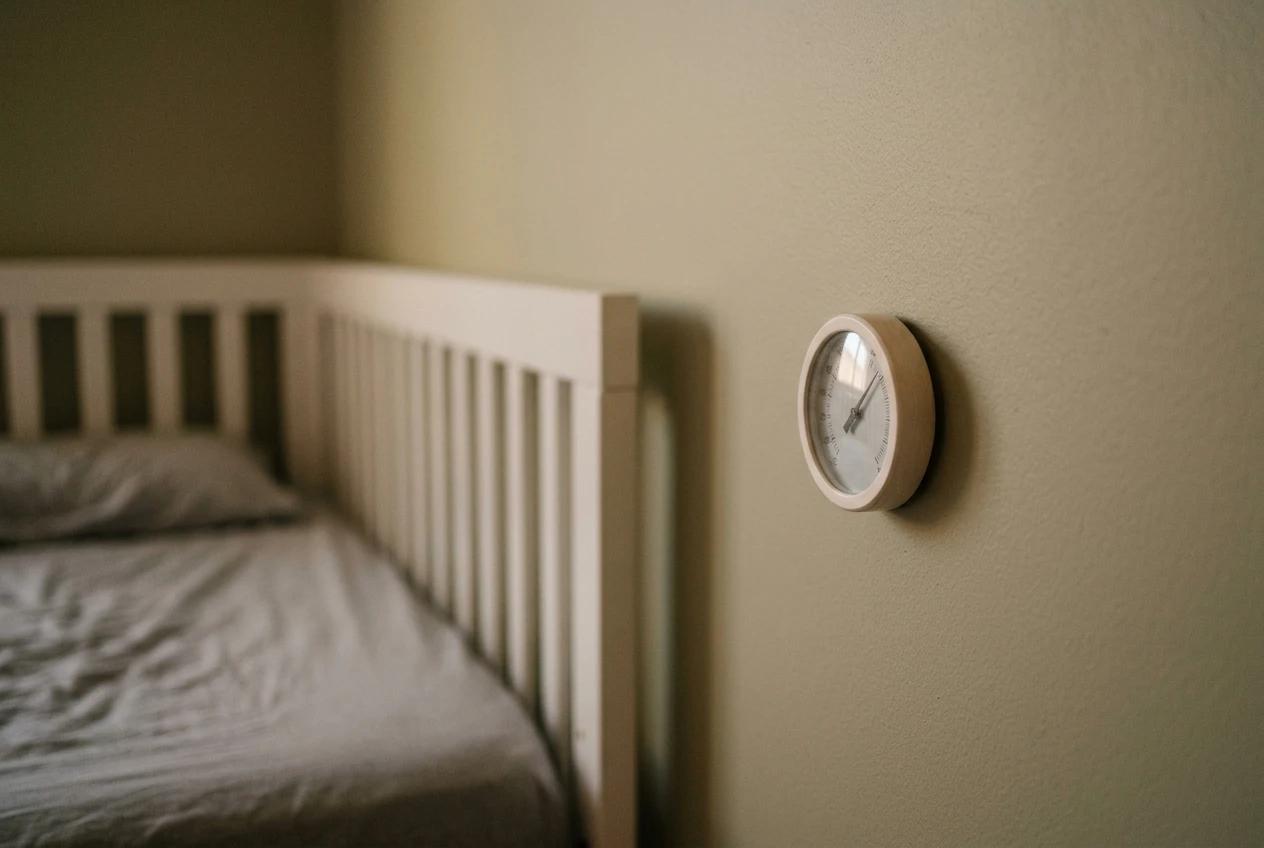
Rooms also change overnight. A room set to 72°F at bedtime may drop by morning, particularly on a cold night in winter. If your room swings a lot, dress for the temperature you expect at bedtime and check the chest when you next look in.
When should I change the chart for my own baby?
Change the chart whenever your baby’s chest says it is wrong. Some babies run warm and some run cool, so the chart is a baseline and your own checks have the final say. If your baby is regularly damp at 68°F, move toward the lighter column. If your baby is regularly cool, move toward the warmer one.
A few situations call for a different approach:
- A baby who runs warm or cold: adjust one layer at a time and recheck the chest after a night or two, so you know which change helped.
- Swaddled newborns: a swaddle is itself a layer, so the outfit under it is usually lighter than the chart suggests. Ask your pediatrician what is right for your newborn.
- Illness: a baby with a fever or a cold may need different dressing than usual. Call your pediatrician rather than guessing.
- Toddlers: young toddlers who are moving more at night may warm up differently from infants, so check the chest regularly.
Your pediatrician knows your baby and can advise on anything the chart does not cover. For product-specific questions, the sleep sack’s own label and instructions come first. This article is general clothing guidance, not medical advice.
For broader safe sleep guidance, the Safe to Sleep campaign from the National Institutes of Health and the American Academy of Pediatrics’ HealthyChildren.org are trusted places to start.
Which pieces make the chart work?
You do not need a drawer full of pajamas to cover all three columns. A small set of layering pieces handles every temperature in the chart. Here is what to own:
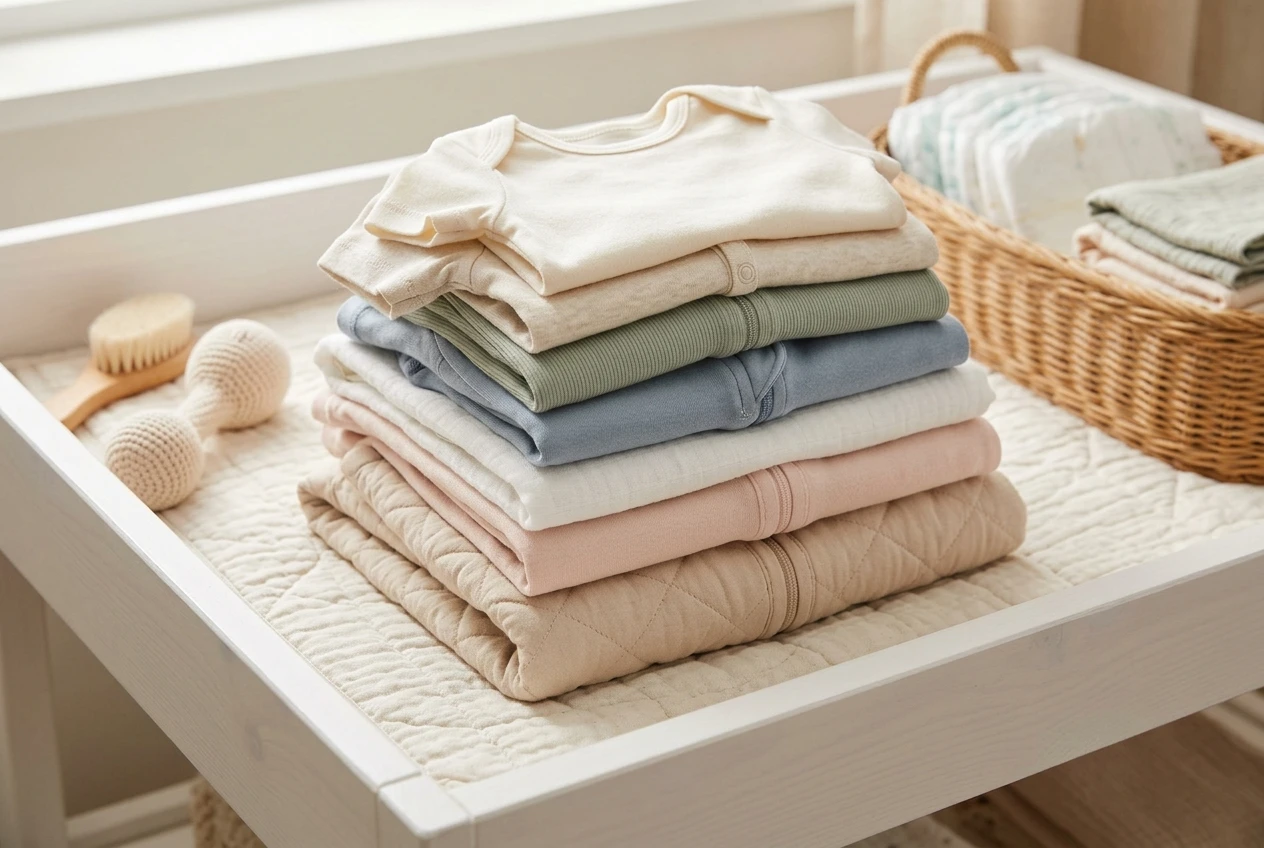
- Short-sleeve and long-sleeve cotton bodysuits: the base layer for every column. Snug cotton bodysuits to wear under a baby sleep sack are a good place to start.
- Lightweight footed sleepers: the middle layer for the cooler columns. Best lightweight footed sleepers for babies in a sleep sack covers what to look for.
- Thin footless sleepers: useful when the room is mild and bare feet inside the sack are enough. If you are deciding between the two styles, footed vs footless sleepers under a sleep sack walks through the trade-offs.
- Two or three sleep sacks in different weights: one light, one medium and one warm covers the full range, and each sack’s label tells you which room temperatures it suits.
Having a spare of each piece makes midnight changes easier. Babies spit up, leak and wake with damp clothes, so a second bodysuit and sleeper within reach saves you a trip to the dresser.
Where can I go deeper on layers under a sleep sack?
This chart covers the whole outfit, and the detail on the layer directly under the sack lives in a separate guide. What to Wear Under a Baby Sleep Sack by Room Temperature goes through that layer in more depth, including how to choose between options at each temperature.
Save the chart, check the chest when your baby is down, and adjust one layer at a time. Within a few nights you will know which column your baby’s room usually falls into and which outfit you reach for.
Browse the baby sleep sacks, sleepers and bodysuits at Adorable Apparel for Kids to build your night-time outfits.