Is Your Baby Too Hot at Night? How to Spot and Fix It
A baby too hot at night feels hot and damp on the chest or the back of the neck, often with sweaty hair, flushed cheeks and restless sleep. Cool hands and feet do not mean your baby is cool. Remove one layer at a time, starting with anything extra, and check the chest again after each change.
How can you tell your baby is too hot at night?
Touch the skin on your baby’s chest or the back of the neck: if it feels hot, damp or sticky, your baby is too hot. Slide your hand gently under the neckline of the sleeper or sleep sack so you do not have to wake or unwrap your baby.
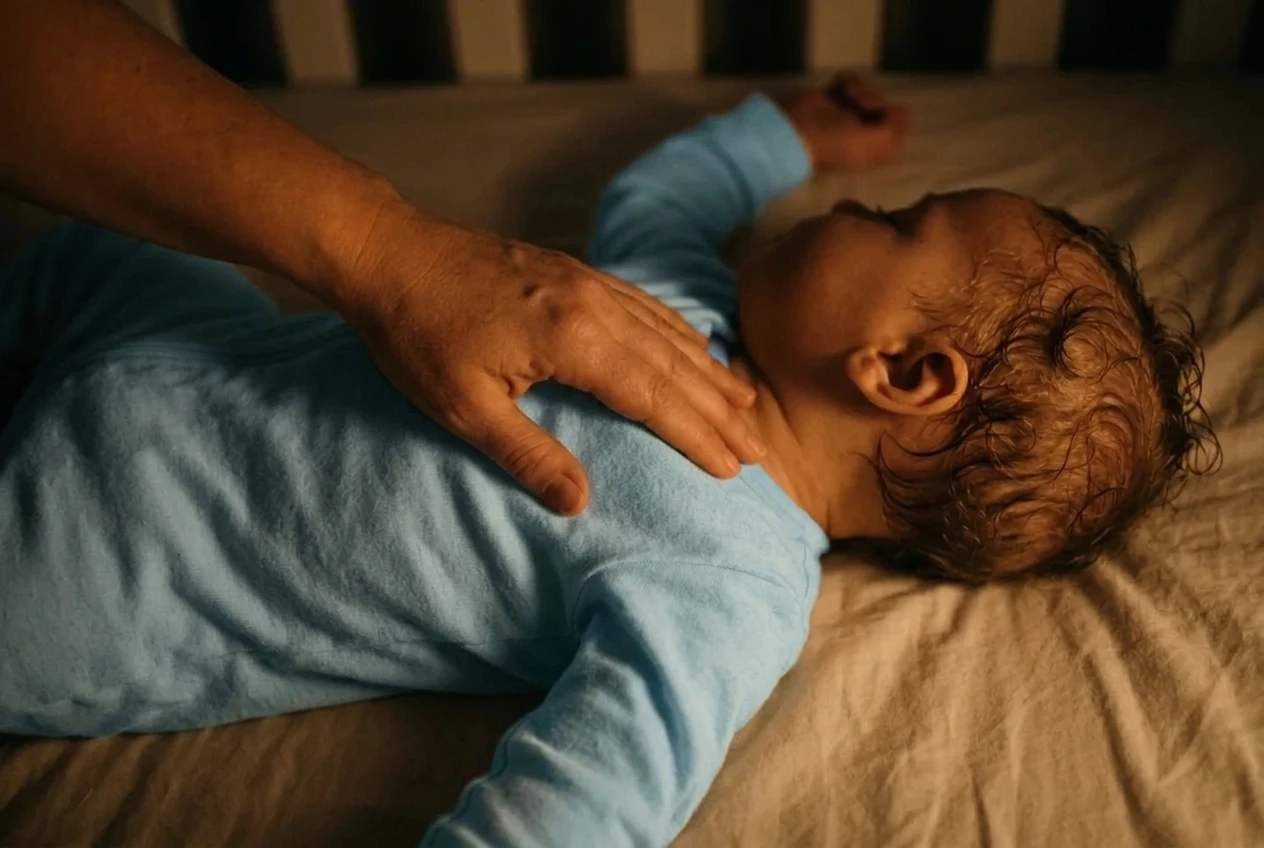
Hands and feet are a poor guide. They are often cooler than the rest of the body even when a baby is comfortable, so cool toes should never be the reason you add a layer.
Other signs that point to overheating:
- Damp or sweaty hair, especially at the nape and temples
- Flushed or red cheeks
- Skin that feels warmer than your own
- Fast breathing
- Fussing, squirming or waking often
- Heat rash, which shows up as small red bumps on the neck, chest or in skin folds
One sign on its own may mean little. A hot, damp chest together with a flushed face and sweaty hair is a clear signal to change something.
What should you do right now if your baby feels too hot?
Take off layers one at a time, in a set order, and check the chest or neck after each change. Stop as soon as the skin feels warm and dry instead of hot and damp. Doing it in this order keeps a tired brain from guessing.
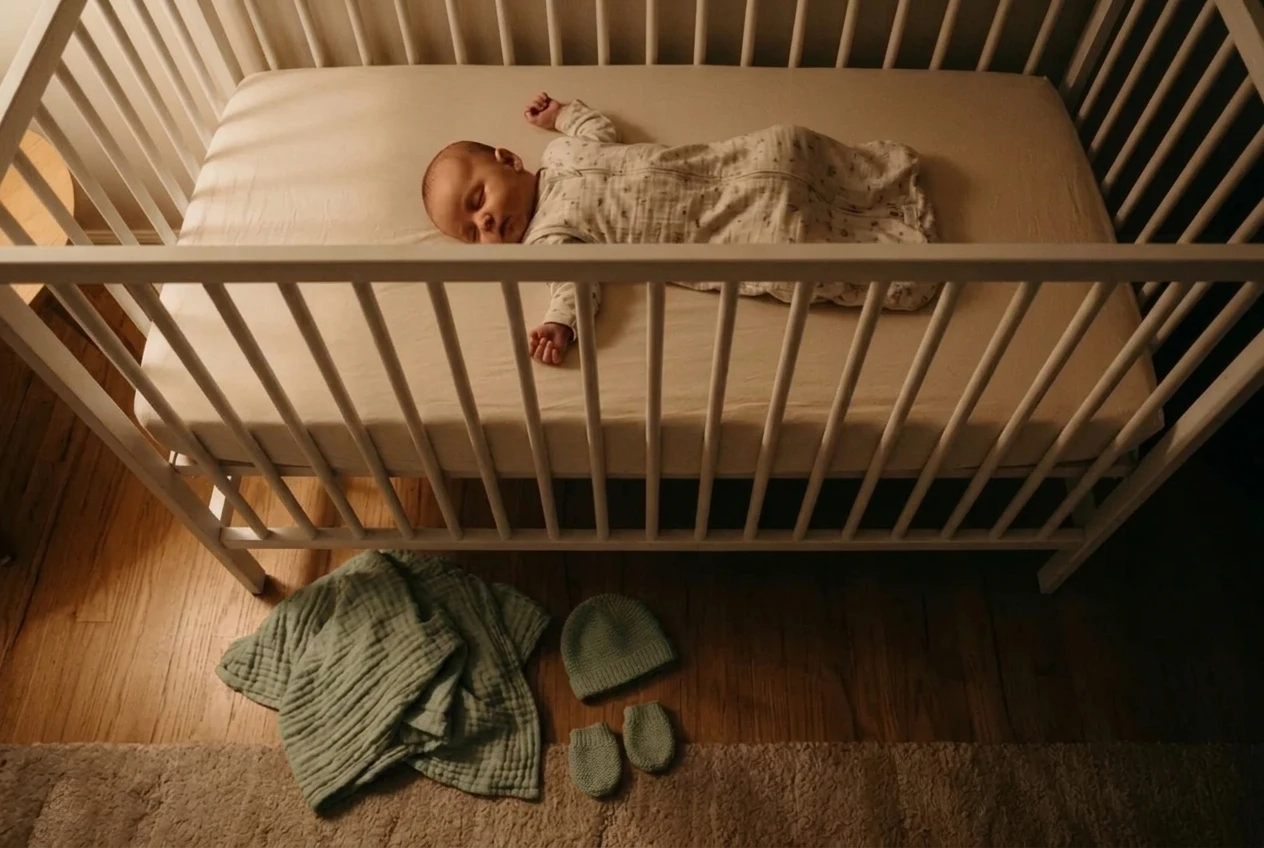
- Check the skin. Feel the chest or back of the neck. If it is hot or damp, go to step 2. If it is warm and dry, leave everything as it is.
- Remove anything that is not sleepwear. Take out blankets, hats, mittens and any loose item in the sleep space. Safe sleep guidance says the crib should hold only the baby on a firm, flat mattress. Check the chest again.
- Loosen or drop the swaddle. A swaddle adds a full layer around the torso. If your baby is hot, move to a sleep sack with the arms free. Check again.
- Take off the outer layer. That might be a cardigan, a second sleeper or a pair of socks over a footed sleeper. Check again.
- Swap the sleep sack for a lighter one. Sleep sacks are rated by tog, and a lower tog means a lighter sack. Check again.
- Swap the sleeper for something thinner. A short-sleeve or long-sleeve cotton bodysuit under a light sack is the lightest practical option. Check again.
- Recheck in a few minutes. Put your baby back to sleep on the back, then feel the chest once more before you leave the room.
Do not cool your baby with a fan aimed at the crib, a wet cloth or a cold bath. Fix the layers and the room, and let the baby settle on their own.
Which layers cause overheating most often?
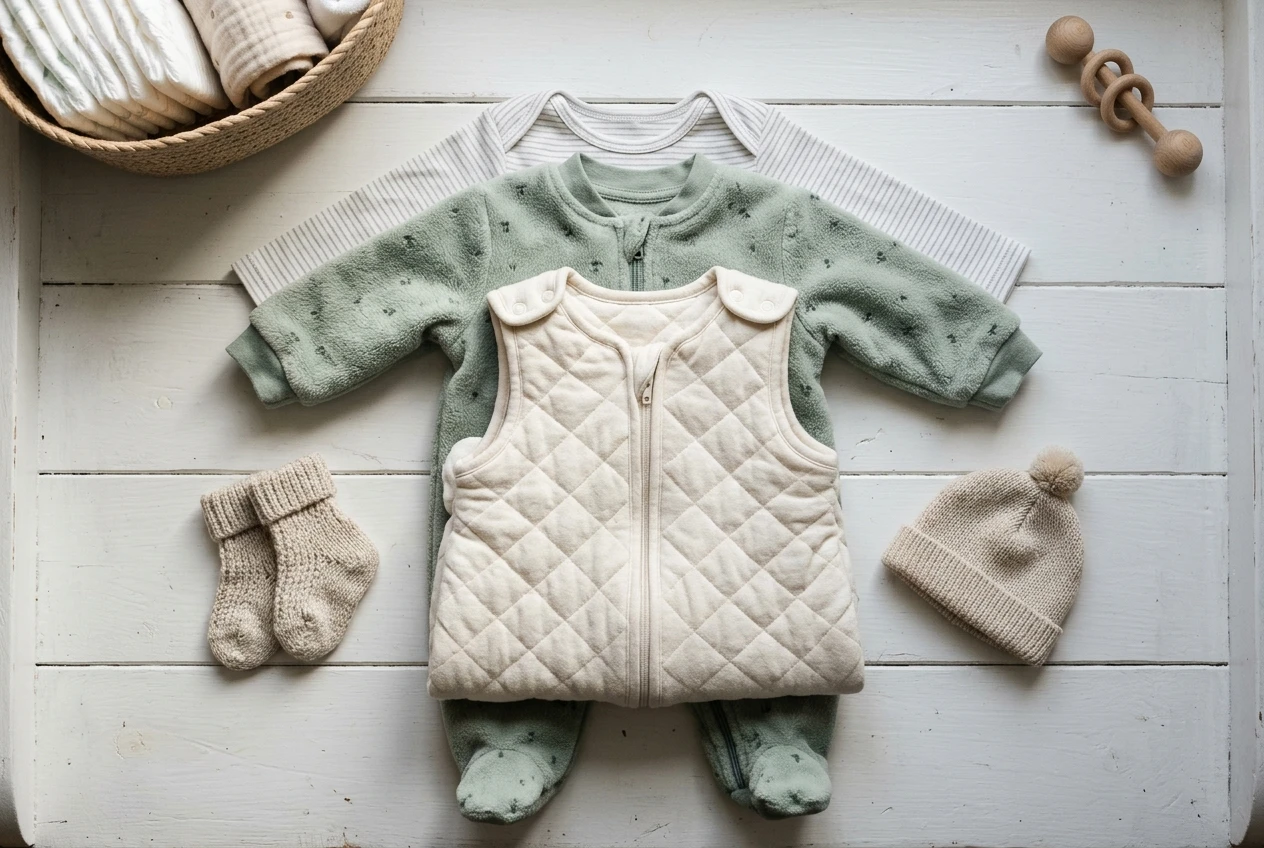
The usual cause is several reasonable layers stacked together, not one wrong piece. A long-sleeve bodysuit, a fleece sleeper and a warm sleep sack might each be fine alone, but all three at once is often too much.
|
Layer combination |
Why it overheats |
What to change first |
|---|---|---|
|
Swaddle plus a blanket |
Two wraps around the torso, and a loose blanket is also a safe sleep hazard |
Remove the blanket, then move to a sleep sack |
|
Fleece or thick sleeper under a warm sleep sack |
Two heavy layers trap body heat |
Swap to a thinner sleeper or a lower tog sack |
|
Footed sleeper plus socks |
Extra layer on feet, which adds heat without a clear benefit |
Take off the socks |
|
Hat or mittens indoors |
A baby loses extra heat through the head, so covering it indoors prevents that |
Remove both |
|
Bodysuit, sleeper and sack all long-sleeved and thick |
Three insulating layers |
Remove the middle layer or lighten the sack |
|
Sleep sack chosen for a colder night, kept on after the heat came on |
Bedding no longer matches the room |
Move to a lighter tog |
If your baby ran hot last night, look at this list before you buy anything new. Often the fix is leaving one existing piece in the drawer.
What fabrics and fits keep a baby comfortable through the night?
Lightweight, breathable fabrics in a close but not tight fit keep a baby comfortable. Cotton is the usual choice because it lets heat and moisture escape. Fleece and heavy polyester blends tend to hold heat in, which can make them too warm for a baby in a heated room.
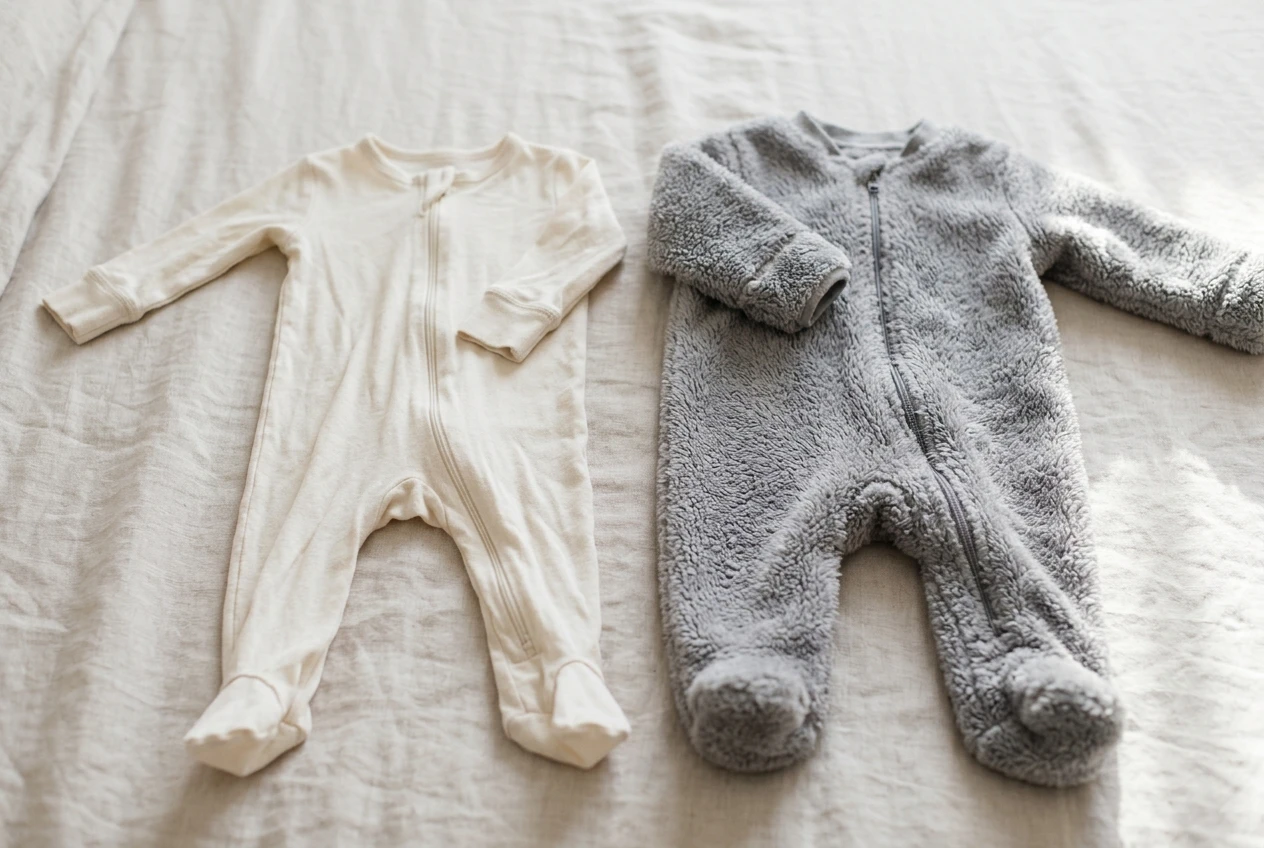
When you pick or sort sleepwear, check these points:
- Weight: A thin knit stays comfortable across a wider range of nights than a thick one, and you can add a layer if the room is cool.
- Close fit: A fitted bodysuit stays in place and does not bunch under a sleep sack. Bunched fabric makes uneven hot spots.
- Room to move: The hips and legs need space. A sleeper that pulls at the crotch or ankles will wake a baby regardless of temperature.
- Neck and armholes on the sleep sack: They should fit well enough that your baby cannot slip down inside. A sack that is too big is a safety problem, not just a comfort one.
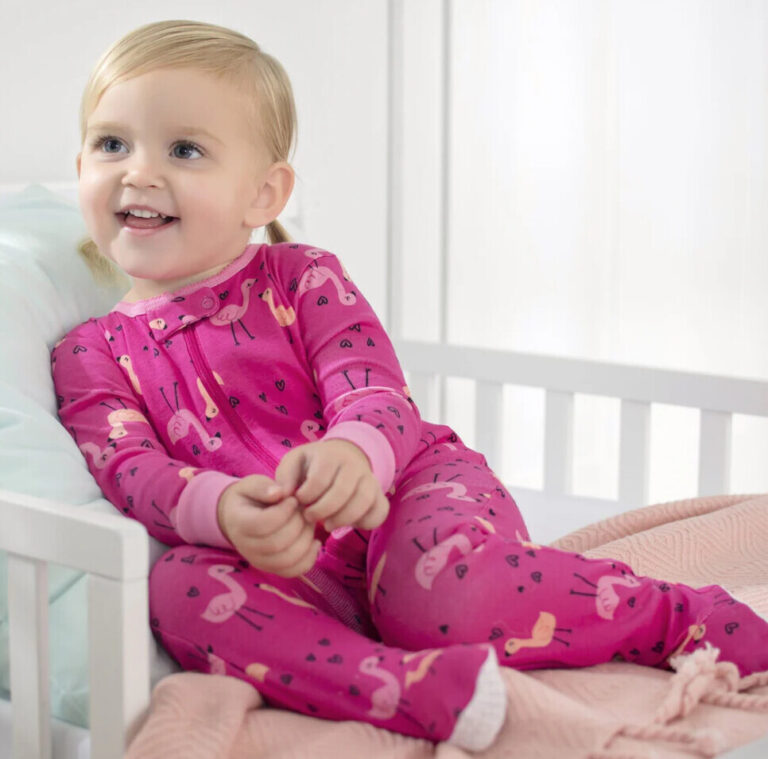
- Footed or footless: Feet are covered by the sleeper in a footed style, so you may not need socks. In a warm room, footless can be the cooler option.
Keep the whole outfit simple: a base layer, one sleeper if needed, and a sleep sack. Anything beyond that should have a reason.
Is the room temperature enough to decide what your baby wears?
No. Room temperature is a useful starting point, but your baby’s own skin tells you more. Two babies in the same room can need different layers, and the same baby can need different layers on different nights.
A few things change how warm a baby gets that a wall thermometer will not show:
- A crib placed near a heater, vent or radiator
- Sun on the crib or the window beside it during an evening nap
- A sleep sack with a higher tog than the night calls for
- A recent feed, illness or a very active evening
- Heating that cycles on after you have set the layers for bedtime
Put a room thermometer at roughly the height of the crib, away from vents, and use it as a first guide. Then confirm with a touch to the chest. Where the two disagree, trust the touch.
If you want a starting point by temperature, our guide on what to wear under a baby sleep sack by room temperature covers it.
When should you call your pediatrician about overheating?
Call your pediatrician if your baby still feels hot after you have lightened the layers, or if hot, sweaty nights keep happening. Your pediatrician knows your baby’s history and can tell you what to check and when to call.
Call promptly if you notice:
- A fever. For a baby under 3 months, a rectal temperature of 100.4°F (38°C) or higher needs a call right away, day or night
- Skin that stays hot after you remove layers and wait a few minutes
- A baby who is unusually sleepy, floppy or hard to wake
- Fast or labored breathing that does not settle
- Vomiting, refusing feeds or fewer wet diapers than usual
- A rash that spreads, does not fade or looks like more than heat rash
If your baby is very hard to wake, is limp, or is having trouble breathing, call your local emergency number instead of waiting for a call back.
It also helps to ask your pediatrician in advance what temperature reading they want you to call about and how they want you to take it. Write it on a note near the crib so it is there when you are half asleep.
Once the layers are sorted, the next job is having the right pieces ready. Browse lightweight footed sleepers that work under a sleep sack, starting with our guide to the best lightweight footed sleepers for babies in a sleep sack.